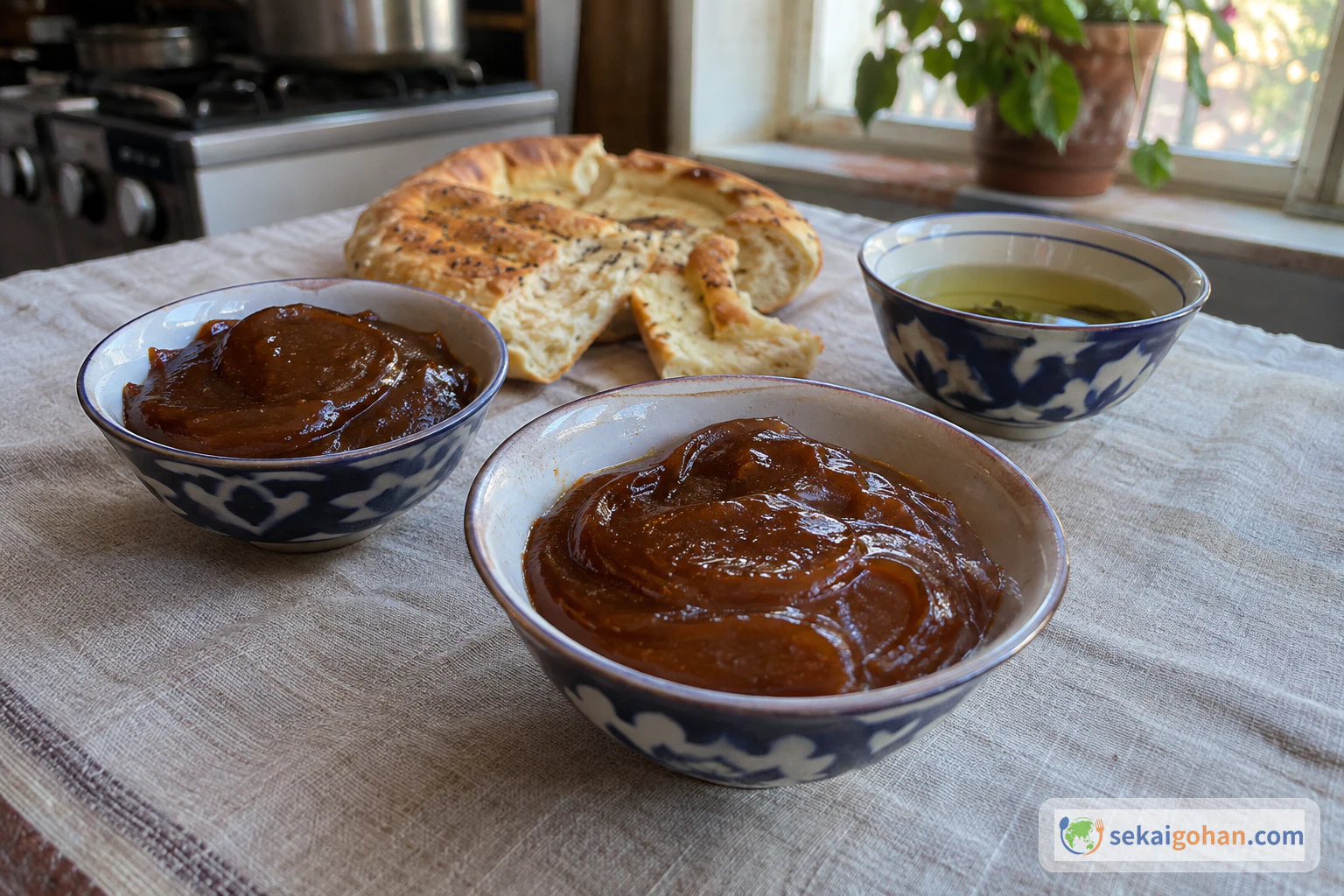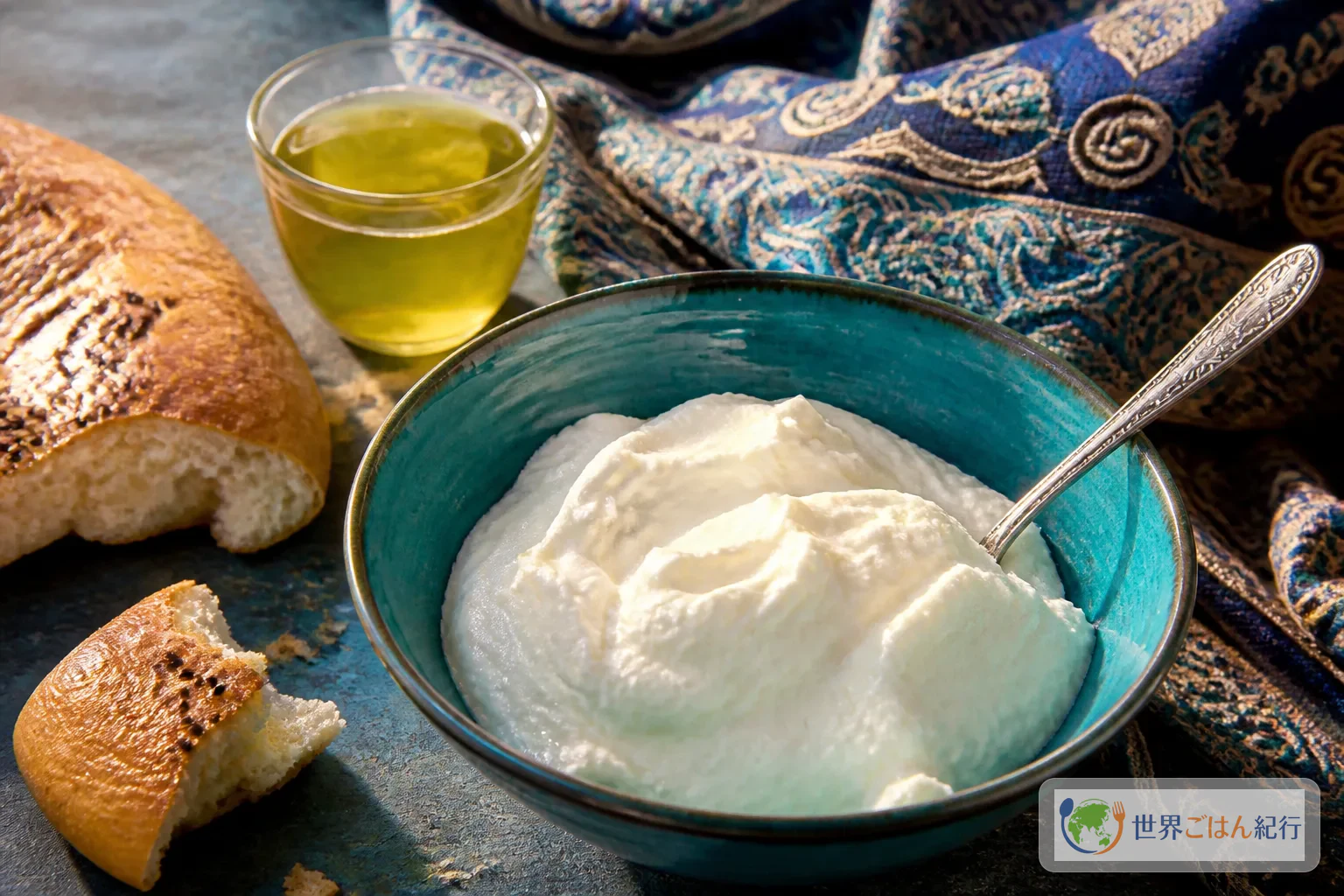
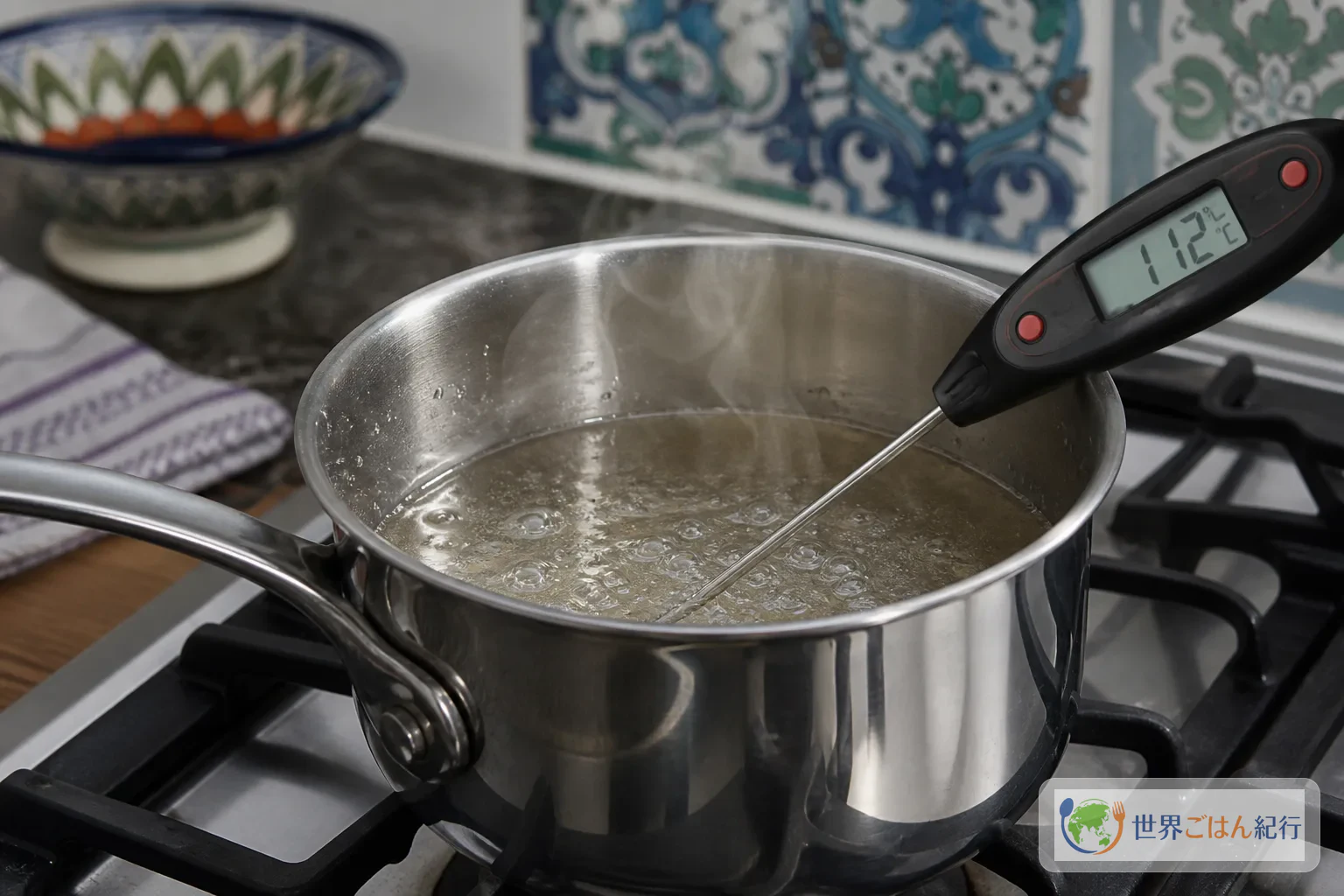
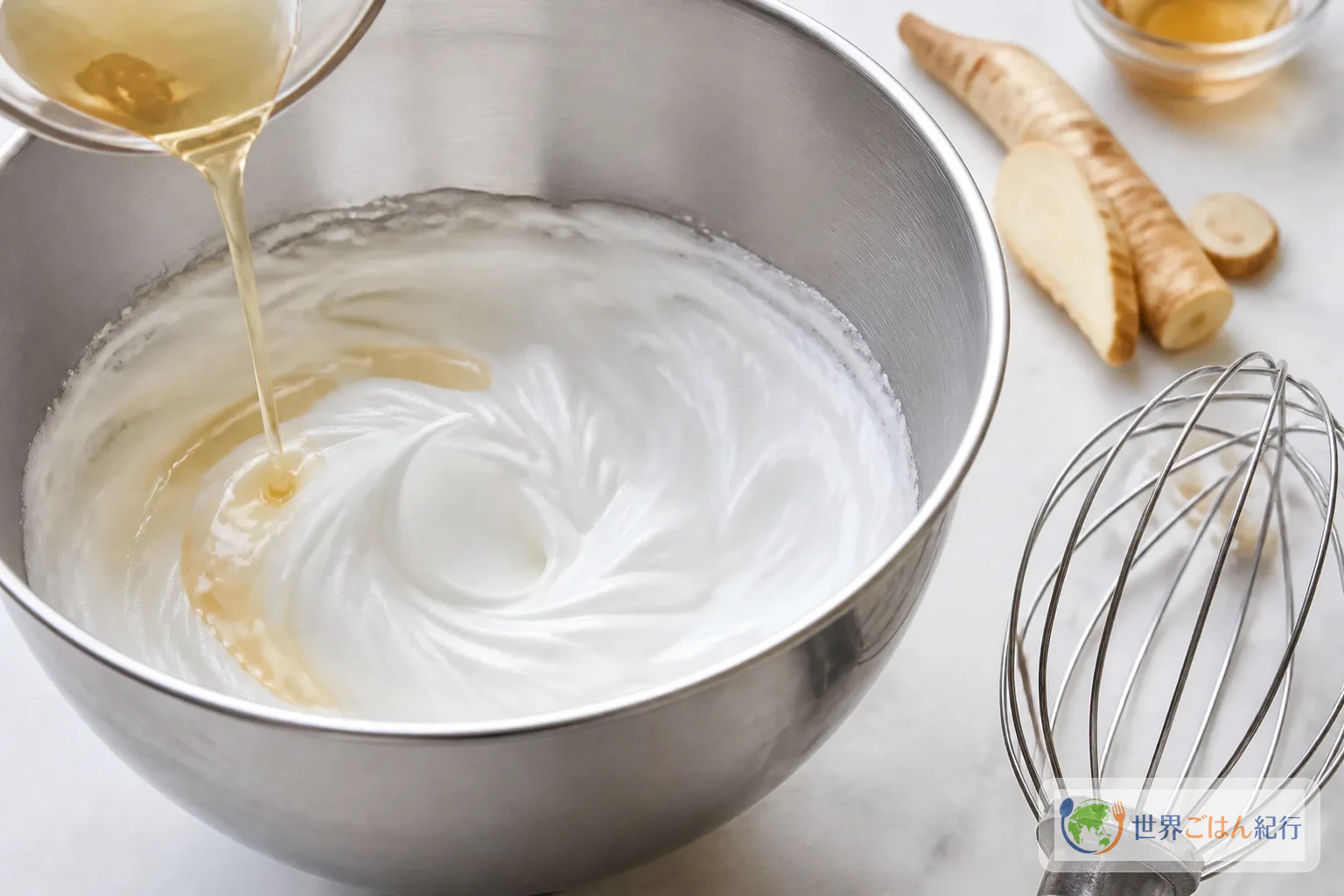
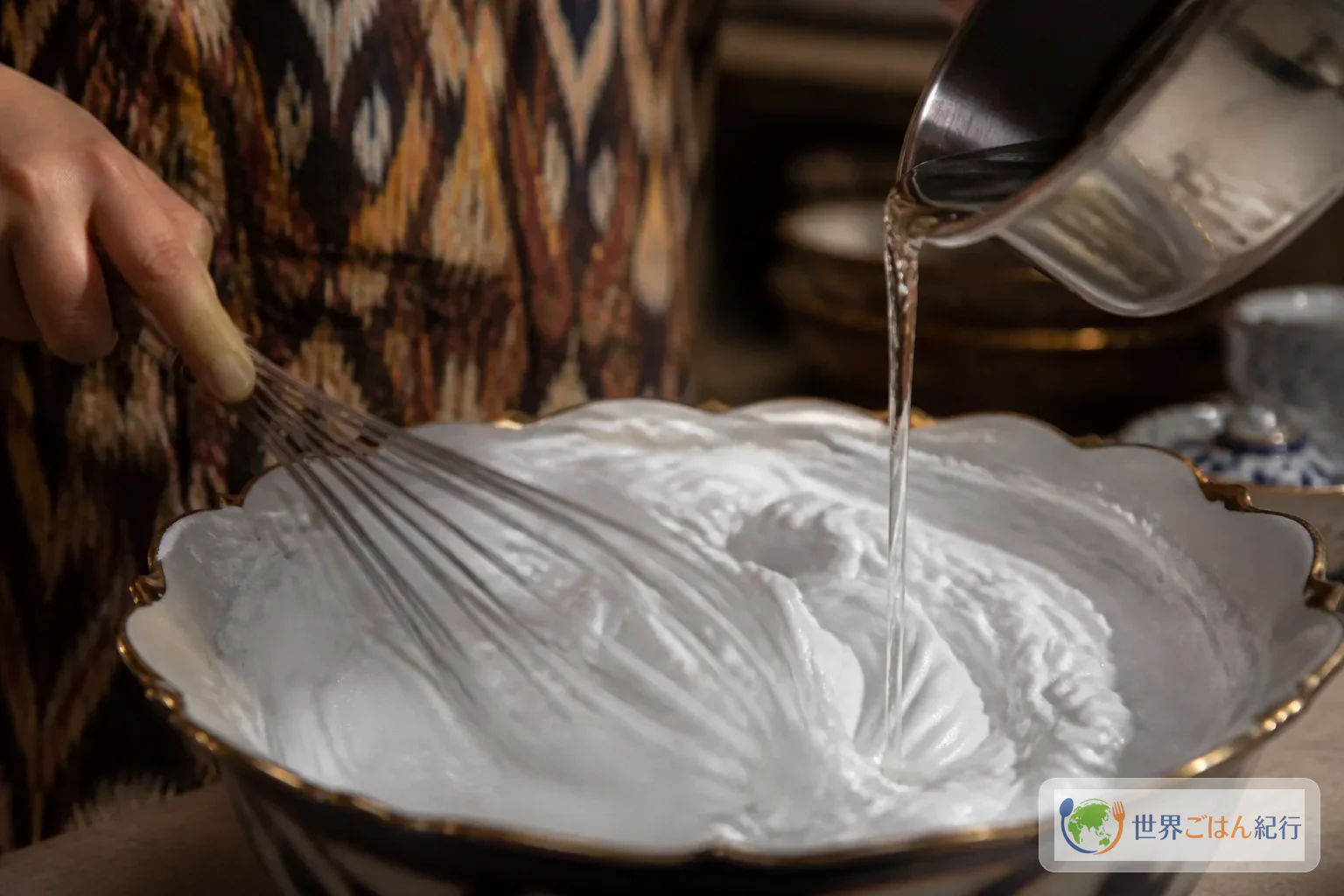
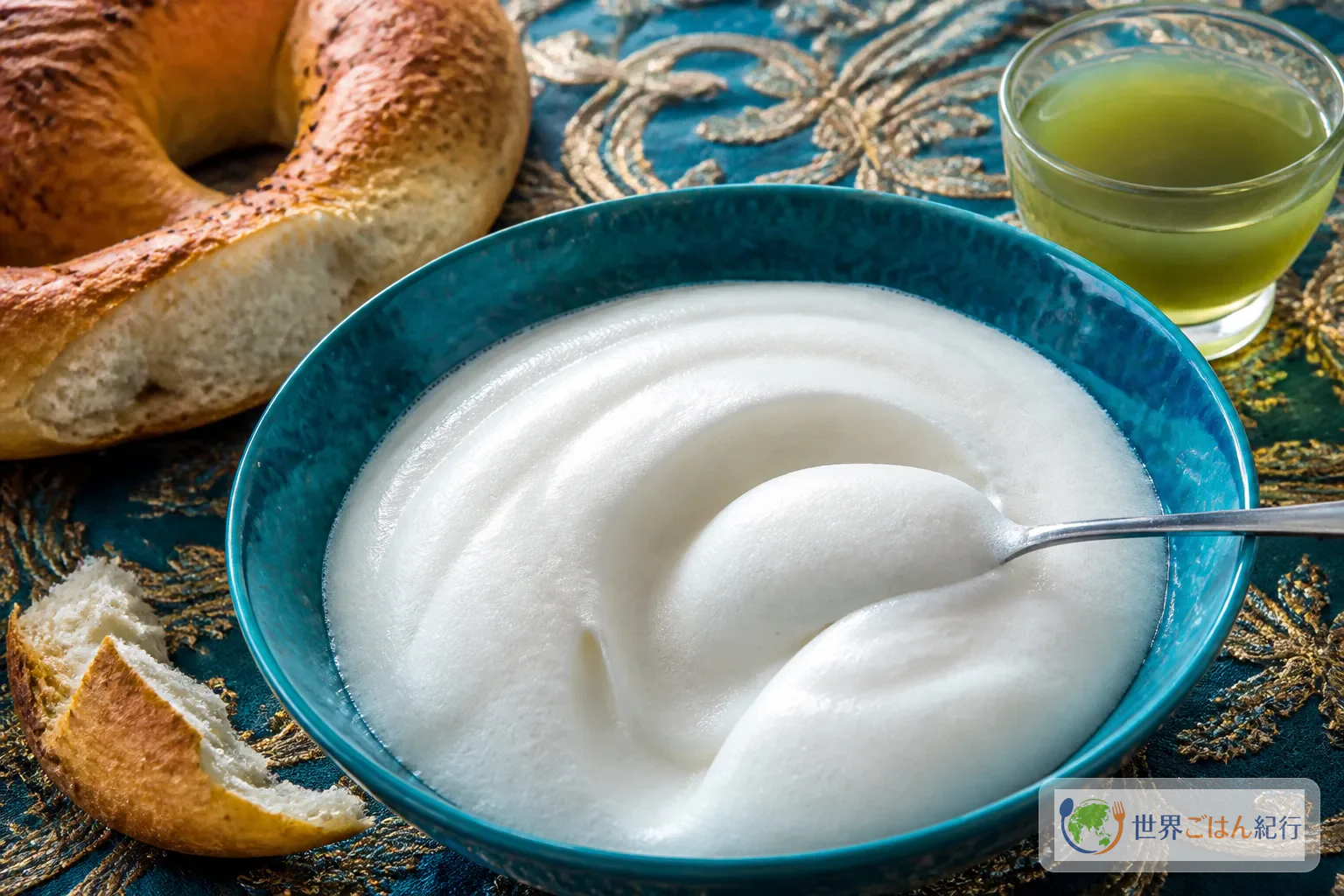
Pour boiling sugar syrup in a thin stream into glossy beaten egg whites, and the clear liquid turns snow white. At the market, nisholda (also Nishallo) is scooped from a big container into bowls, and it's so dense that a spoon stands up in it. This traditional Uzbek sweet is made from egg whites and sugar combined with an infusion of a root called yetmak. It tastes of clean sugar with a mild, grassy root aroma, and it's eaten cold with bread such as patyr and a cup of green tea.
About Nisholda
The handmade version gets its body from the saponins in the root, which make the infusion foam. Sugar syrup and egg white hold that foam up. In some versions licorice stands in for yetmak, and the result is the same kind of white sweet.
Taste and texture of nisholda
| What to look at | What a good result looks like |
|---|---|
| Sweetness | A clear sugar sweetness that covers the lightness of the egg white. A little acid gives it an outline |
| Aroma | Yetmak has a mild grassy aroma. Licorice gives a stronger, liquorice-like aroma |
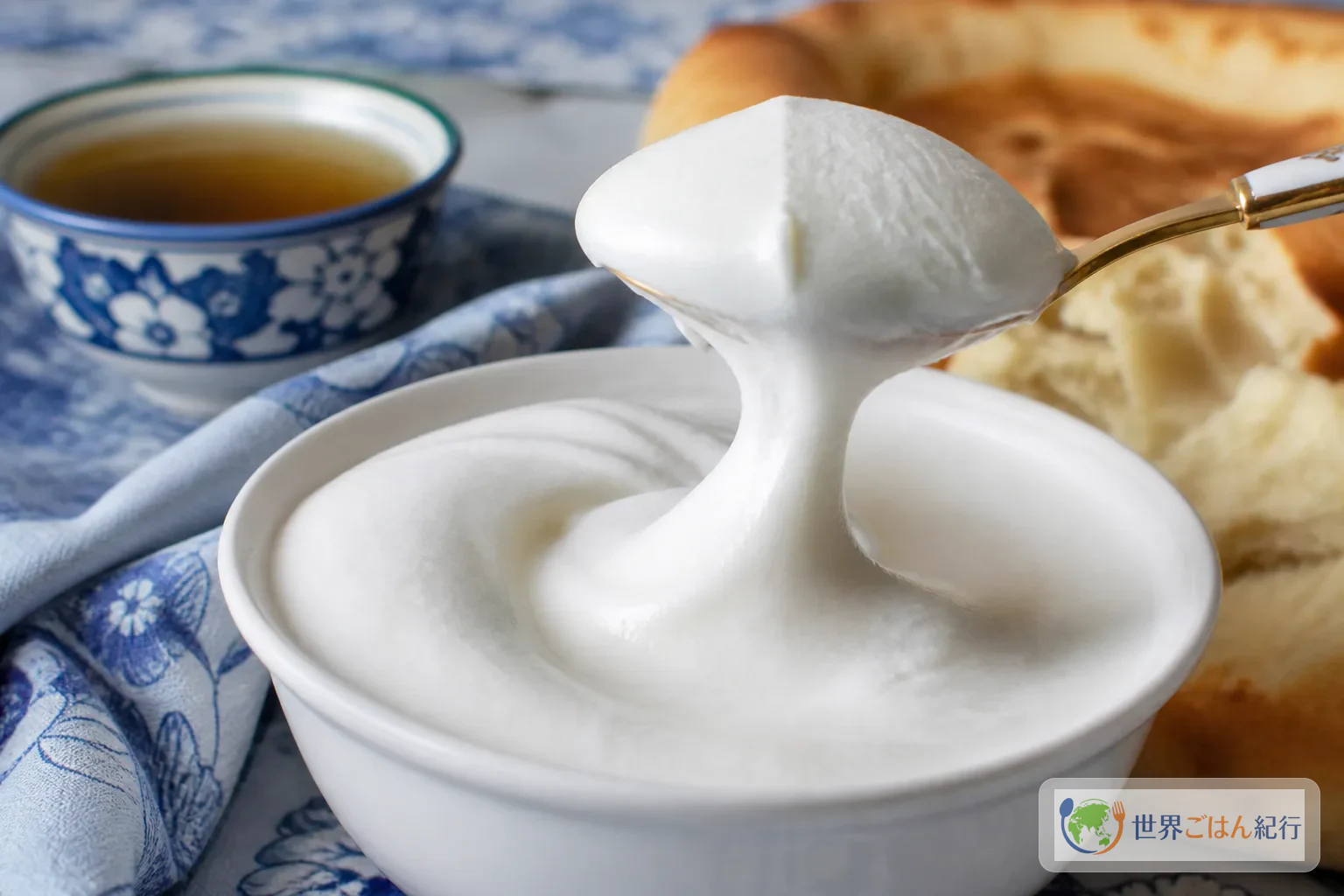
| Texture | Denser than cold meringue; the mark of a spoon stays for a while |
| How to eat | Scoop the chilled foam with bread and serve green tea alongside. Also suits a small after-meal sweet |
Nisholda at Ramadan and Navruz
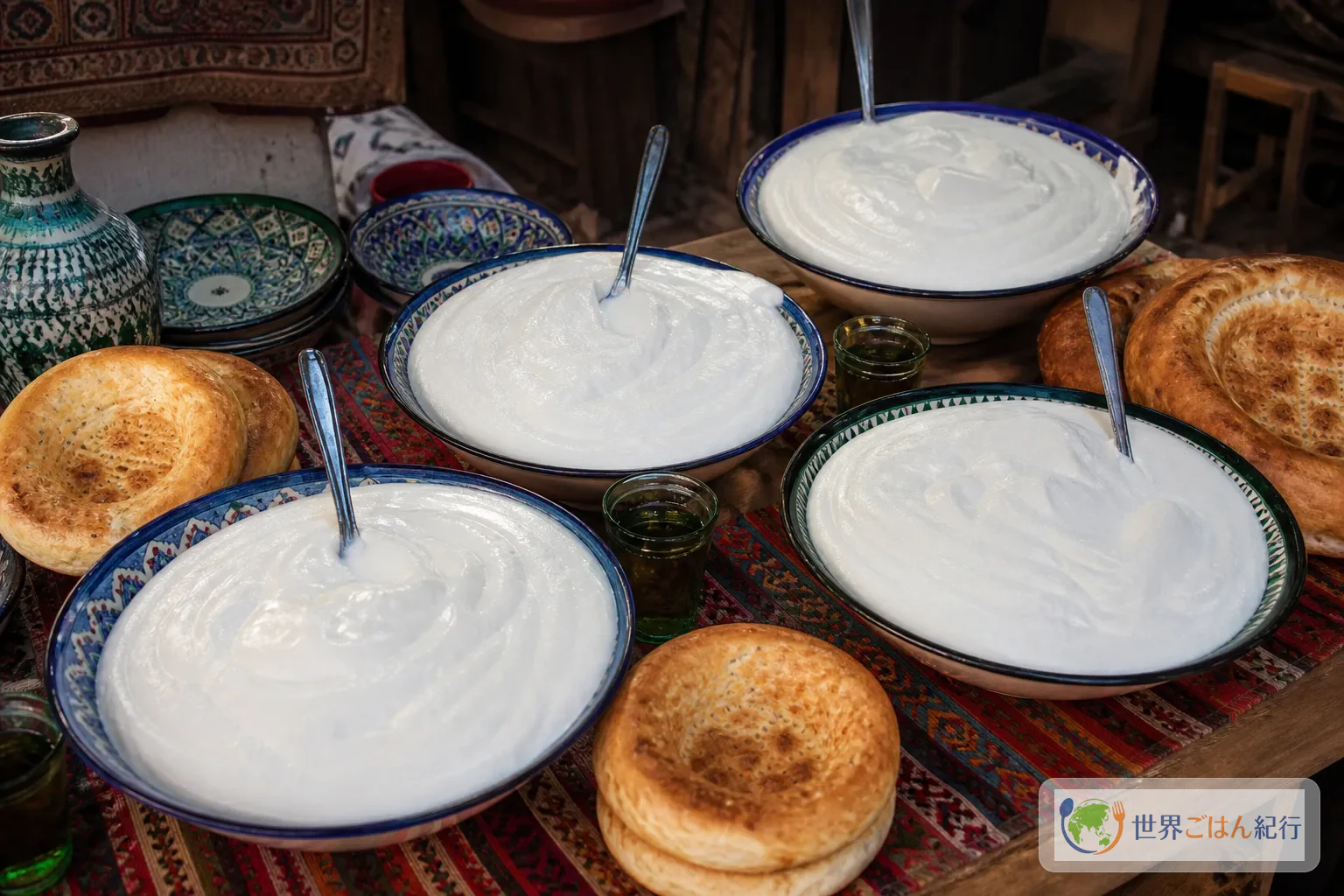
Nisholda is best known as a food prepared in quantity for days when people gather, rather than as a small sweet at the end of a meal. It is served with patyr at the end of the Ramadan fast, and households share nisholda and bread at iftar. It also appears on wedding, festival and Eid tables.
In spring, the white foam turns up again at Navruz. At the March festival, nisholda is sold alongside sumalak, which is made by long cooking wheat sprouts and flour. Both belong to a food culture of gathering around big pots at the turn of the season. An everyday snack and a dish made by many hands for a festival play different roles, even when both are sweet.
Regional versions
Nisholda is made in the Fergana Valley, Tashkent, Samarkand, Bukhara and elsewhere in Uzbekistan. Sweets combining egg white, sugar and a root infusion also exist in neighboring parts of Central Asia. The names vary, and so does the aroma: each cook decides whether to add anise or vanilla, whether to use yetmak or licorice, and how acidic to make the syrup.
Ingredients (serves 4)
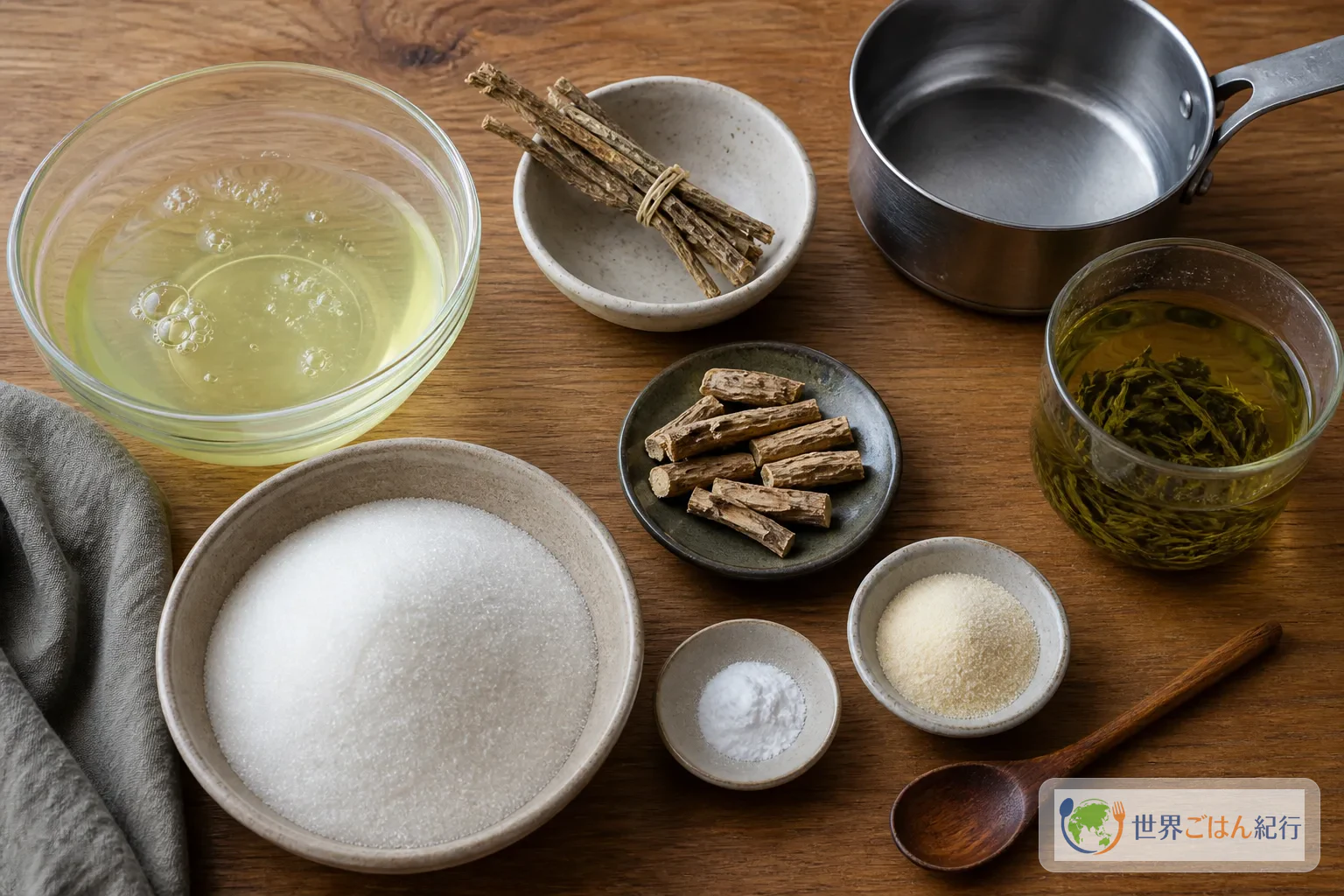
Because the egg white is not fully cooked, choose pasteurized egg white whose label you can check rather than cracking shell eggs. 4 oz (120 g) of egg white is roughly 4 large eggs.
Yetmak and licorice
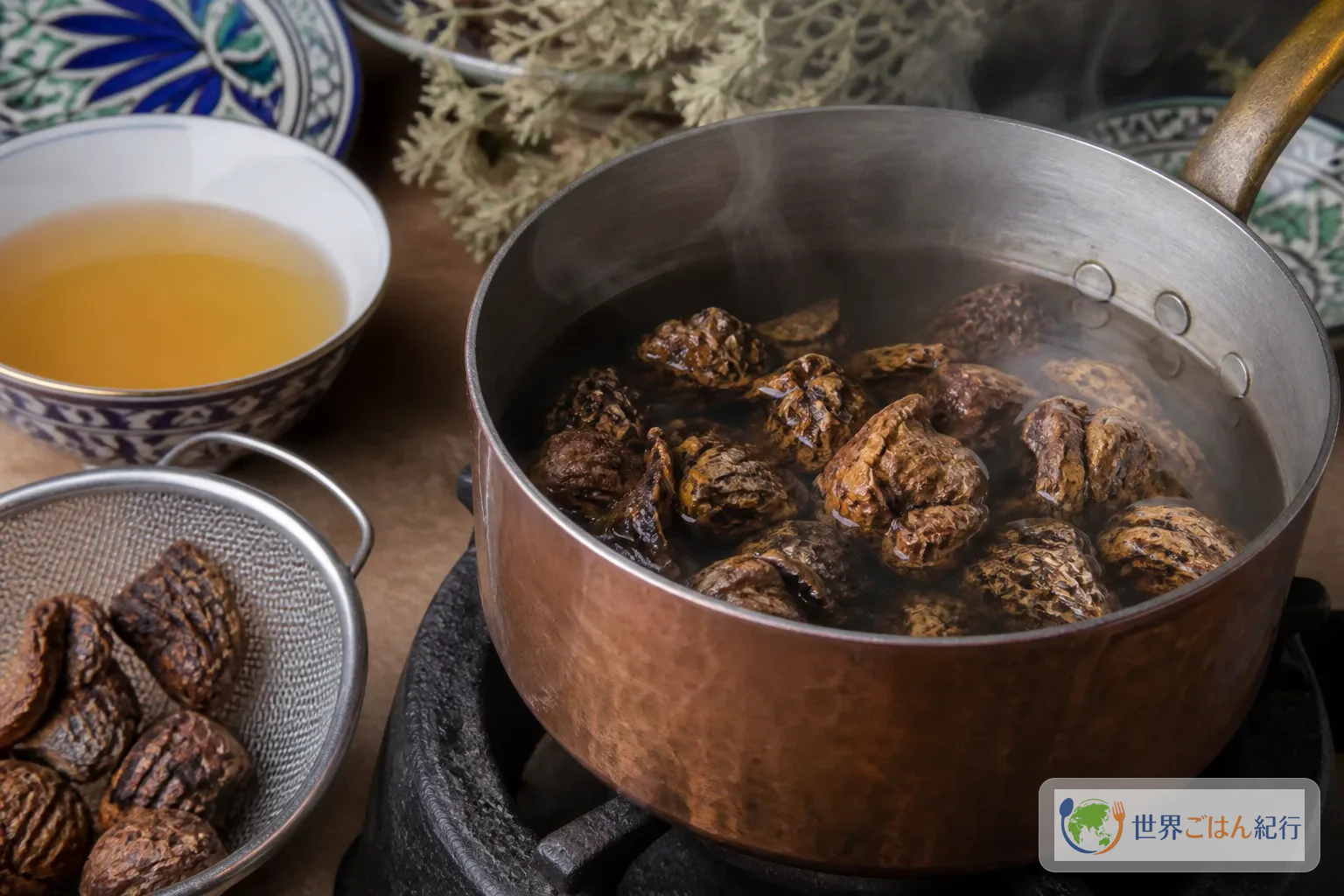
Yetmak (soap root) is an edible root that has supported the foam of nisholda in Central Asia. It is the root of a saponin-containing plant, and its saponins are linked to the white, foaming state of nisholda. The root comes from Allochrusa gypsophiloides, also listed under an older genus name. Read more about the plant.
When buying, check not only the product name but that it is clearly labeled "for food" or "edible". Never use a garden root, a herb of unknown purpose, or the root of an ornamental plant in cooking. Food-grade licorice root is an easy substitute to find, but its aroma is strong and it will not taste like the yetmak used locally. A foam made from egg white alone without root is closer to a sweet meringue than a home version of nisholda.
If you use licorice as a substitute, choose one sold as a food or dried ingredient. If a product page lists only herbal medicine or health food uses, don't use it in cooking.
Choosing Yetmak, Licorice and Flavorings
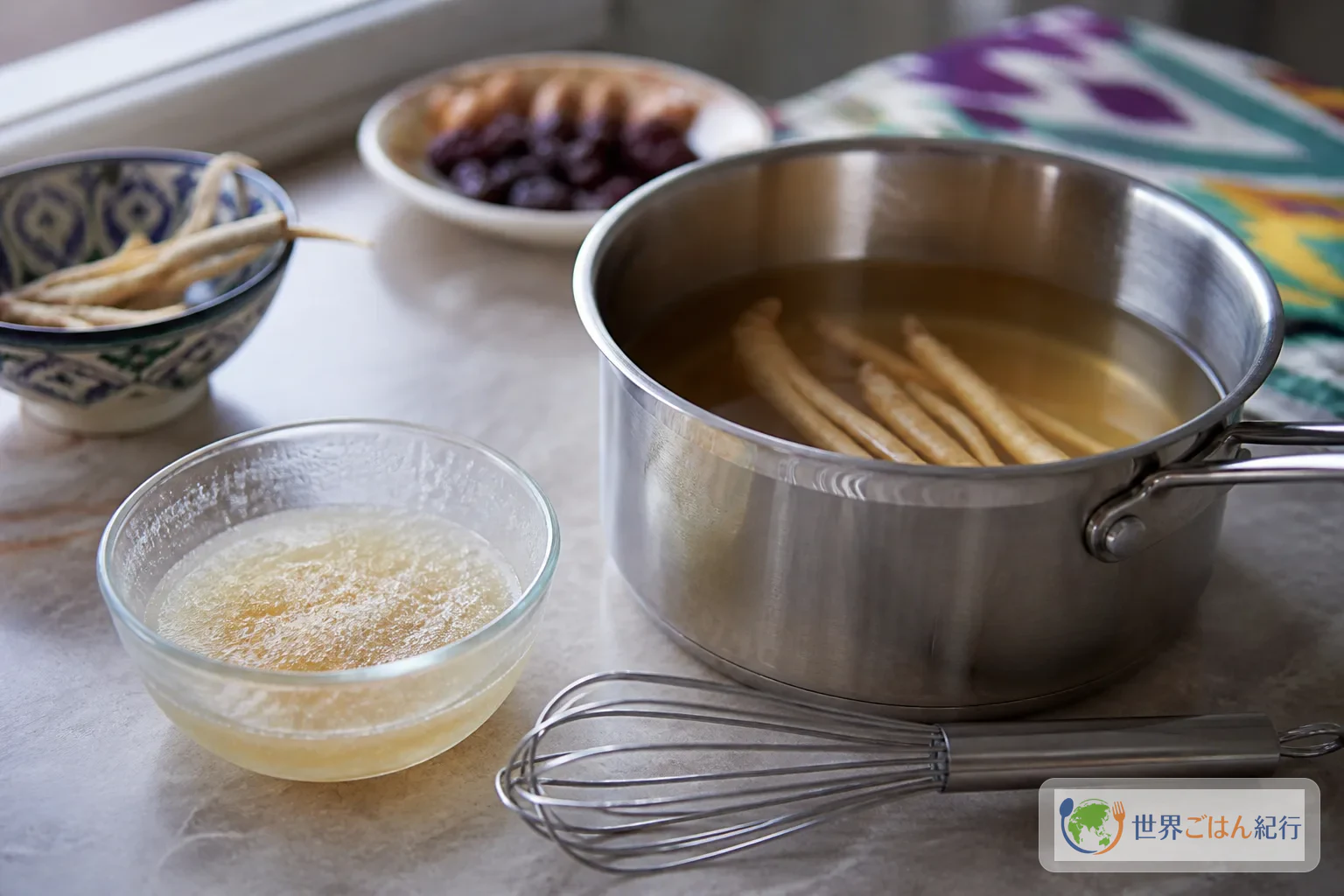
The root infusion gives nisholda its aroma and the framework of its foam, but too much brings out a grassy smell. The strength of yetmak varies with where it comes from and how dry it is, so the same 5 g won't always give the same concentration. If you can't find edible yetmak, use food-grade licorice root. It won't give the same aroma or foaming, but a different aroma at home isn't a failure. Stick to roots sold as edible, though; not just any plant root will do.
| Change | Result | Good for |
|---|---|---|
| Use yetmak | Mild root aroma, closer to the local composition | People who can confirm an edible dried root |
| Use food-grade licorice root | A sweet licorice-like aroma rises | People who want easier-to-find ingredients |
| Add a little anise | A tea-sweet aroma comes forward | People who find licorice a bit heavy |
| Add a little vanilla | Rounder aroma, the root's character weakens | People adjusting the aroma for children |
Dry root is hard, and breaking even 5 g with a knife makes your hand wobble. A mortar is used to break it into pieces that infuse easily, not to grind it to powder. A thick bag and a cutting board work just as well.
Instructions
Preparation: make the root infusion and bloom the gelatin
Make the syrup and combine it with the egg white
Common Nisholda Problems and Fixes
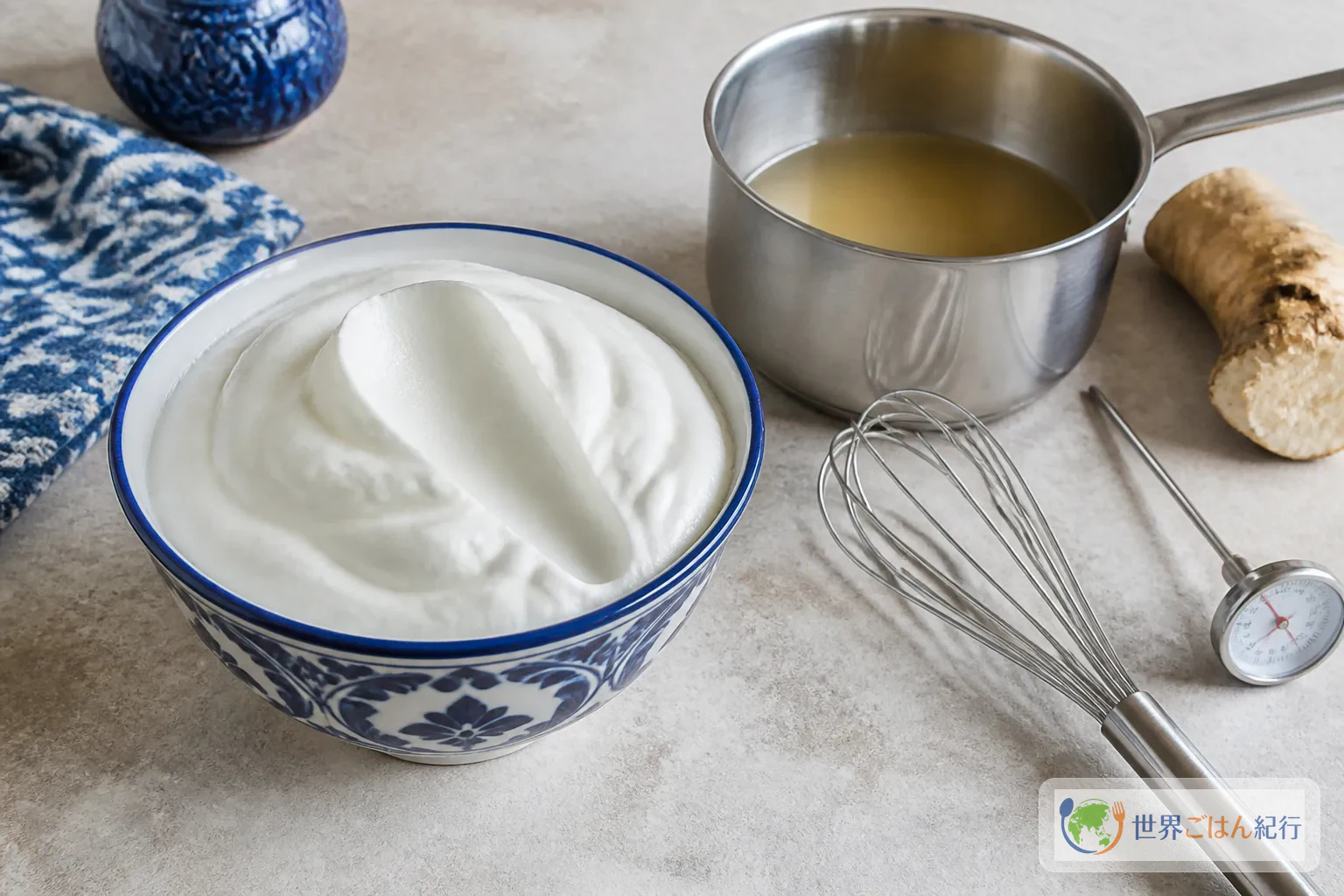
What trips people up at home is less the amount of root than the temperature of the syrup and the state of the foam. The root infusion, egg white and syrup each do a separate job, so check them one at a time. On a first try, test a small amount of syrup before committing; it cuts down on failure.
- For the root infusion, put the foam's framework before aroma. If adding 1 tbsp (15 ml) loosens the foam, stop and leave the rest out.
- Watch the syrup temperature. Below 122°F (50°C), sugar tends to set when it goes into the bowl. At 149°F (65°C) or above, part of the egg white sets from the heat and white grains can appear.
- Use the whisk lines as your marker. If the lines vanish right away when you lift the whisk, it's not yet time to add syrup. Whip a few more minutes on high, and if the foam still slumps, you may have added too much infusion.
- After adding the syrup, look at the bottom of the bowl. If clear liquid has pooled, keep whipping on high for about 10 minutes. The usual causes are syrup that is too hot, pouring too fast, under-whipped egg white, or grease left in the bowl. If the separation continues, the foam won't fully come back. Refrigerate it, eat it the same day in small amounts with bread like a sweet sauce, and don't mix it back in to remake. Next time, keep the syrup at 55–60°C and the pouring time at 5–7 minutes.
Serving Nisholda
For a table close to the local one, serve nisholda cold with bread and tea, and scoop the white foam with a torn edge of bread rather than eating it straight off a spoon. Salty bread and strong green tea cut the sweetness and keep the next bite from feeling heavy.
In a meal, serve Uzbek plov or manti first and save nisholda for tea after the meal, where its sweetness shines. Sour or salty dishes such as Tajik qurutob pair well too, since their flavors head in a different direction.
Frequently Asked Questions
I can't get yetmak. Can I make it without licorice too?
You can make a white foam from egg white, sugar and citric acid alone, but without the root infusion you lose nisholda's characteristic aroma and foam support. Powdered gelatin helps it hold its shape, though the taste and texture lean toward meringue. It's easier to enjoy if you treat it as a different sweet. Use only food-grade licorice root, never a herb of unknown purpose.
Can I whip it by hand?
You can, but after combining the egg white and root infusion you have to keep whipping for a long time while pouring syrup in a thin stream. Holding the bowl with one hand and whisking with the other makes the pouring awkward. Two people working together, or an electric hand mixer, makes it easier to control the temperature. What matters is being able to keep whipping without stopping partway through.
How long does it keep?
Even with pasteurized egg white, store homemade nisholda in the refrigerator at 39°F (4°C) or below and finish it by the next day. Over time water separates out and the texture changes. Keep it at room temperature only briefly rather than leaving it out on the table. Freezing separates the water in the foam, so keep it chilled instead. For safe handling of egg dishes, see the egg safety guide.
Can I reduce the sweetness?
If you cut the sugar sharply, the syrup can't support the water in the foam and the mound won't hold even after chilling. Start with 12.5 oz (360 g). For a lighter sweetness, serve more bread, brew the green tea stronger, or take smaller scoops. Changing what you eat it with leaves the foam intact; changing the syrup ratio does not.
Sources
Dishes and preparation:
- Muslim Board of Uzbekistan. "Nisholda". https://www.muslim.uz/uz/e/post/32281-nisholda?page=2&per-page=1 (accessed 20 August 2026)
- Doca Tours. "Step-by-step instruction for cooking Uzbek traditional sweet Nishollo." https://doca-tours.com/step-by-step-instruction-for-cooking-uzbek-traditional-sweet-nishollo/ (accessed 20 August 2026)
- Central Asia Travel. "Oriental sweets." https://www.centralasia-travel.com/en/countries/uzbekistan/cuisine/oriental-sweets (accessed 20 August 2026)
- Uzbekistan Academy. "Nisholda taomi". https://uzbekacademy.uz/oz/article/2026/03/17/nisholda-taomi (accessed 20 August 2026)
- Uzbekistan Travel. "5 reasons to celebrate Ramadan in Uzbekistan." https://uzbekistan.travel/en/o/reasons-celebrate-ramadan-uzbekistan/ (accessed 20 August 2026)
- Fergana State University. "Farg'ona konferensiyasi materiallari". https://api.scienceweb.uz/storage/publication_files/6413/16789/6586839fcd192___Farg%27ona%20konf.%202021%2023-noyabr.pdf (accessed 20 August 2026)
- U.S. Food and Drug Administration. "What You Need to Know About Egg Safety." https://www.fda.gov/food/buy-store-serve-safe-food/what-you-need-know-about-egg-safety (accessed 20 August 2026)