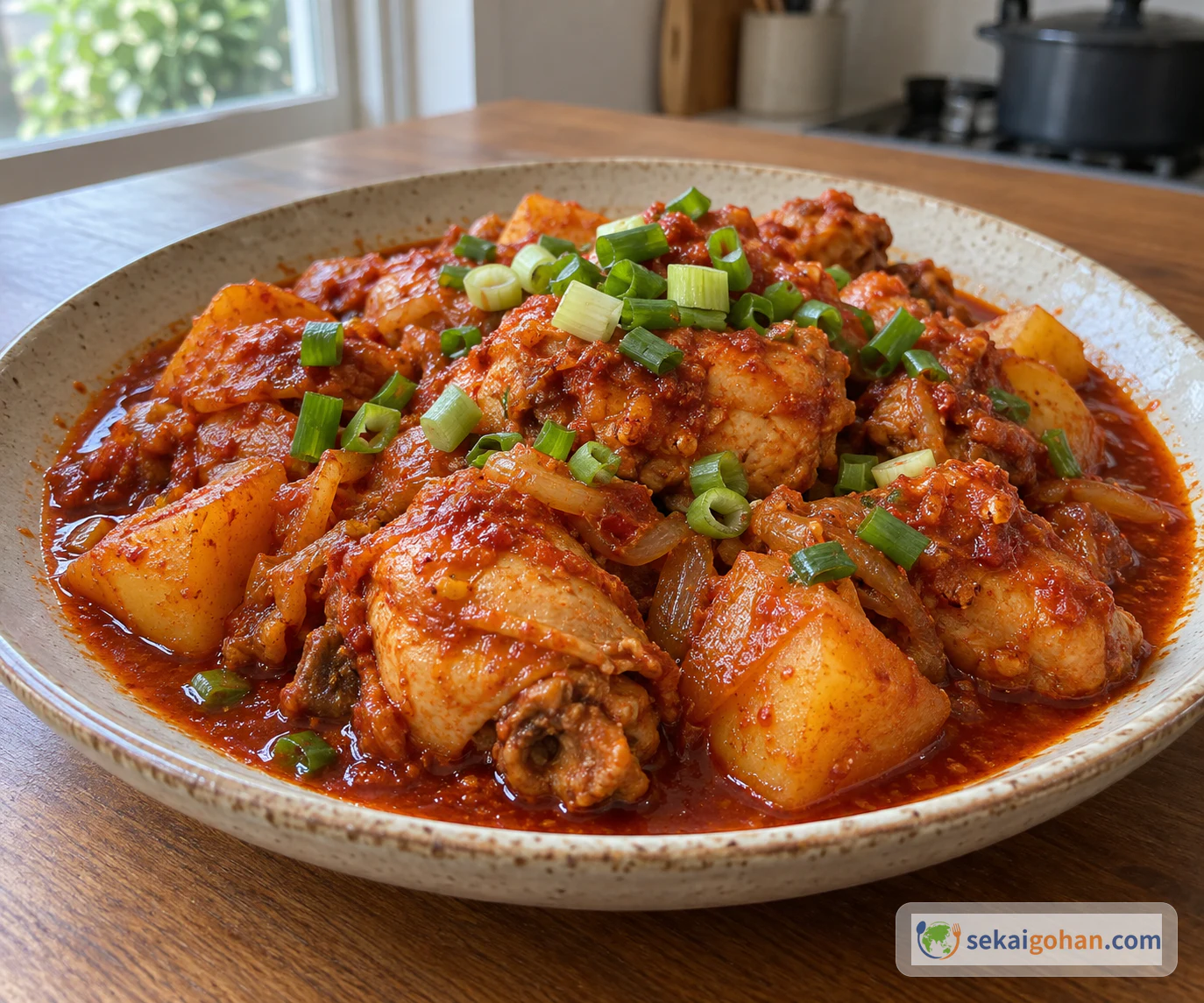
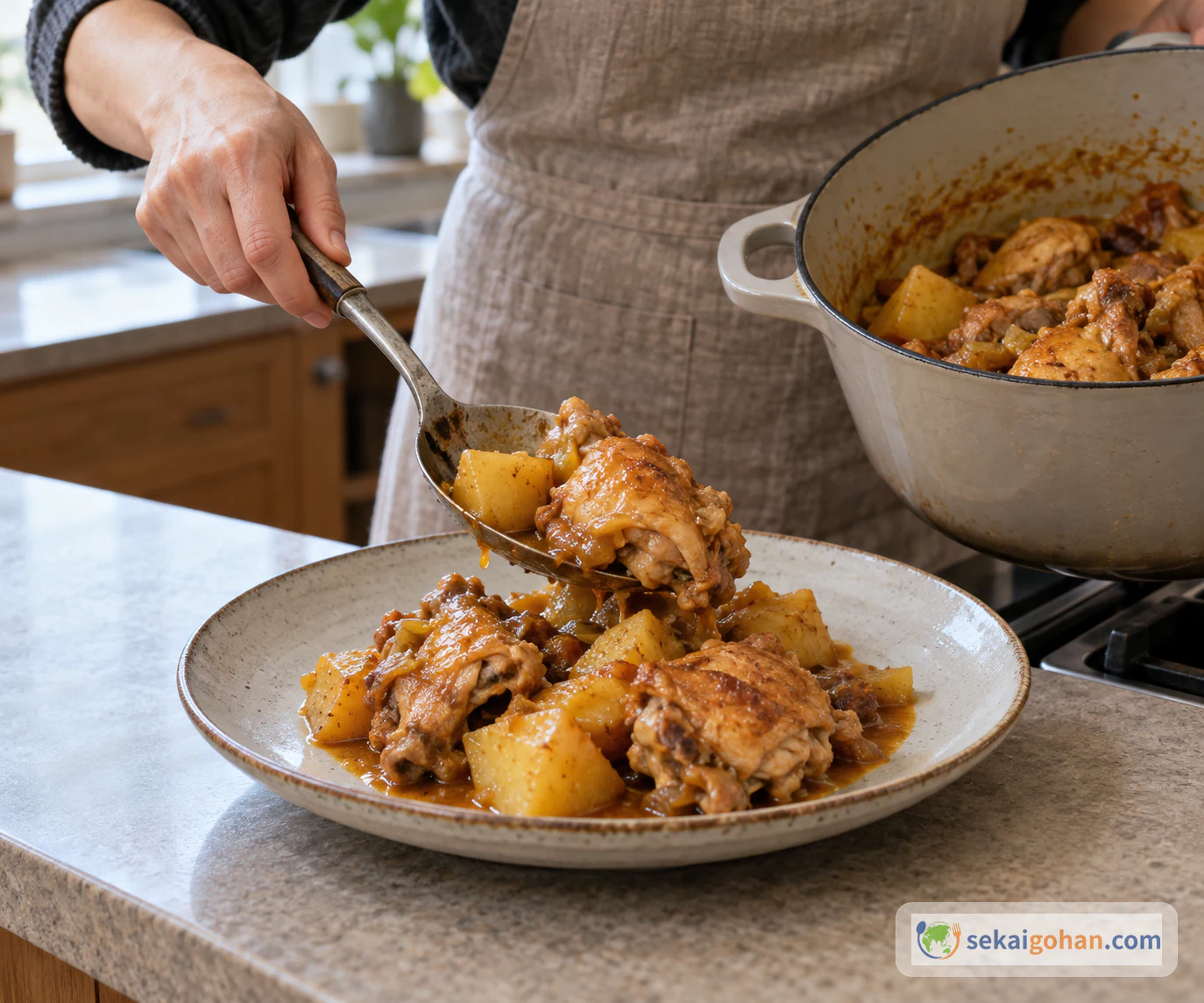
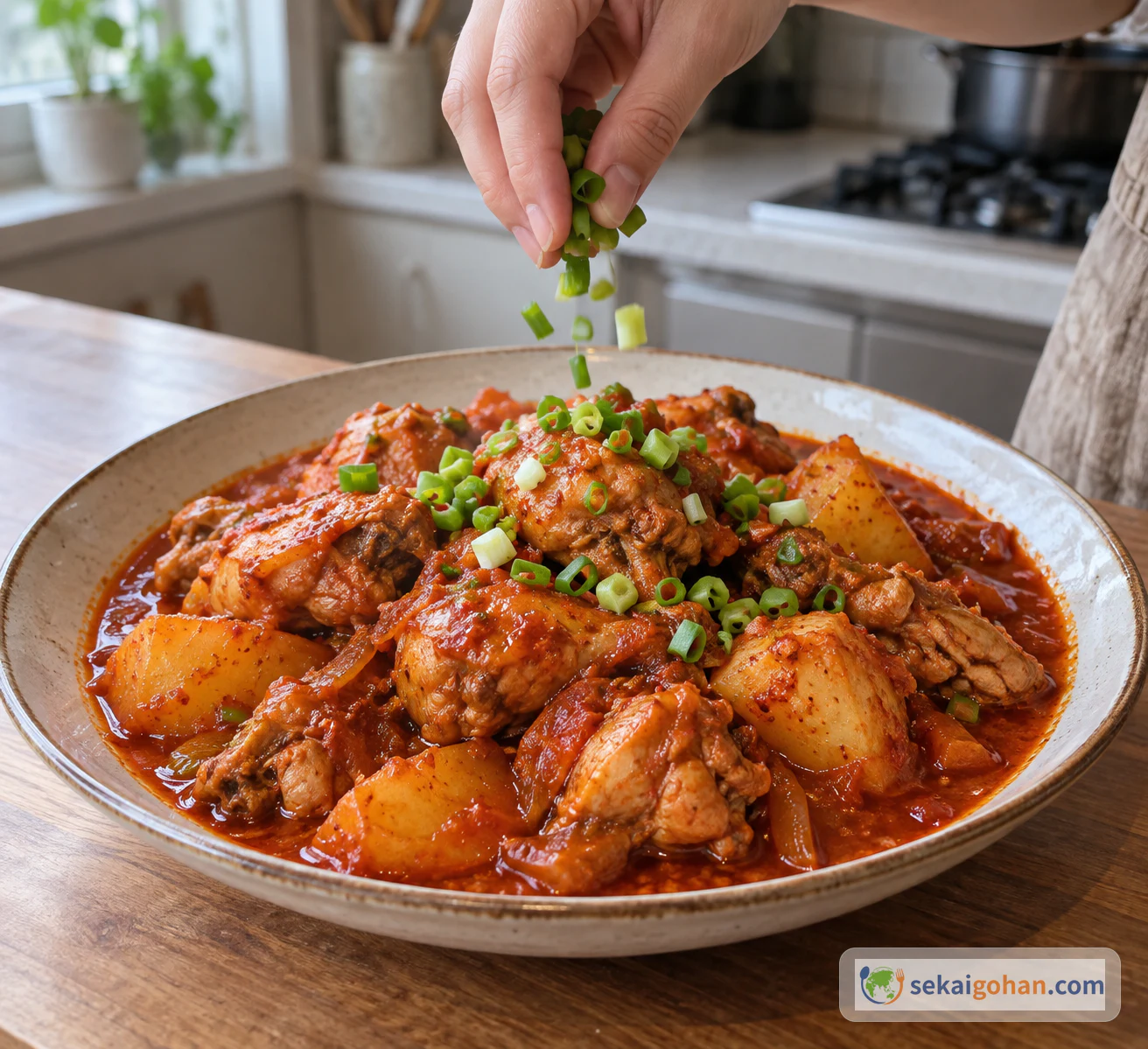
Daktoritang: chicken thighs and potatoes coated in red braising sauce, finished with a sprinkle of chopped green onion
Serves4 servings
CuisineKorean

Daktoritang (Dakbokkeumtang): Korean Spicy Braised Chicken with Potatoes

How to make daktoritang, also called dakbokkeumtang (닭도리탕 / 닭볶음탕): chicken thighs, potatoes and onions braised in gochujang and gochugaru. This guide follows Maangchi's traditional-style recipe through all eleven steps and explains the two names, safe handling of raw chicken, and how to choose Korean chili seasonings.

Cooking flow

Cooking steps

STEP 11 / 11

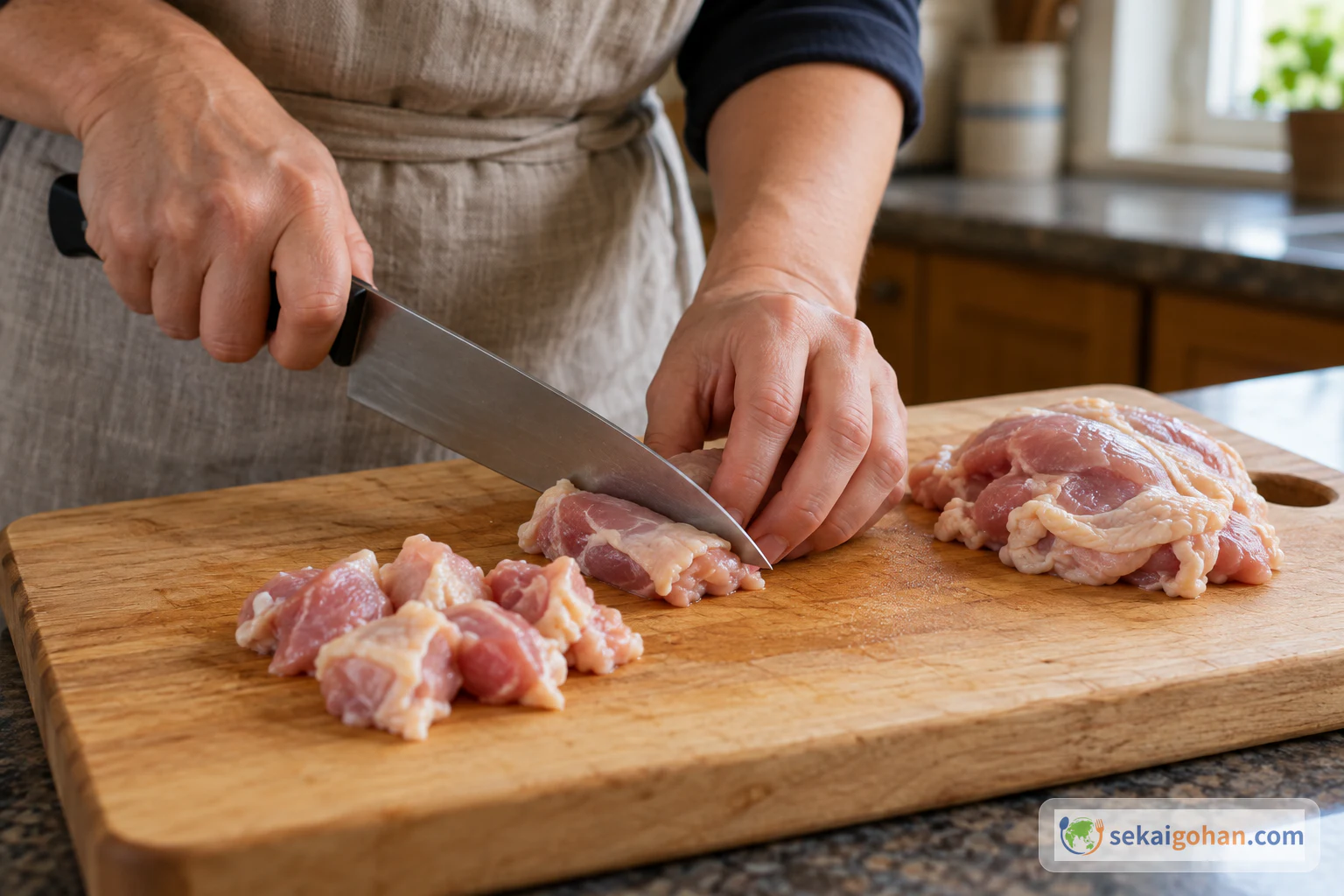
Cut the chicken thighs

Cutting chicken thighs into bite-sized pieces on a cutting board
Cut the thighs into bite-sized pieces; no rinsing

Cut the chicken thighs into bite-sized pieces. Do not rinse the raw chicken, because splashing water can spread bacteria. Use a clean board and knife for the raw chicken and keep them away from cooked food. Wash your hands and tools after handling it.

STEP 22 / 11

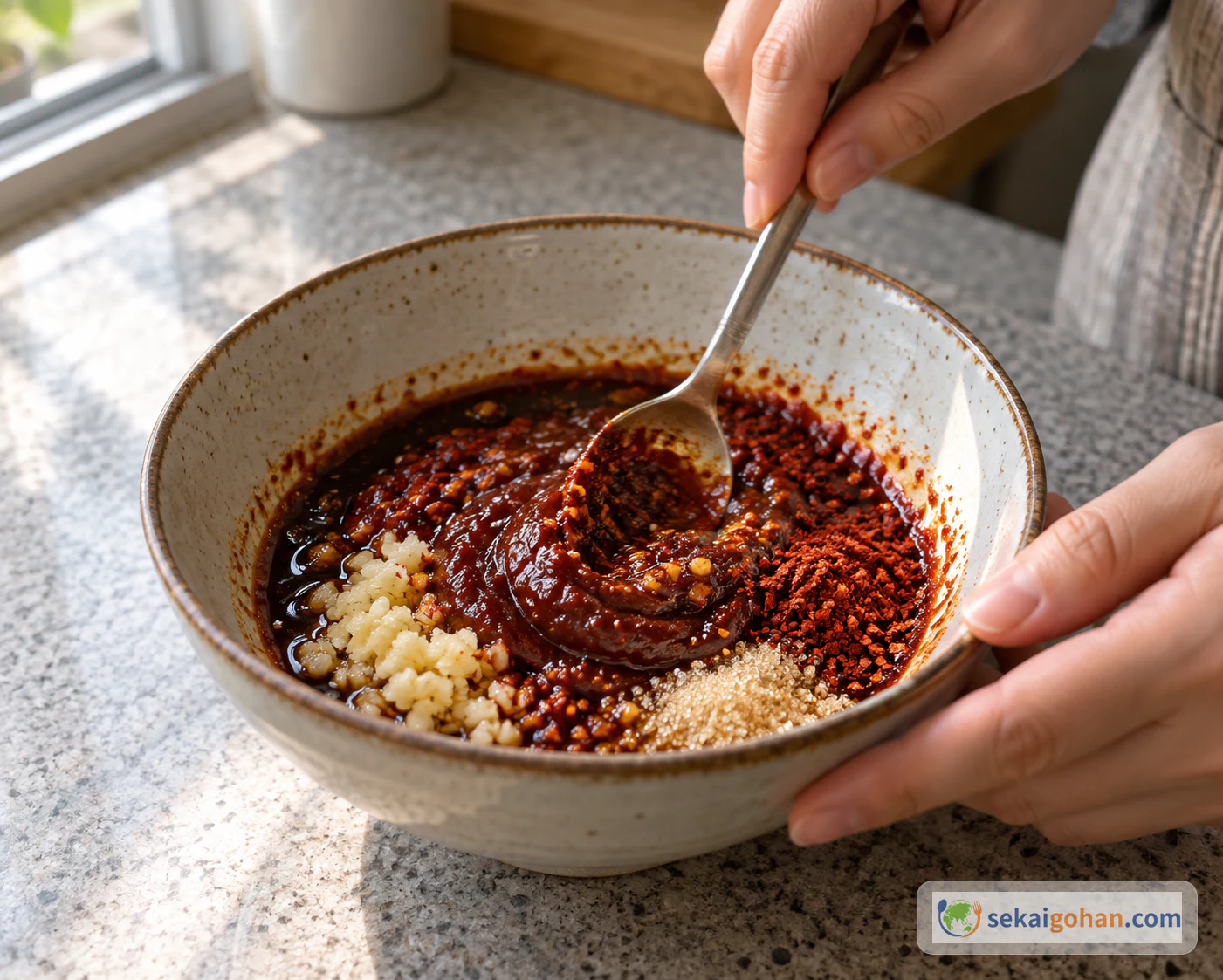
Mix the seasoning paste

Seasoning paste of soy sauce, garlic, gochujang, gochugaru and sugar being mixed
The five seasonings mixed into one paste

Combine the soy sauce, minced garlic, gochujang, gochugaru and sugar. Mix them into a paste.

STEP 33 / 11

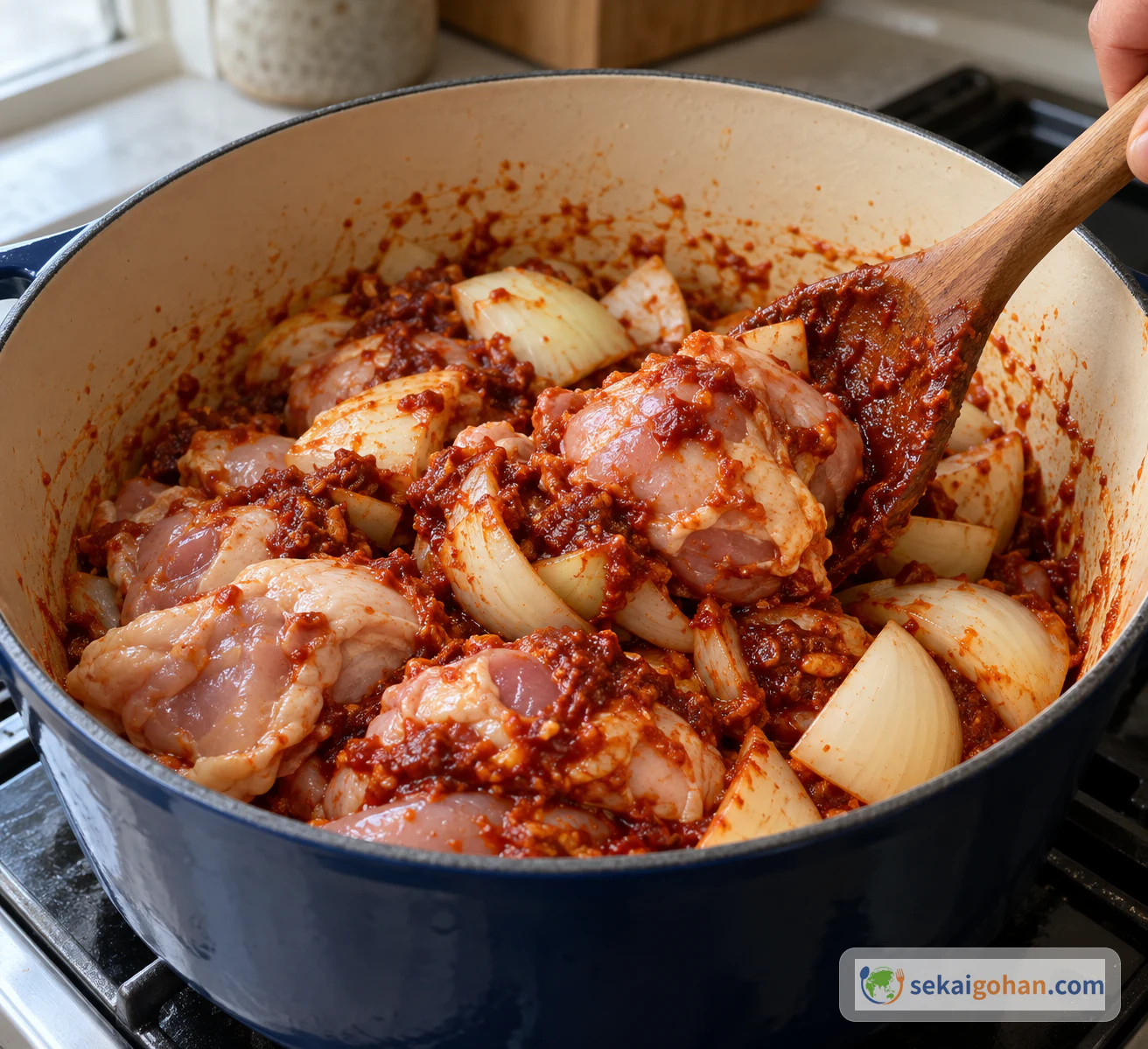
Coat the chicken and onions

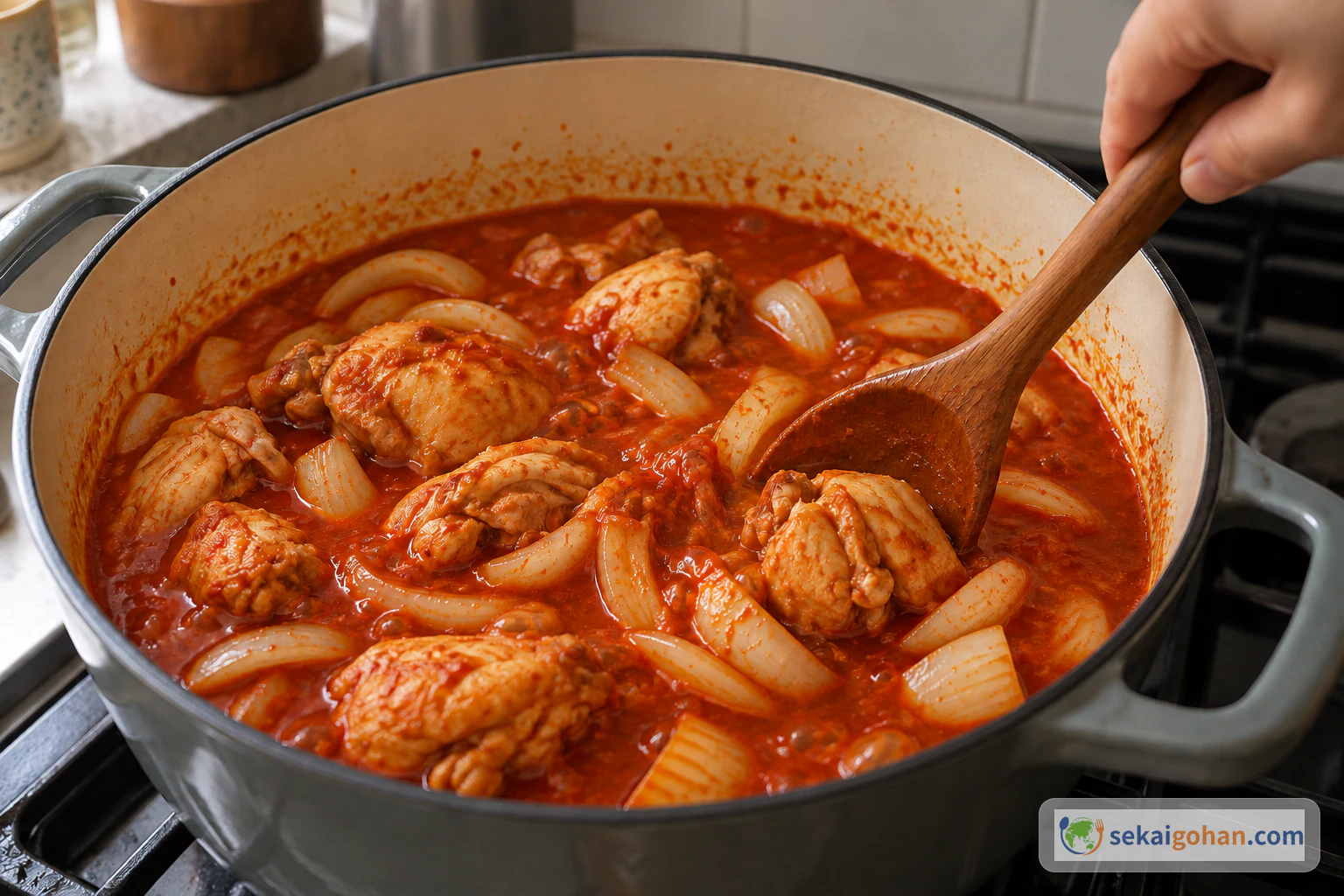
Coating chicken thighs and onion with the red seasoning paste using a spoon
Fold the chicken and onion through the paste

Put the chicken and onions in the pot with the paste. Mix with a spoon until everything is coated.

STEP 44 / 11

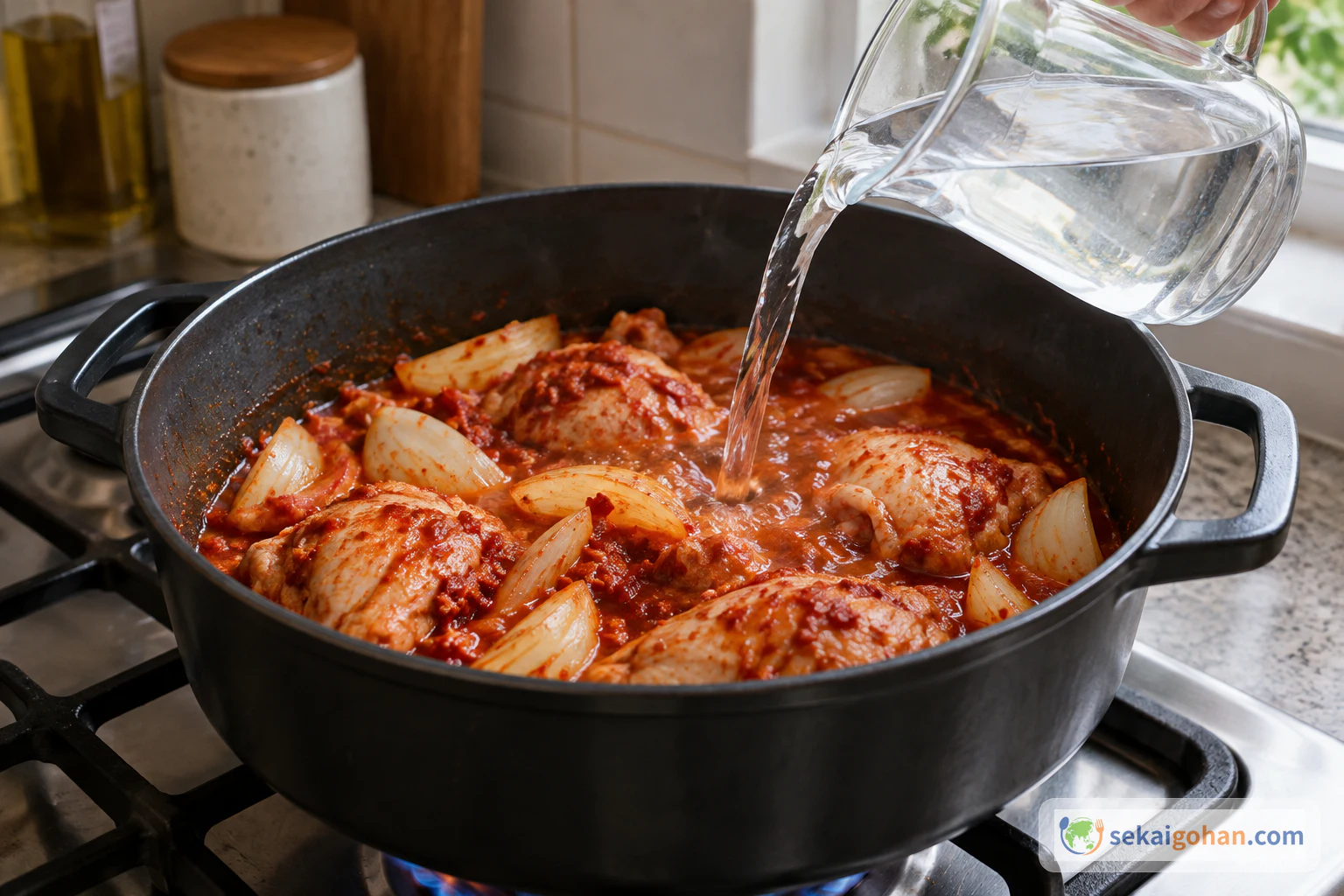
Add the water and mix

Pouring water into the pot of chicken and onion coated in red seasoning paste
Pour the water over the coated chicken and onions

Pour in 2 cups of water.

Stir so the paste loosens into the water and the broth runs through the chicken and onions.

Stirring the watered-down red broth through the chicken and onion
Mix until the paste and water become one broth
STEP 55 / 11

Cook over medium-high heat for 20 minutes

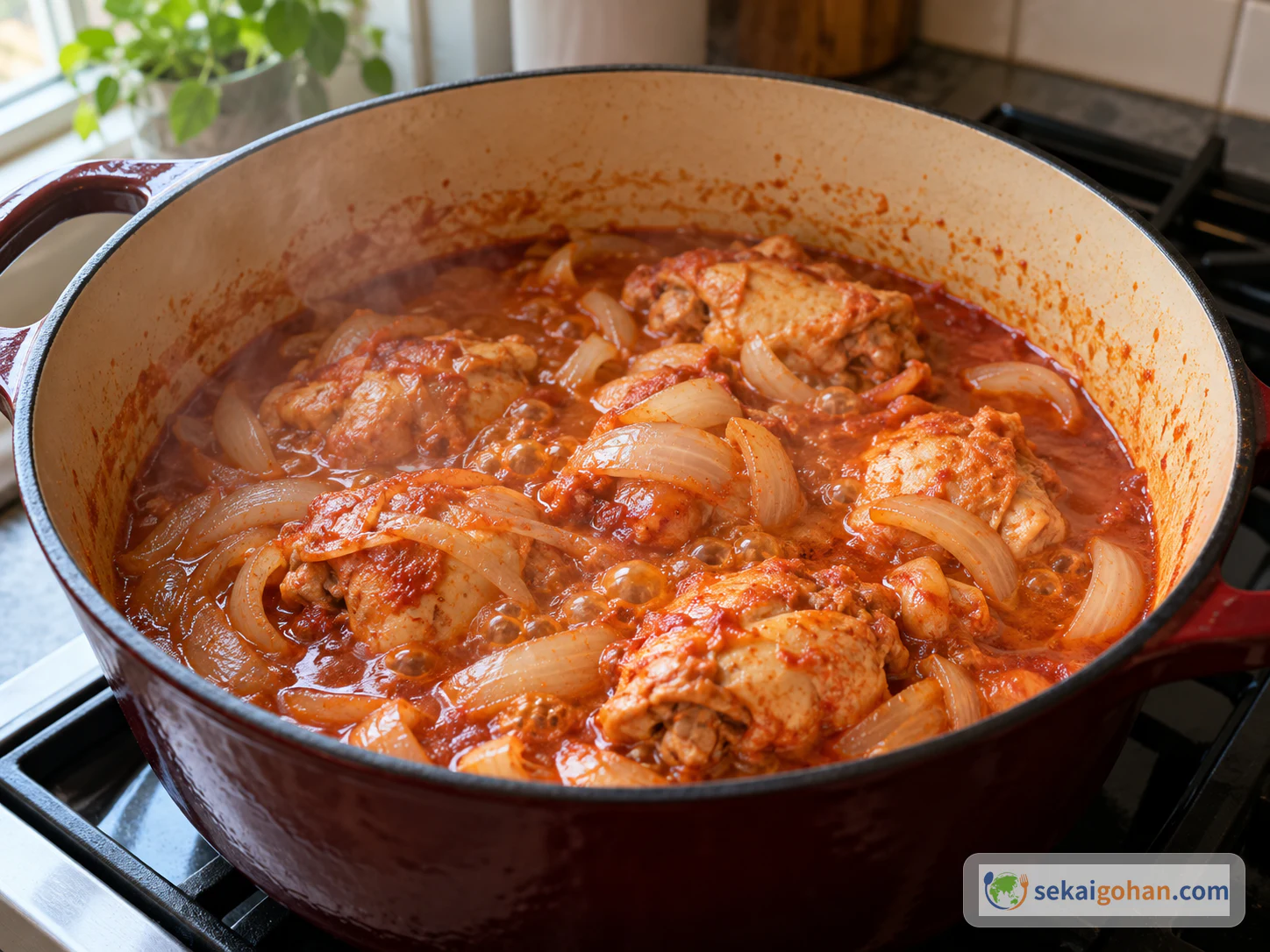
A pot of chicken thighs and onion beginning to simmer in red broth
The first stage: chicken and onion only

Cook over medium-high heat for 20 minutes.

STEP 66 / 11

Prepare the potatoes while the chicken cooks

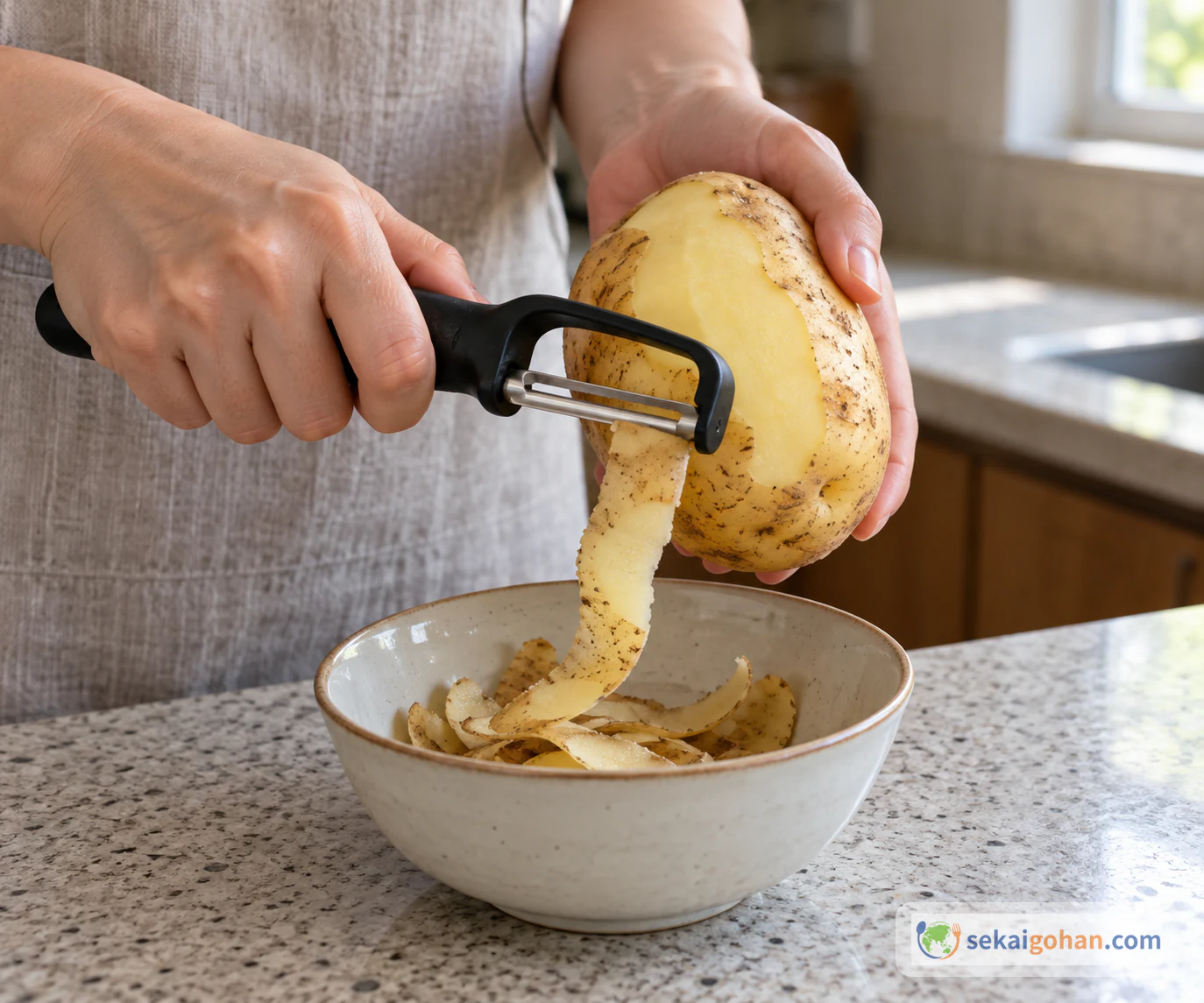
Peeling a potato with a vegetable peeler
Peel the potatoes while the first stage cooks

While the chicken cooks, peel the potatoes.

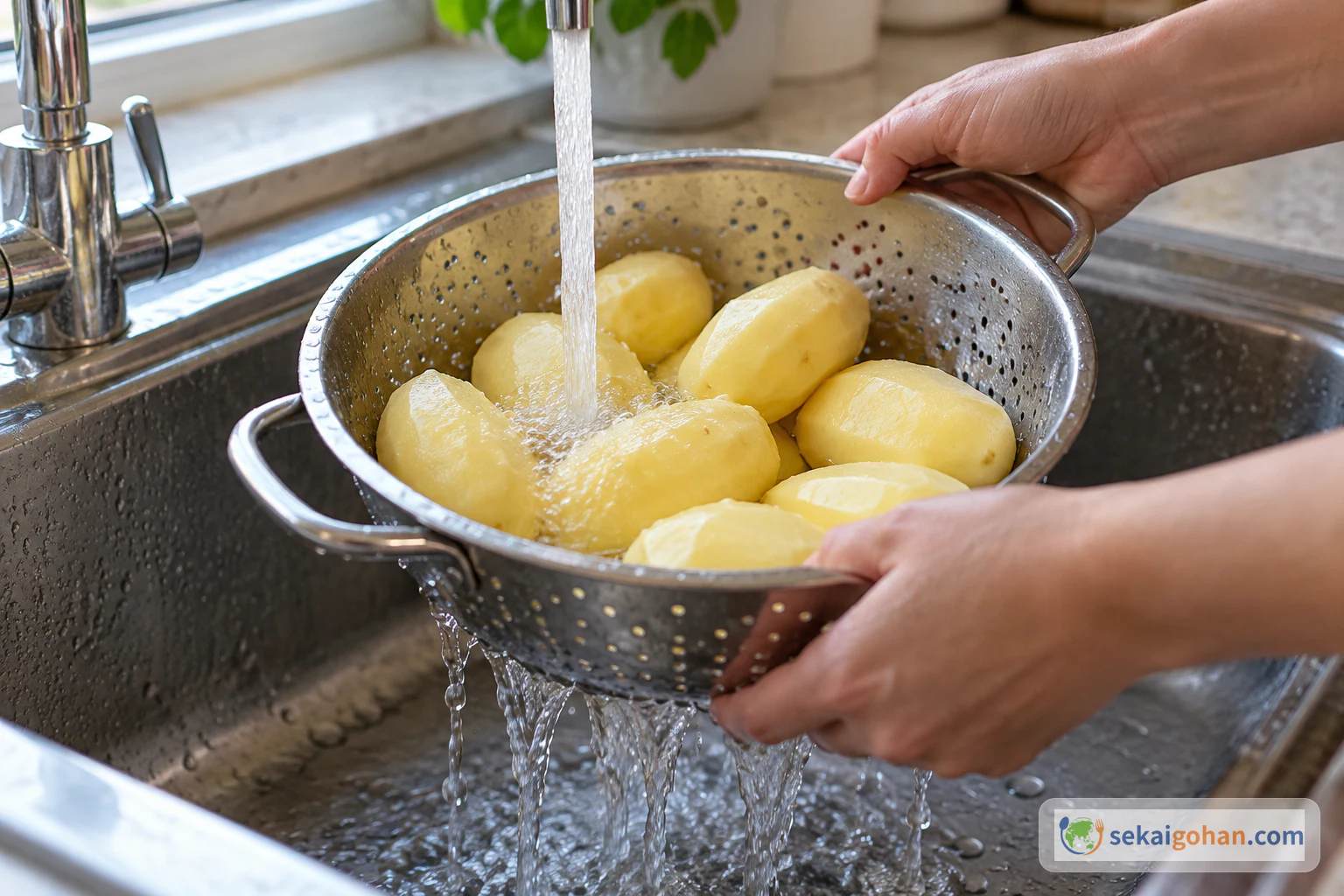
Rinse the peeled potatoes in water and drain them.

Rinsing peeled potatoes in water and draining them in a colander
Rinse and drain the peeled potatoes

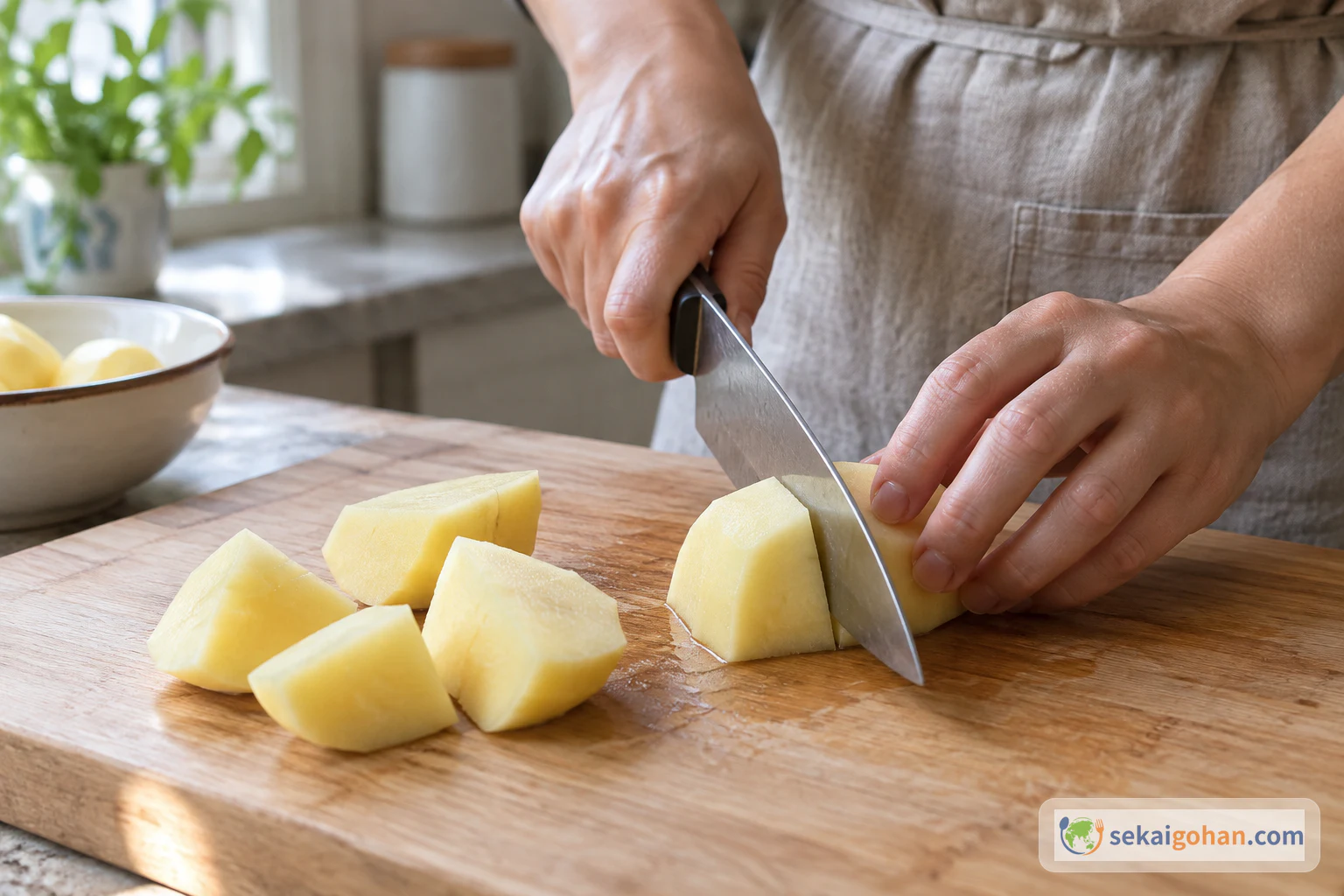
Cut them into large chunks about 2 inches across.

Cutting peeled potatoes into large chunks
Large chunks, about 2 inches across
STEP 77 / 11

Chop the green chili and green onion separately

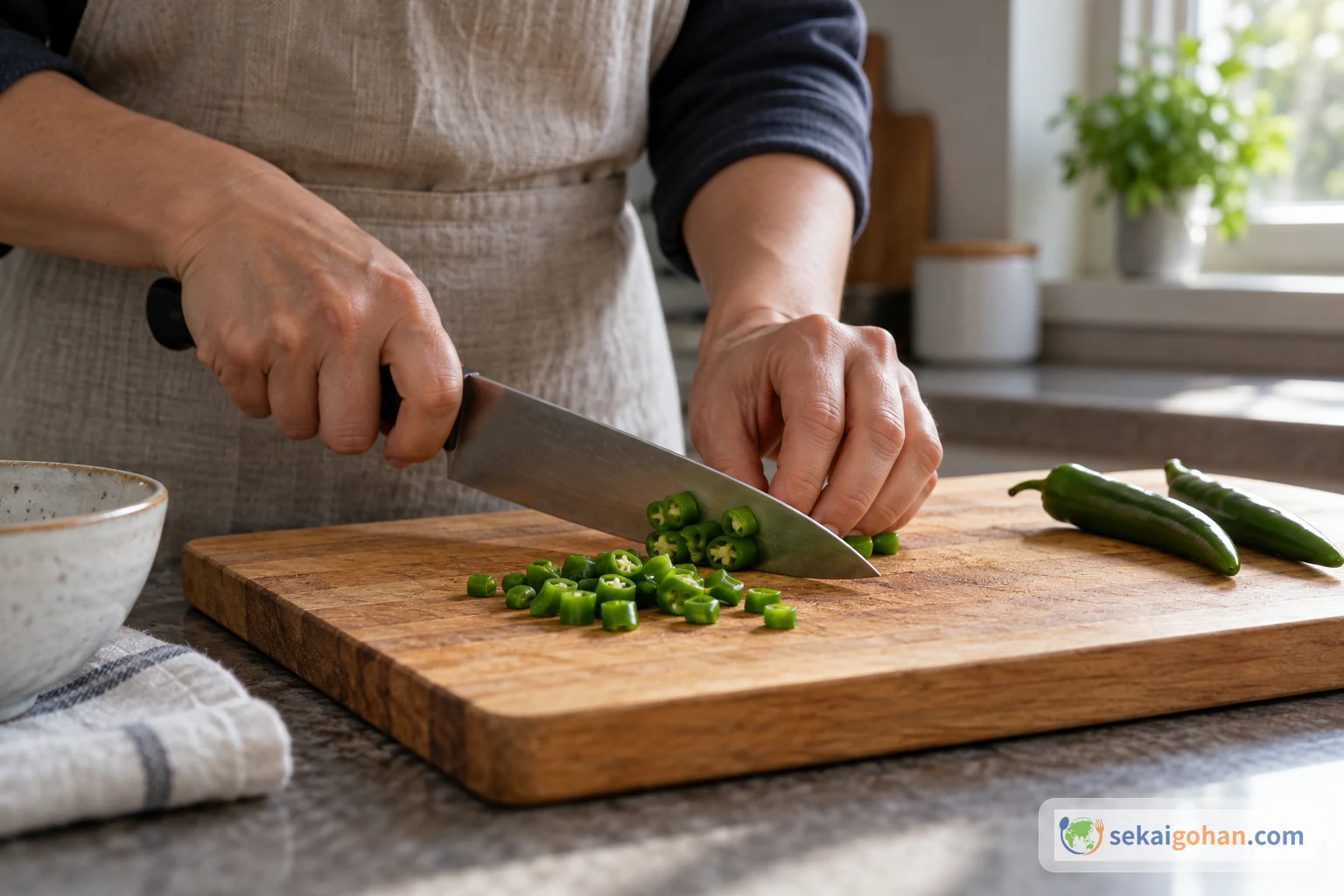
Chopping green chili peppers into small pieces to set aside
The green chili goes in with the potatoes

Chop the 2 green chili peppers into small pieces and set them aside.

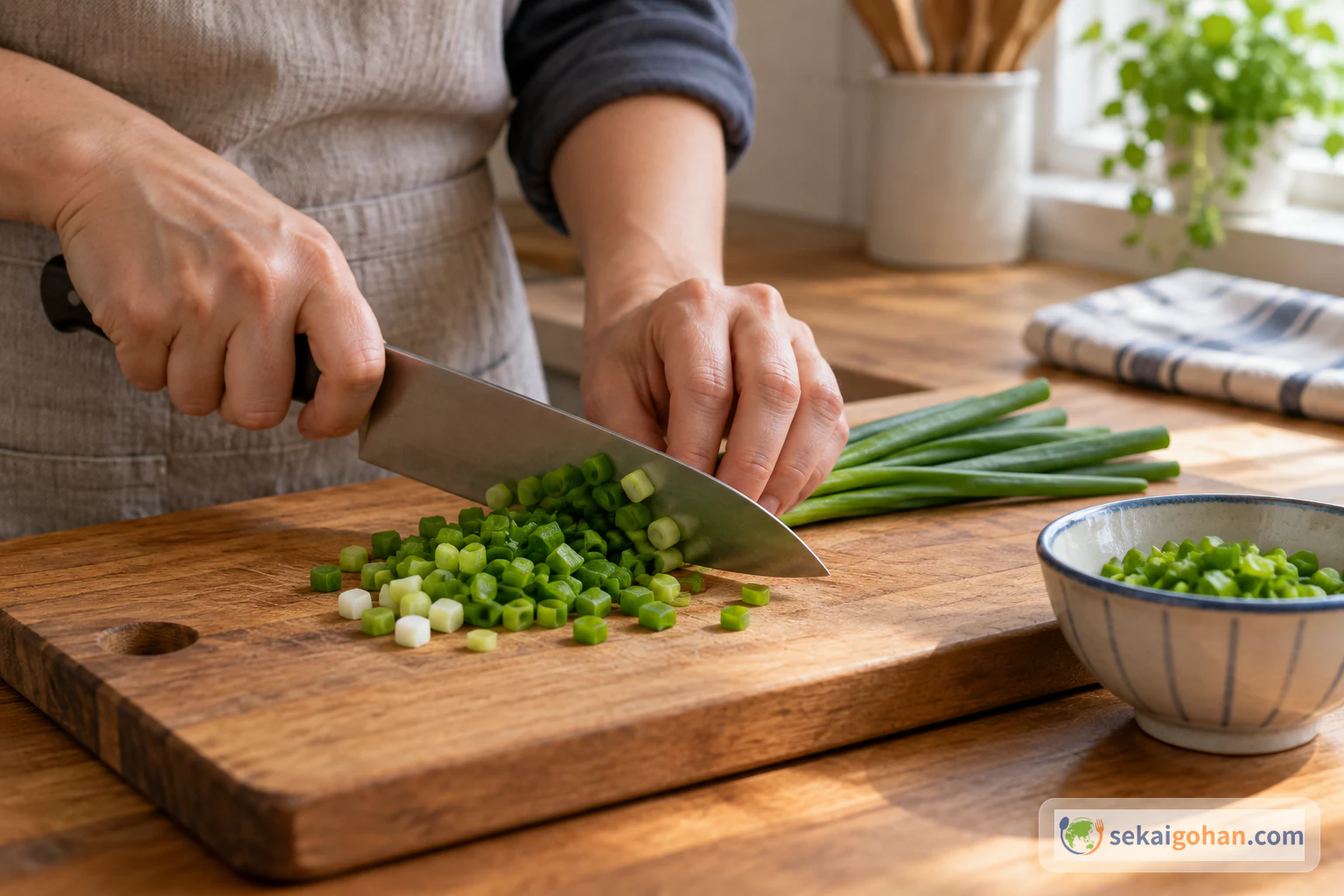
Chop the 2 green onions into small pieces and keep them in a separate bowl. They are for the finish.

Chopping green onion into small pieces and setting it aside in a separate bowl for finishing
Keep the green onion apart until the end
STEP 88 / 11

Add the potatoes and green chili, stir and cover for 20 minutes

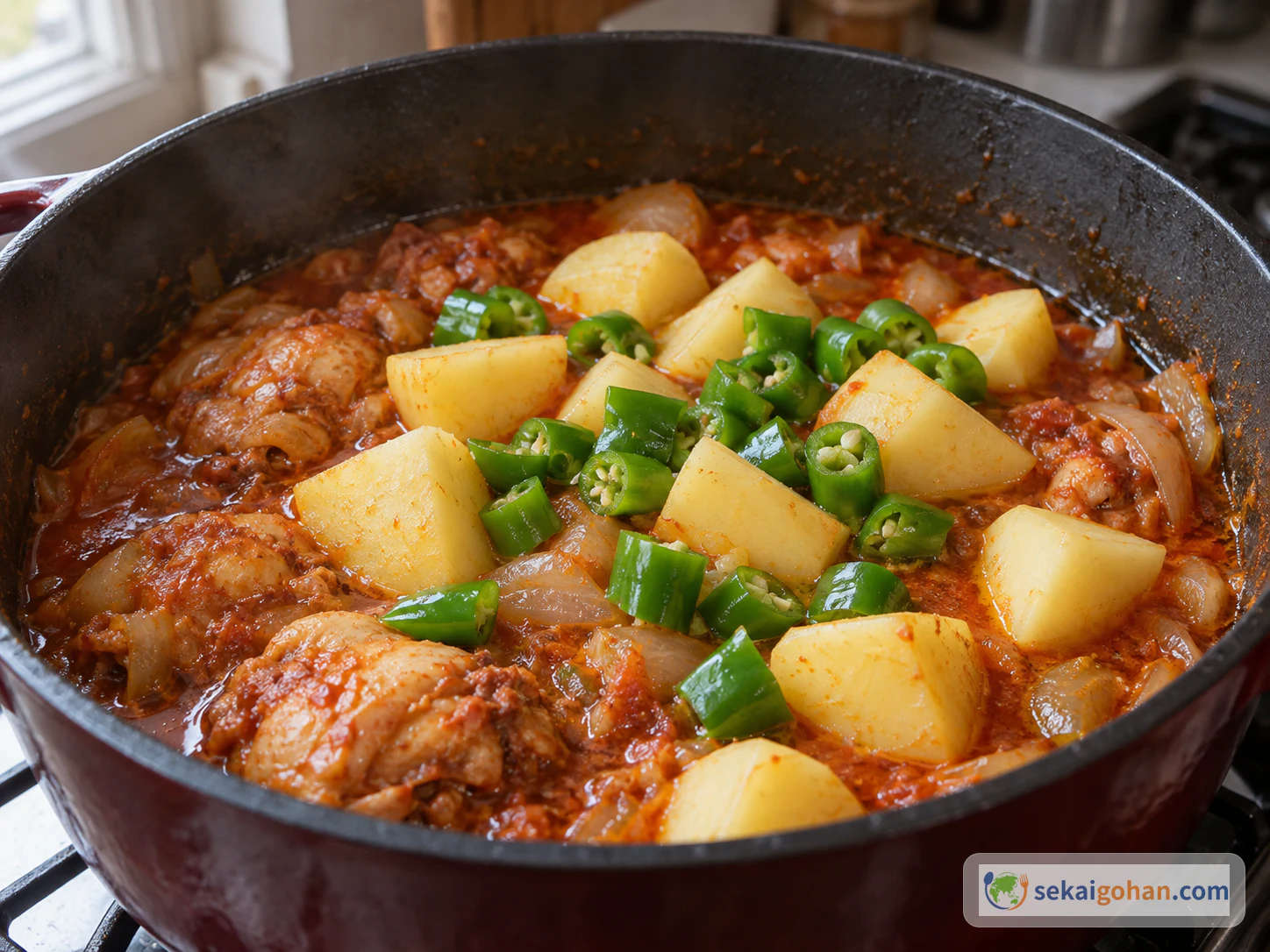
The pot of simmered chicken and onion with potatoes and green chili just added
Only the potatoes and green chili go in now

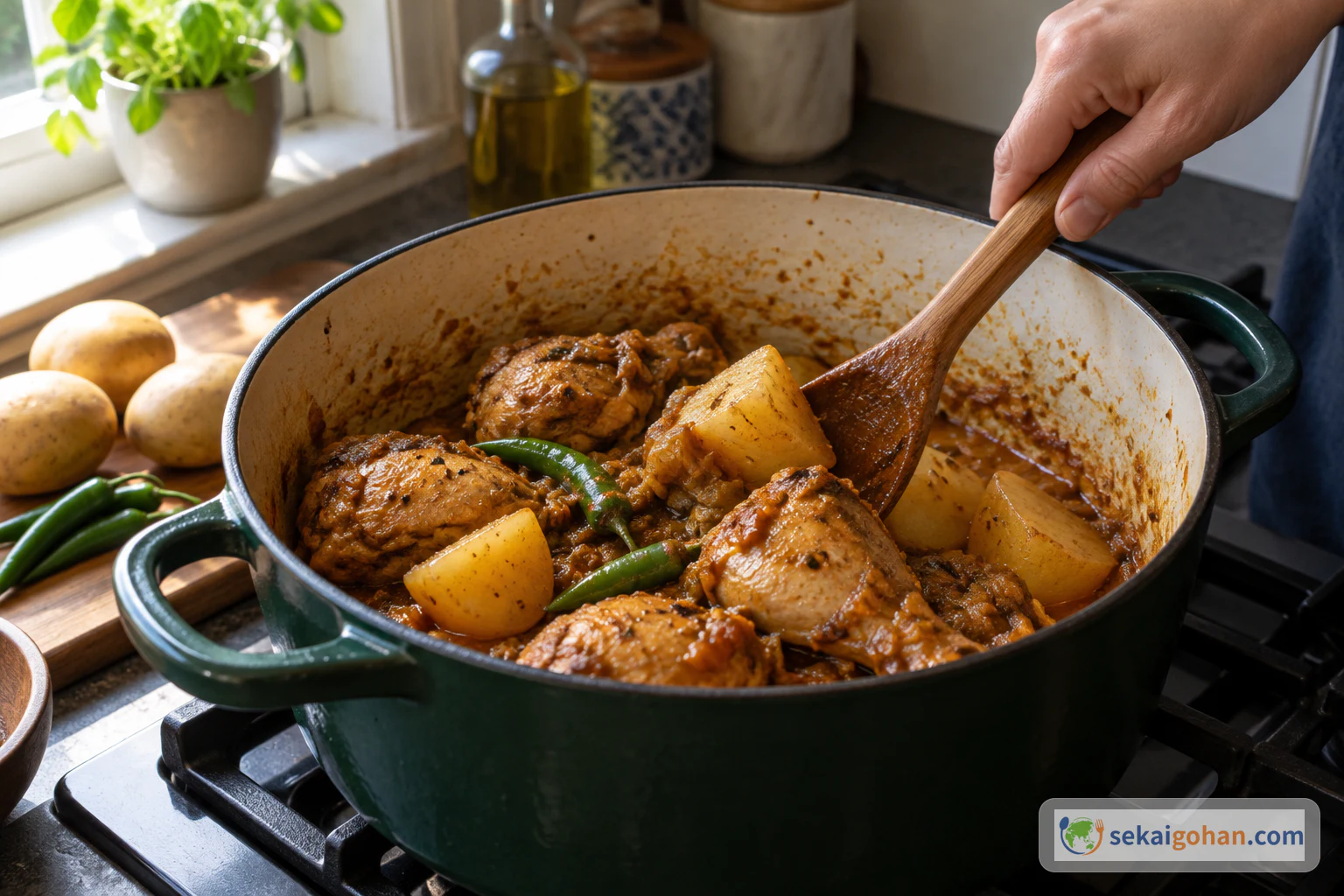
When the first 20 minutes are up, add the potatoes and green chili to the pot. Keep the green onion out.

Stir them into the chicken and broth.

Stirring potatoes and green chili into the chicken and broth with a spoon
Turn the potatoes through the broth

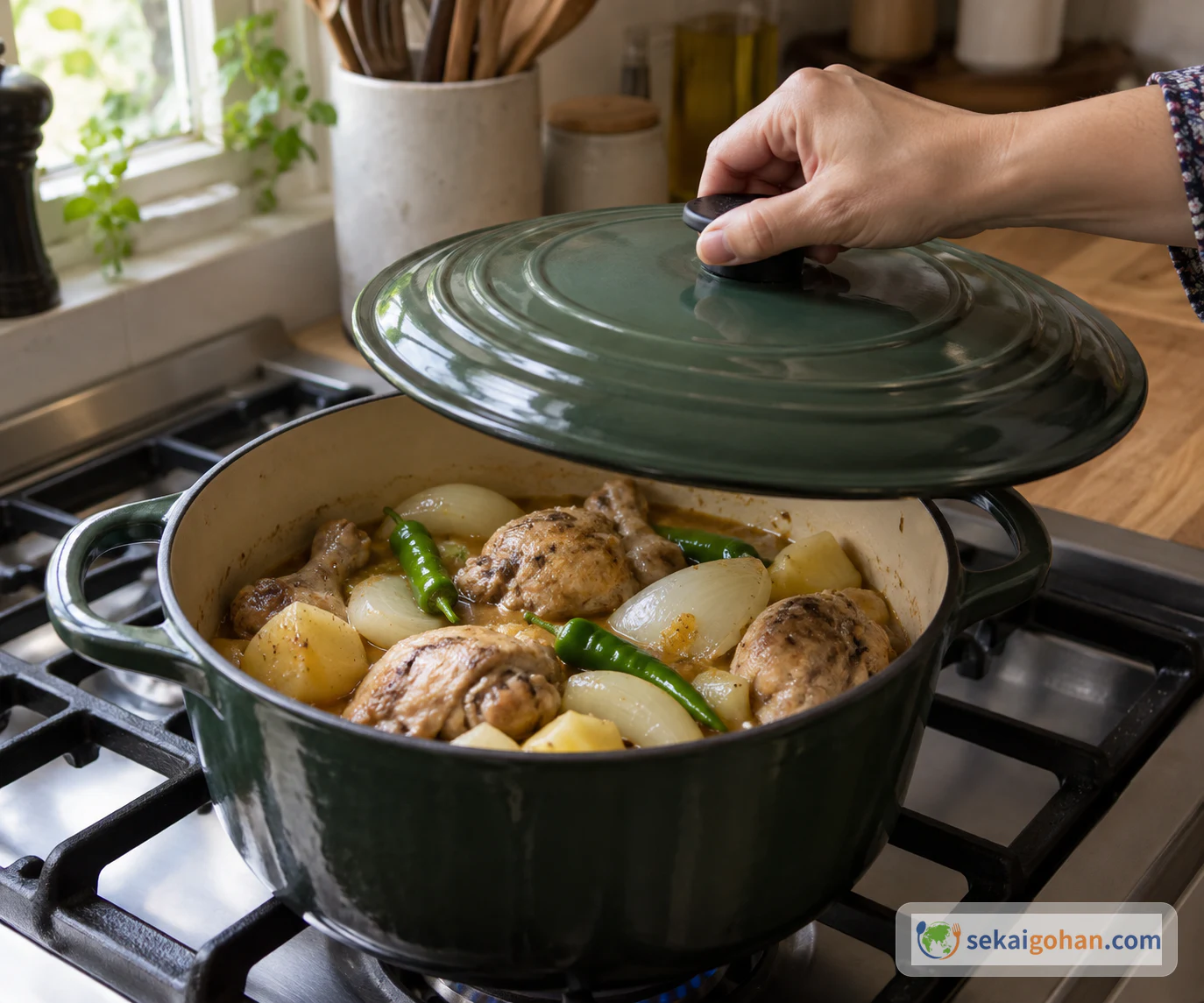
Cover the pot and cook for 20 minutes more.

Putting the lid on the pot of chicken, potatoes and green chili
Cover for the second stage
STEP 99 / 11

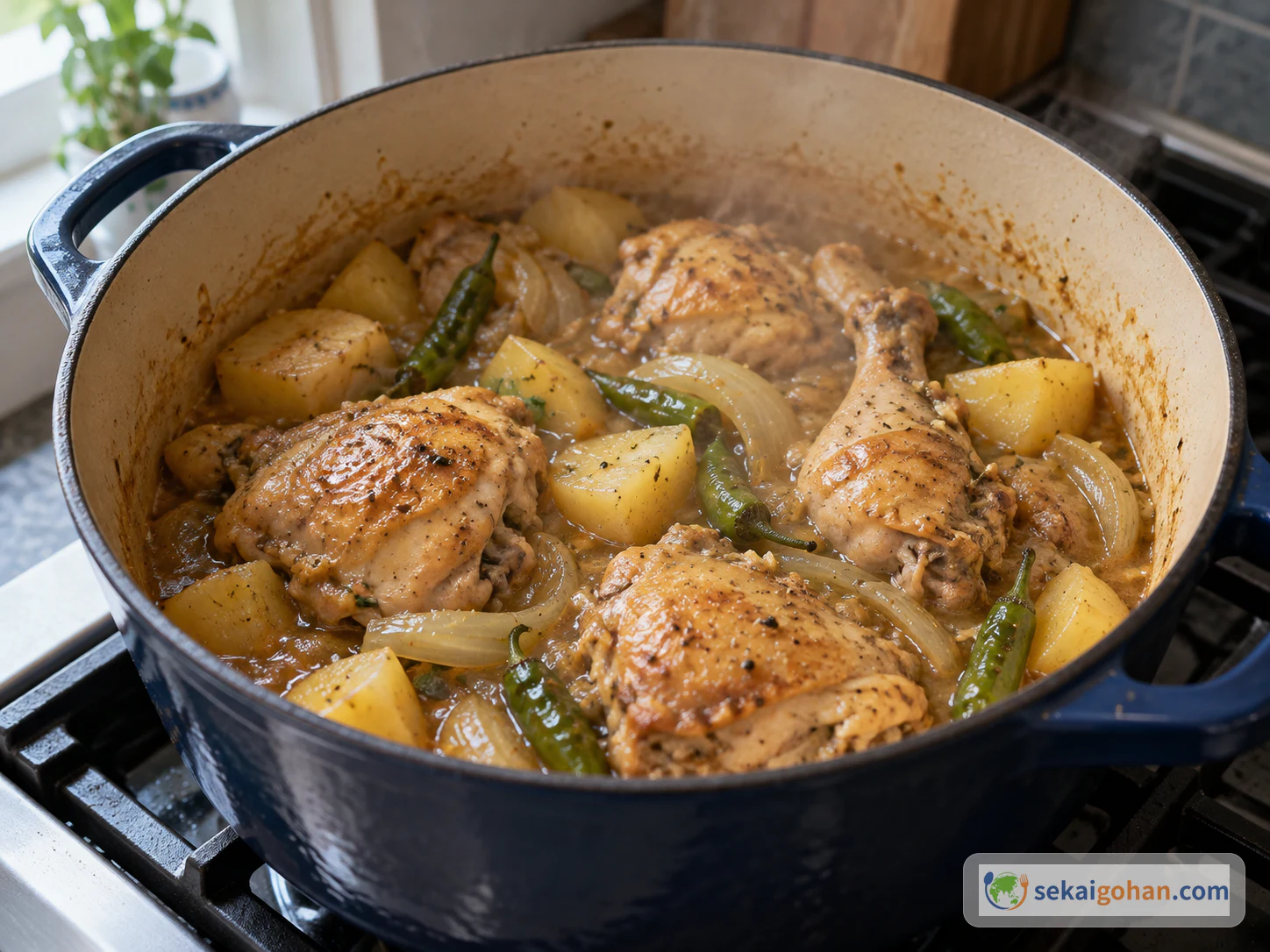
Uncover and reduce for 3–5 minutes

Reducing the broth of chicken and potatoes in the uncovered pot
Lid off: let the broth reduce and thicken

Take off the lid and cook for 3 to 5 minutes more. Some of the broth evaporates and the sauce thickens slightly.

STEP 1010 / 11

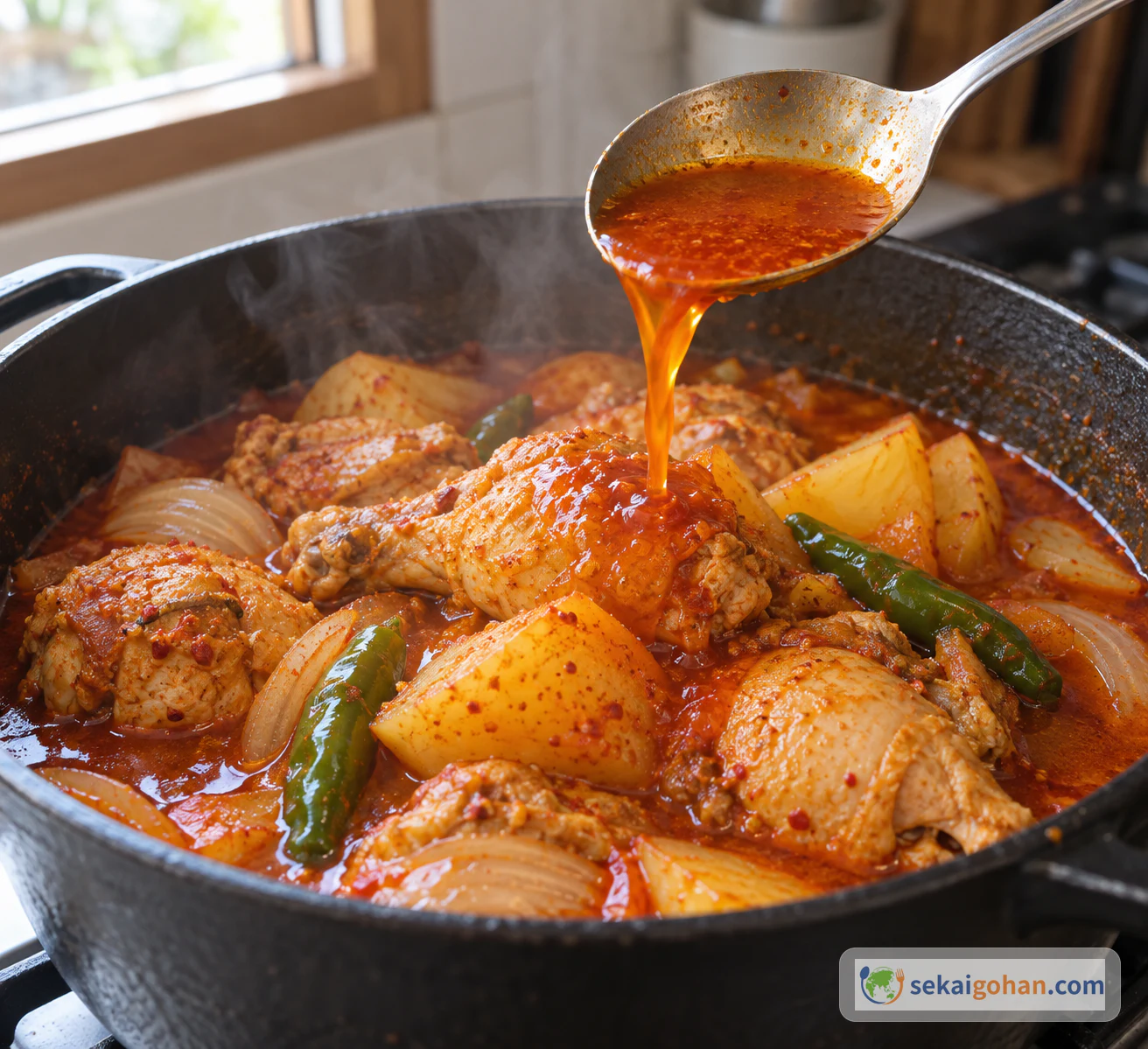
Baste with the broth from the bottom of the pot

Spooning broth from the bottom of the pot over the chicken and potatoes
Spoon the broth from the bottom over the top

While the sauce reduces, scoop up broth from the bottom of the pot from time to time. Pour it over the chicken and potatoes on top.

STEP 1111 / 11

Plate and finish with green onion

Transferring the chicken, potatoes and sauce from the pot to a large plate
Move everything to one large plate

Transfer the chicken, potatoes and sauce to a large serving plate.

Sprinkle the chopped green onion over the top and serve. Rice on the side goes well with it.

Sprinkling the reserved green onion over the plated daktoritang
The green onion goes on last, uncooked
0 / 0
Ingredients

Ingredients

1 / 1

Ingredients

Ingredient Amount Role
Chicken thighs 1 kg (about 2 lb) The main ingredient. Cut into bite-sized pieces
Medium onions 2 (about 2 cups) Cut into pieces. Simmered with the chicken from the start
Large potatoes 3 (about 600 g / about 1.5 lb) Peeled, rinsed and cut into large chunks about 2 inches across. Added halfway through
Green chili peppers 2 Chopped small. Added with the potatoes
Green onions 2 Chopped small. Sprinkled on at the very end
Soy sauce 1/4 cup For the seasoning paste
Minced garlic 1/4 cup For the seasoning paste
Gochujang (고추장), Korean chili paste 1/4 cup For the seasoning paste
Gochugaru (고춧가루), Korean chili flakes 1/4 cup For the seasoning paste. Red color and heat
Sugar 1 tablespoon For the seasoning paste
Water 2 cups Poured over the coated chicken and onions to make the braising broth
0 / 0

Potatoes soaked in a red, spicy broth, eaten beside a bowl of plain rice: that's the reason to make this pot. Daktoritang is a Korean braise of chicken thighs, potatoes and onions, simmered in a sauce of soy sauce, garlic, gochujang and gochugaru until the broth turns deep red. The heat is real, but the potatoes soften it as they drink up the sauce. This version serves 4 and takes 45 to 60 minutes, all in one pot.

About Daktoritang

One Dish, Two Names

You'll see this dish under two names. Dakdoritang (닭도리탕), also spelled daktoritang, is one. Dakbokkeumtang (닭볶음탕) is the other, and both mean the same braise.

Where the word "dori" comes from is unsettled. The dictionary's etymology entry shows a form resembling tori (鳥, "bird") with 湯 ("soup"), but offers no definitive explanation.

How Versions Differ

There are two ways to cook it. One boils the chicken directly with water and seasoning; the other stir-fries the chicken, seasoning and vegetables before the water goes in. This recipe takes the first route, so there's no stir-frying step.

Beyond that, recipes vary a great deal. One uses a whole chicken and a short marinade, pre-simmers the chicken, cooks the potatoes separately and adds the sauce in two stages before the final braise. A chicken-breast version uses milk, apple, ginger, black pepper and kosher salt, with slits cut into the meat.

Daktoritang and Other Korean Chicken Dishes

Daktoritang is easy to confuse with its neighbors. Andong jjimdak is a soy-based braise, dakgalbi is stir-fried on a griddle, and samgyetang is a whole-chicken soup. For more dishes from the same cuisine, see our page on Korea.

Ingredients for 4 Servings
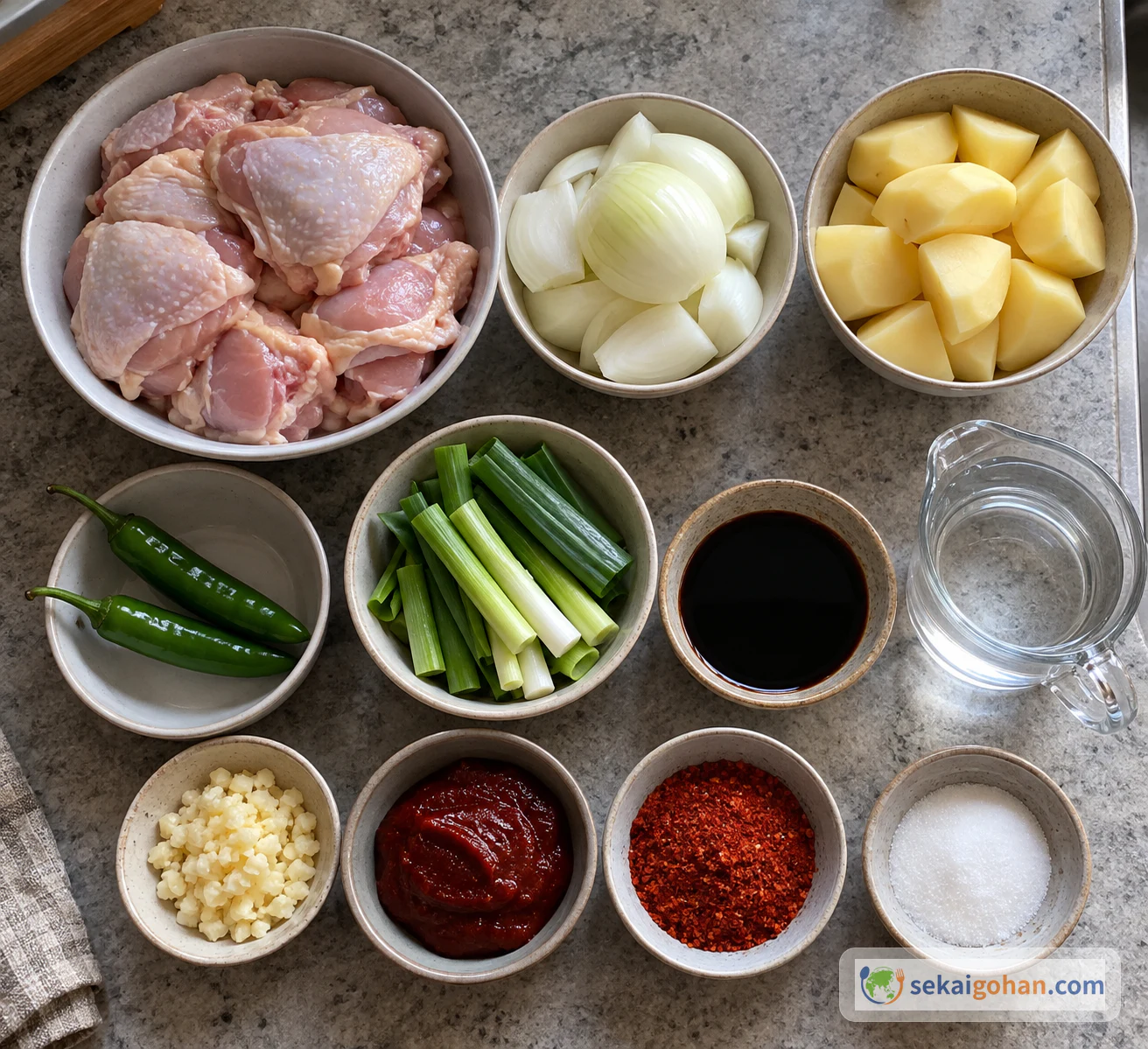
Chicken thighs, onions, potatoes, green chili peppers, green onions, soy sauce, garlic, gochujang, gochugaru, sugar and water laid out
Everything that goes into the pot, plus the green onion for the finish

Measure each of the four quarter-cup seasonings on its own. Gochujang and gochugaru are separate ingredients, and the recipe needs both.

Equipment

  • Pot with a lid
  • Cutting board and knife for the raw chicken, kept clean and separate
  • Cutting board and knife for the vegetables
  • Vegetable peeler
  • Colander
  • Small bowl and spoon for the paste
  • Spoon for mixing and basting
  • Large serving plate
  • Digital food thermometer, to check the chicken is done

Choosing Ingredients for Daktoritang

Outside Korea, the trickiest part is finding the two chili seasonings. Gochujang and gochugaru do different jobs. Gochujang is a paste and gochugaru is a dried chili powder or flake, so use one of each rather than doubling either. Look for them by name at Korean or Asian grocers. Heat varies from product to product, so if you want a milder or hotter pot, read the package and choose accordingly, keeping the amounts the same.

Chicken thighs are the cut used here. Use whatever thighs you can get and cut them into bite-sized pieces. Raw chicken also needs careful handling, which starts before it ever reaches the pot.

Skip the rinse

Do not rinse the chicken after cutting it, because splashing water can spread bacteria. The potatoes are still rinsed.

Green chili peppers. Ordinary fresh green chilies work well; pick a heat you're comfortable with.

Allergens

Soy sauce and gochujang are soy-based seasonings. Products differ in what else they contain, such as wheat, so check the ingredient and allergen labels on the brands you buy.

Method: One Pot, Two Stages of Simmering

How the pot builds

Chicken and onion simmer first. Potatoes and green chili join for a covered second stage. The lid comes off at the end to thicken the broth. The green onion never goes into the pot.

Daktoritang Troubleshooting

Situation Likely reason What to do
The green onion went into the pot It was chopped or added together with the green chili Keep the two in separate bowls in step 7. The green chili goes in with the potatoes; the green onion goes on only at the plate
The sauce is still thin at the end The lid stayed on, or the final stage was cut short Uncover for the 3–5 minute reduction and keep spooning broth over the top
Only one of the two chili seasonings was used The recipe needs both Gochujang and gochugaru are both needed, 1/4 cup each
Not sure the chicken is cooked Time and color alone cannot confirm it Use a food thermometer (see below)

Handling and Cooking the Chicken Safely

Don't rinse poultry; splashing water can spread bacteria. Keep raw and cooked food apart, and work with clean hands, equipment and tools.

Cook the chicken pieces to 74°C / 165°F, checking with a digital food thermometer and keeping the tip away from bone. Color, broth thickness and elapsed time won't tell you the chicken is safe, but a thermometer will.

Serving, Storing and Varying Daktoritang

Set out plain rice alongside the pot. At the end of the meal, spoon the last of the potatoes and broth over the rice; for many people, that's the best bite of the whole thing.

Refrigerate leftovers within 2 hours, keeping them at or below 4°C. Use them within 2–4 days, and reheat to 74°C / 165°F.

You can adjust the pot without changing its character:

  • Chicken: Use 2.25 lb (1 kg) of chicken wings in place of the thighs.
  • Onions: Use 3 medium onions instead of 2.
  • Potatoes: Use 4 large potatoes instead of 3.

Frequently Asked Questions

Are daktoritang and dakbokkeumtang different dishes?

No. Dakdoritang (닭도리탕) is another name for dakbokkeumtang (닭볶음탕).

Should I wash the chicken?

No. Splashing water can spread bacteria, so leave the cut chicken unwashed. The peeled potatoes are still rinsed.

When exactly should I baste?

During the uncovered reduction in step 10, spoon the broth from the bottom over the top from time to time.
Sources