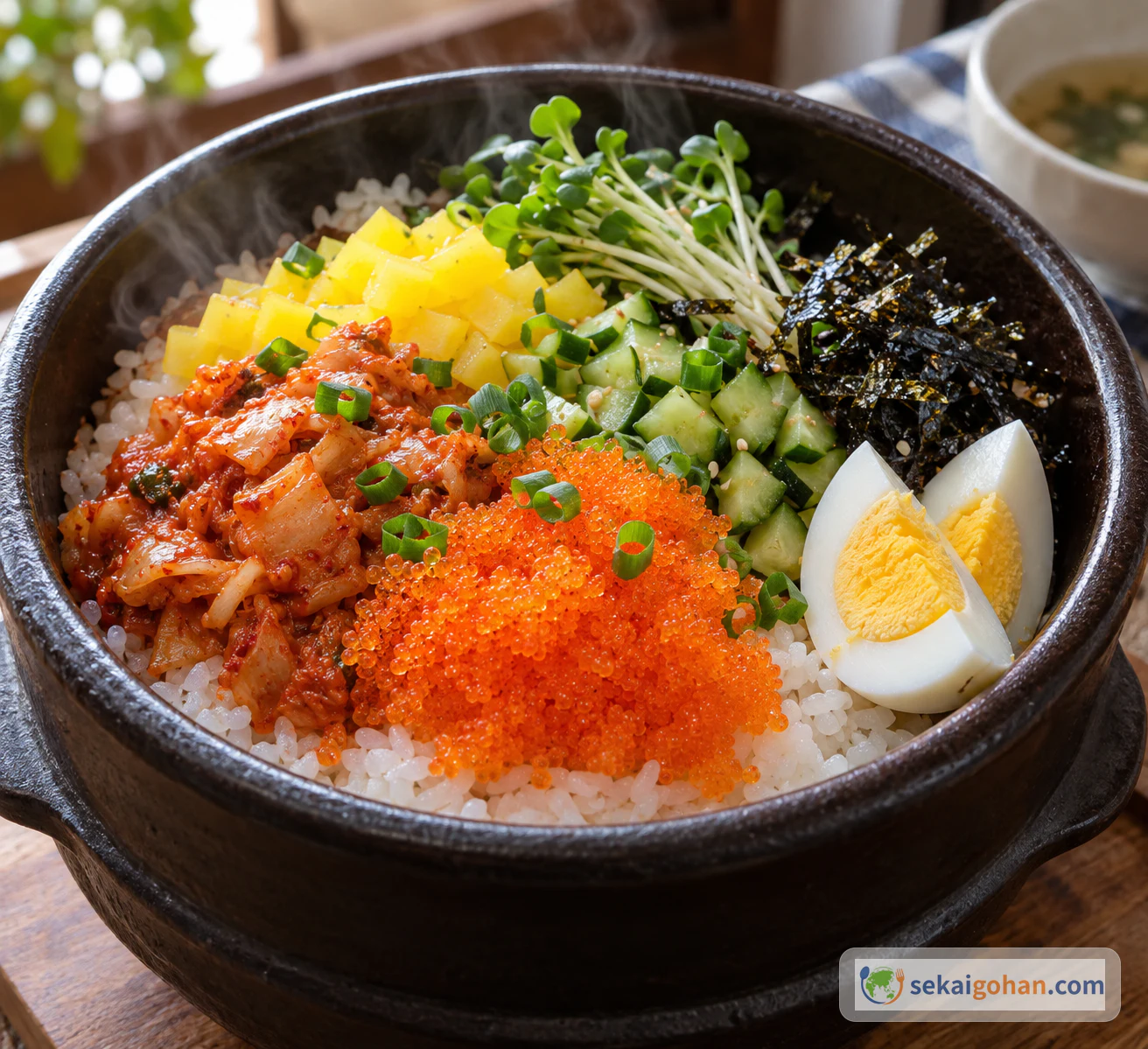
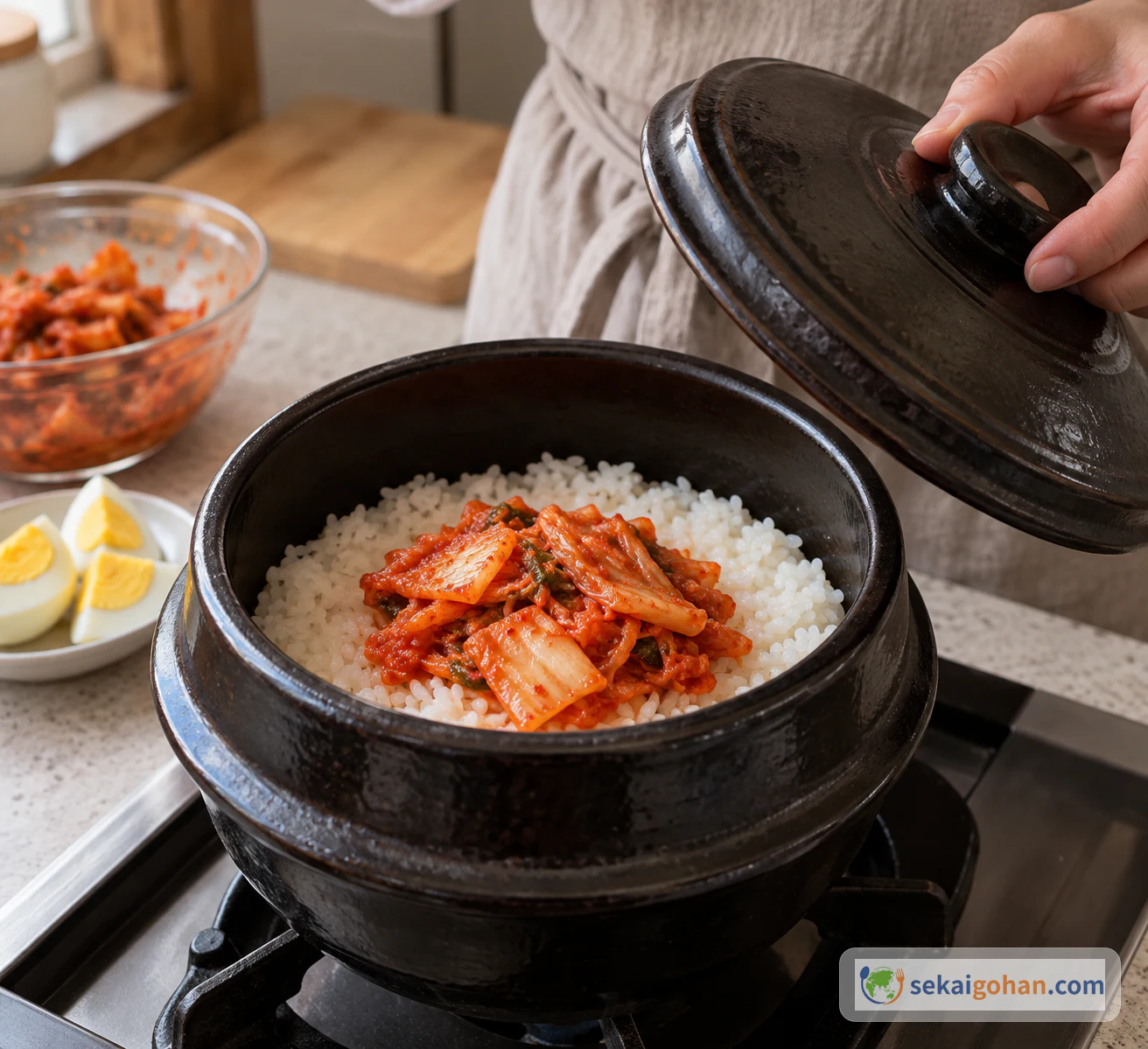
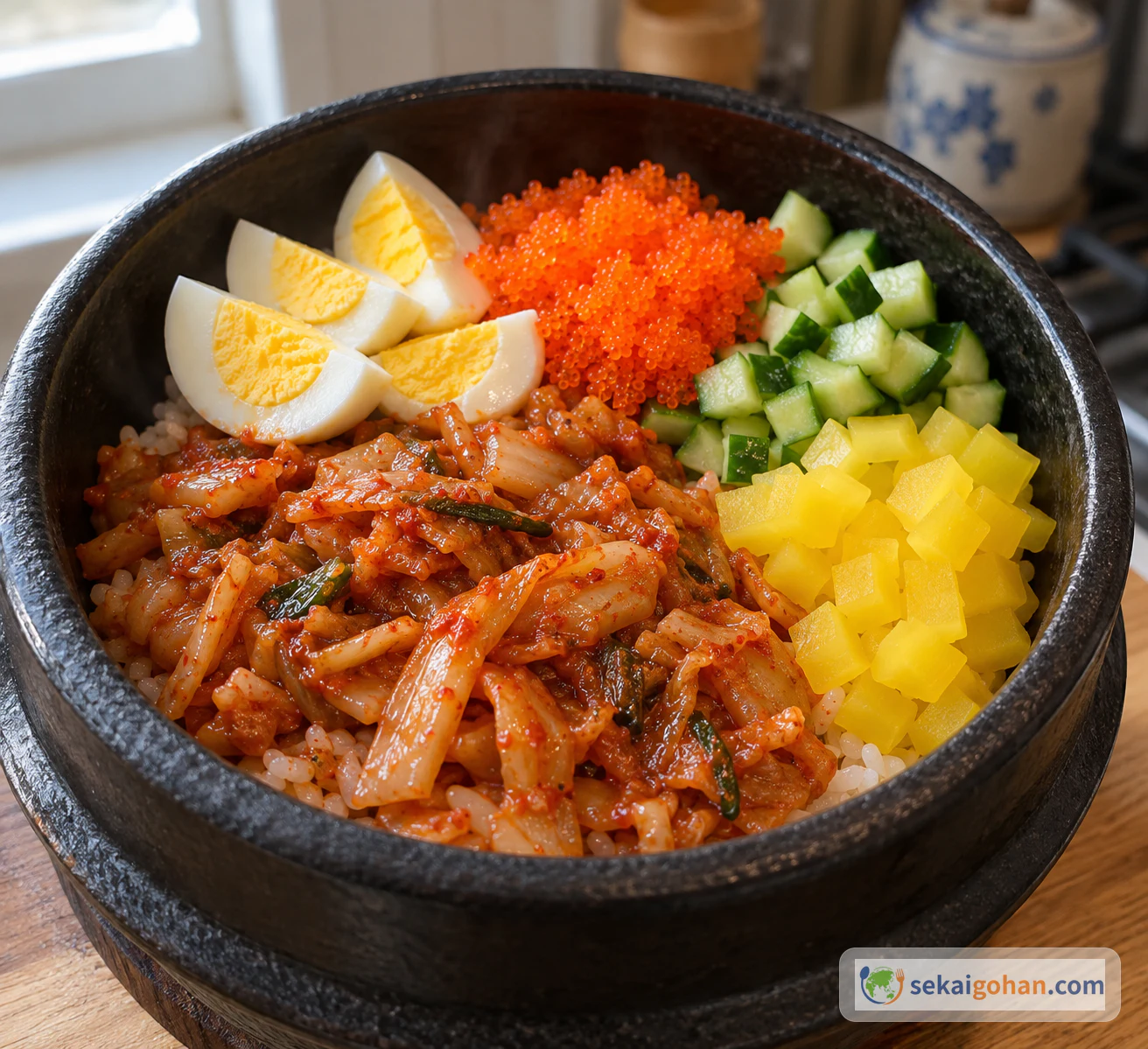
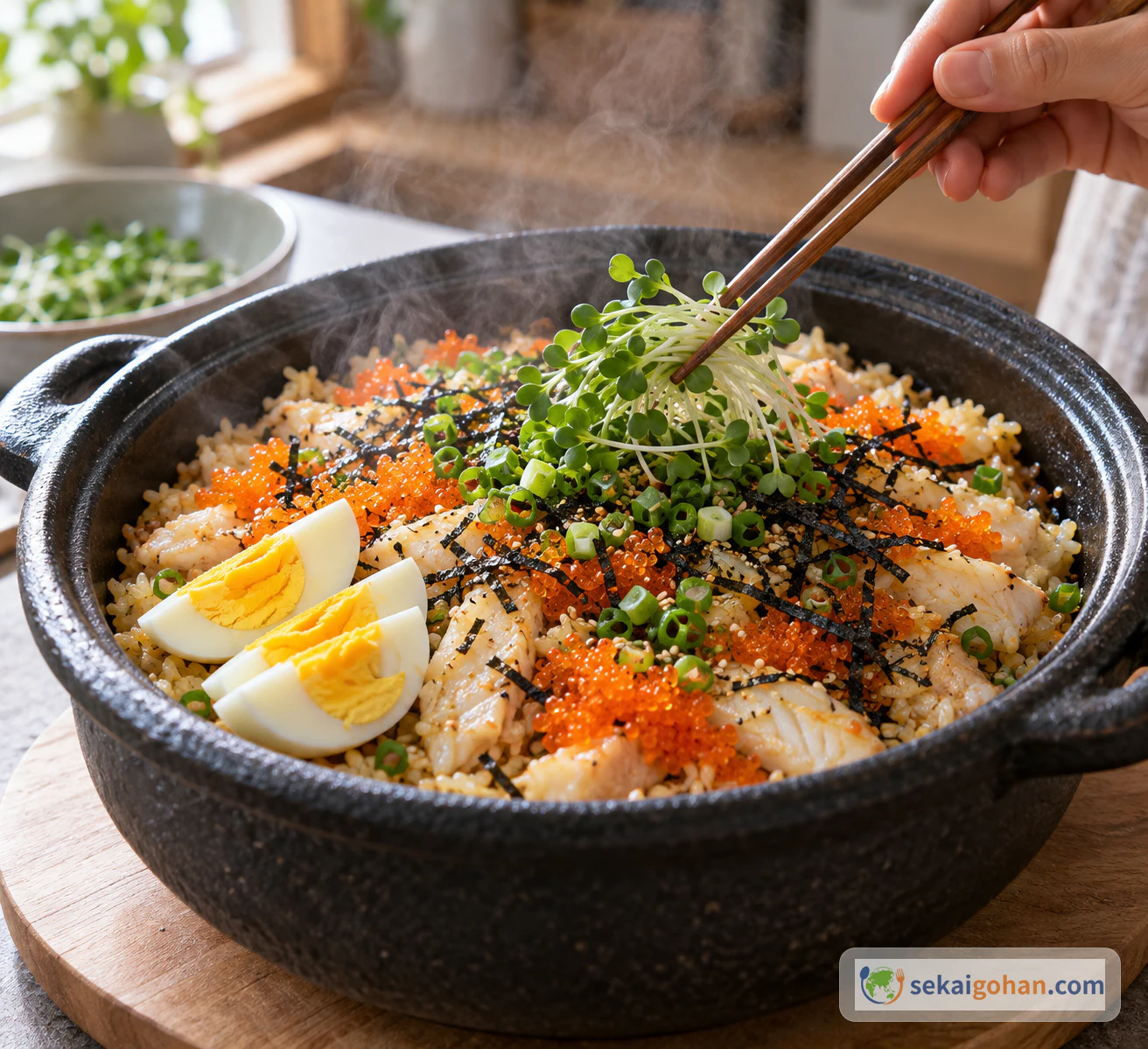
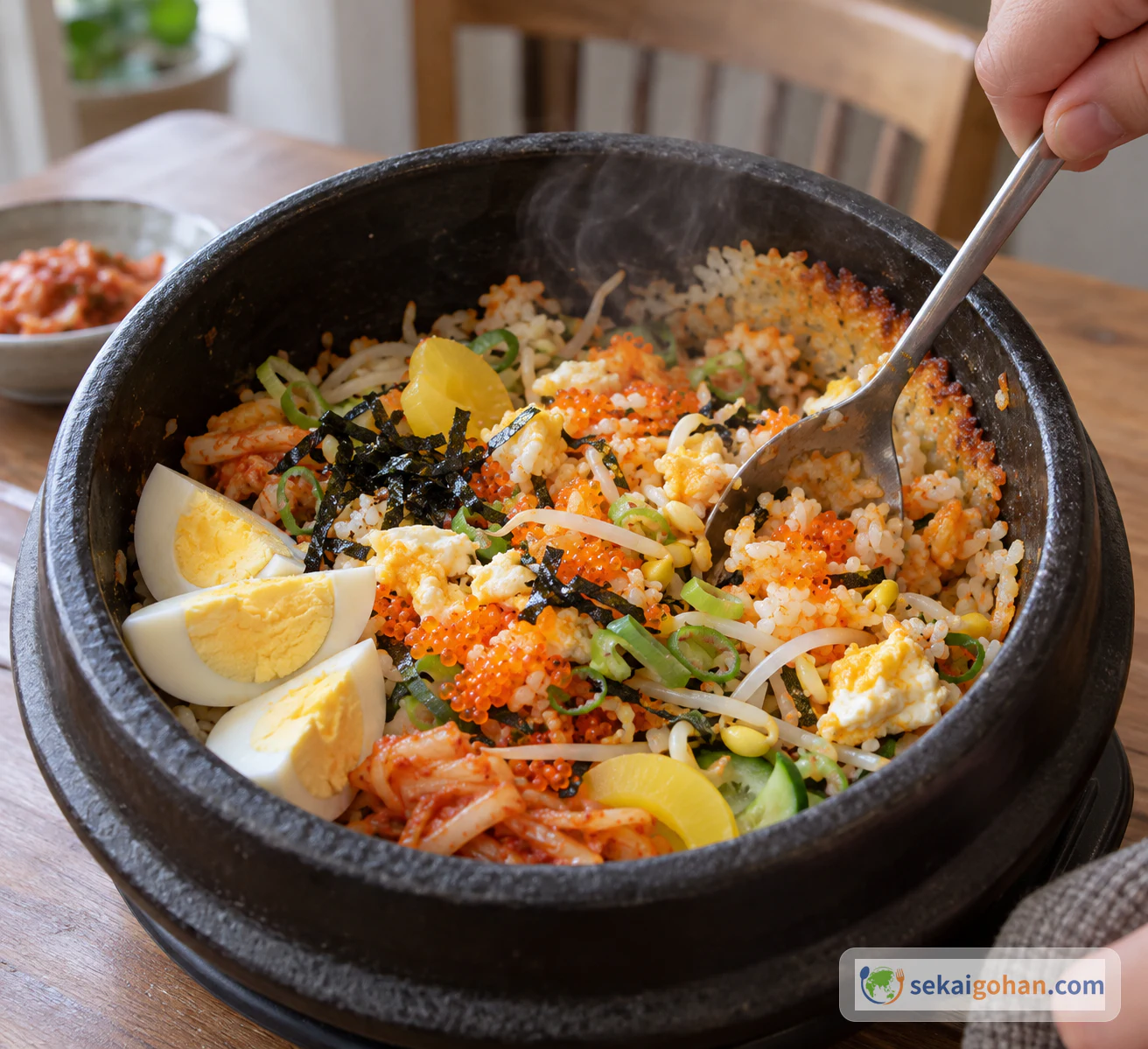
The pot is the first thing you notice. Rice coated in sesame oil sits in a hot earthenware bowl, and with the lid on, the bottom begins to crackle softly. Then the cold, colorful toppings go on: tiny orange beads of flying fish roe, cubes of cucumber and yellow pickled radish, a tuft of sprouts. This is albap (알밥), Korean fish roe rice, served sizzling in a ttukbaegi, a Korean earthenware pot. Stir it all together with a spoon and every mouthful turns out warm and cool, soft and crunchy, with the roe bursting between your teeth.
About Albap
The name says it plainly. In Korean, al (알) means roe and bap (밥) means rice. Steamed rice is heated in a hot pot and topped with flying fish roe, vegetables such as carrot, cucumber and pickled radish, and seaweed. This version swaps in stir-fried kimchi and sprouts and keeps the toppings small, so the roe stays in front.
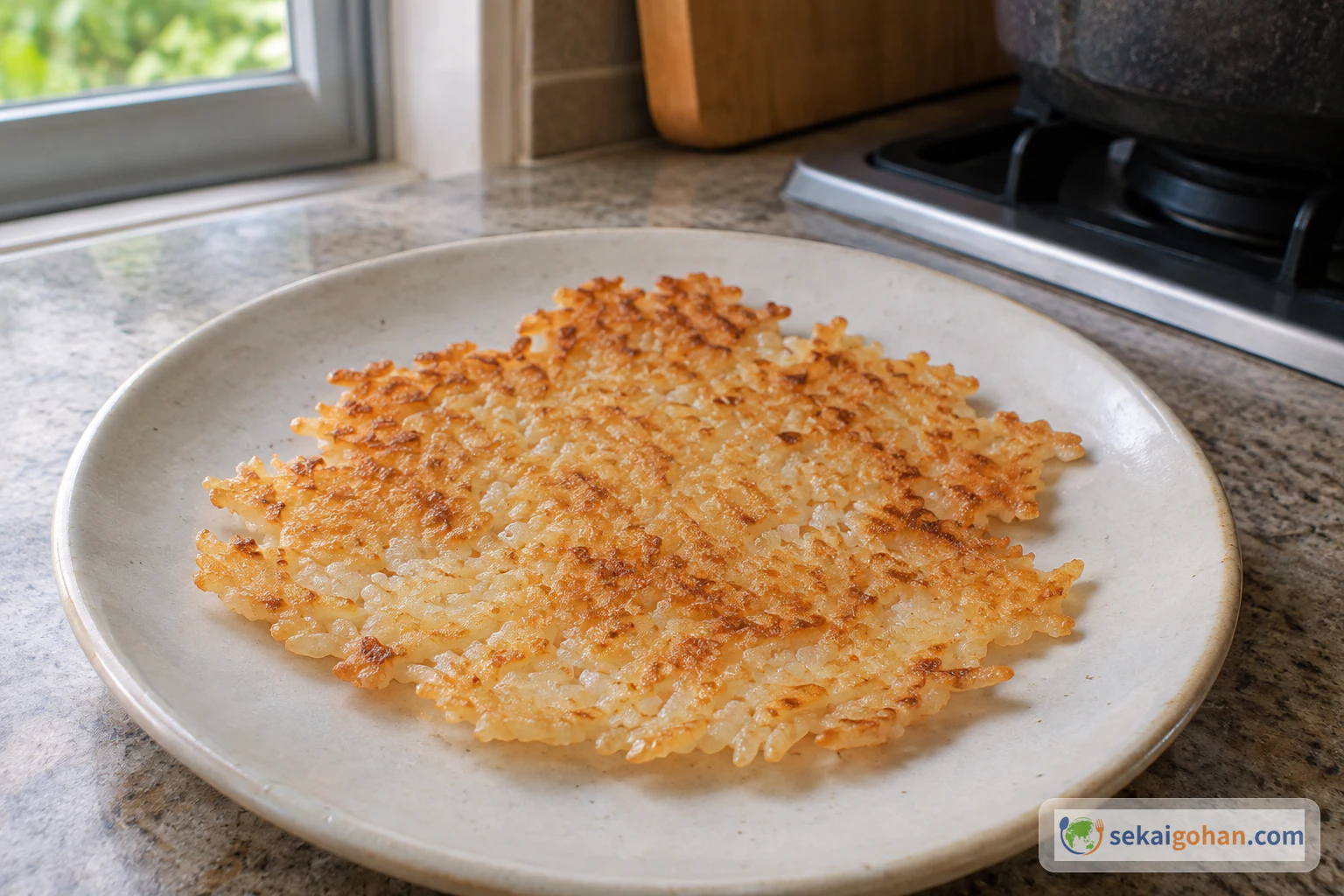
If you know bibimbap, albap will feel familiar, since both mix rice and toppings in one bowl. Think of it as a fish roe bibimbap with a different focus. Instead of a spread of namul, beef and gochujang sauce, albap is built around the roe and small, crisp toppings, and the browned rice at the bottom of the hot pot is part of the point.
The hot pot and the mixing are what define the dish. Each component is prepared separately, arranged on the hot rice, and stirred together just before eating. You want the rice hot enough to crackle against the pot and the cold vegetables still crisp, so eat it right away. For more dishes from the same table, see the Korean recipes on Sekai Gohan.
Ingredients for 1–2 Servings
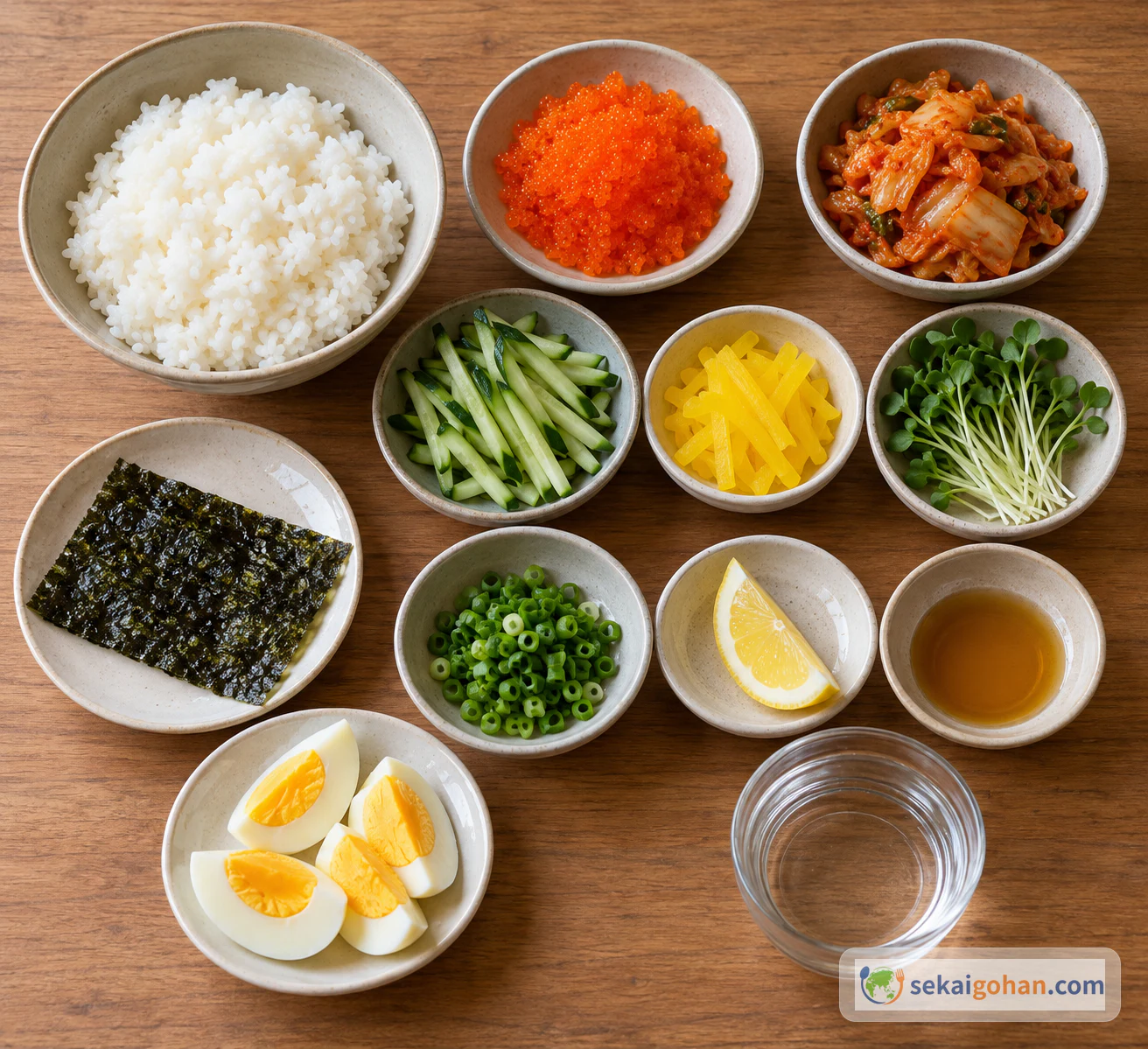
The rice is measured already cooked, not raw: 1 1/2 cups (up to 2 cups). To measure by volume in metric, use 240 ml per cup, 15 ml per tablespoon and 5 ml per teaspoon.
There is no salt, gochujang or sesame seed in this recipe. The roe, kimchi and pickled radish already bring plenty of seasoning.
This dish contains fish roe (seafood), egg and sesame. Depending on the product, kimchi and pickled radish can also contain soy or other allergens. Read the labels on the roe, kimchi and pickled radish when you buy them.
Equipment
- A ttukbaegi (Korean earthenware pot) rated for direct-flame cooking, with a lid. The pot in this recipe holds 3 1/2 cups. A skillet with a lid also works
- A small pot for boiling the egg
- A fine-mesh strainer
- A small bowl for the roe
- A wooden spoon
- A spoon for mixing and eating
Choosing Ingredients for Albap
Flying fish roe. Look for packages labeled flying fish roe or tobiko, which is the Japanese name for flying fish roe. It is a seasoned, salty product. The roe is never cooked in this recipe, so choose a product the label says can be eaten as is. The words "fish roe" alone won't tell you that, and a product labeled for cooking should stay out of the bowl, because the hot pot won't cook it.
Yellow pickled radish (danmuji). Korean grocers sell it whole or pre-cut. If you can't find it, Japanese sweet pickled daikon (takuan) can stand in. It can be sweeter or sharper, so start with less and taste.
Sprouts. Radish or broccoli sprouts both work.
Stir-fried kimchi. Treat it as a ready-made component, either homemade or store-bought. Use it as it is, with no extra oil, sugar or other seasonings.
Instead of cracking a raw egg into the hot pot, the egg is hard-boiled separately, peeled, quartered and placed in the center.
Method: Prepare Everything, Heat the Rice, Then Build Quickly
Once the rice is in the pot, things move fast. Have the egg boiled and quartered, the roe dressed, and the vegetables cut before you start step 2.
Cracking a raw egg into the hot pot and letting the residual heat cook it is unreliable. That heat varies with the size of the pot and how it was heated, and it does not make an egg or roe safe. Browning and sound tell you about the rice, not about food safety. That is why this recipe boils the egg separately until hard and uses roe labeled ready to eat.
Fixing Common Albap Problems
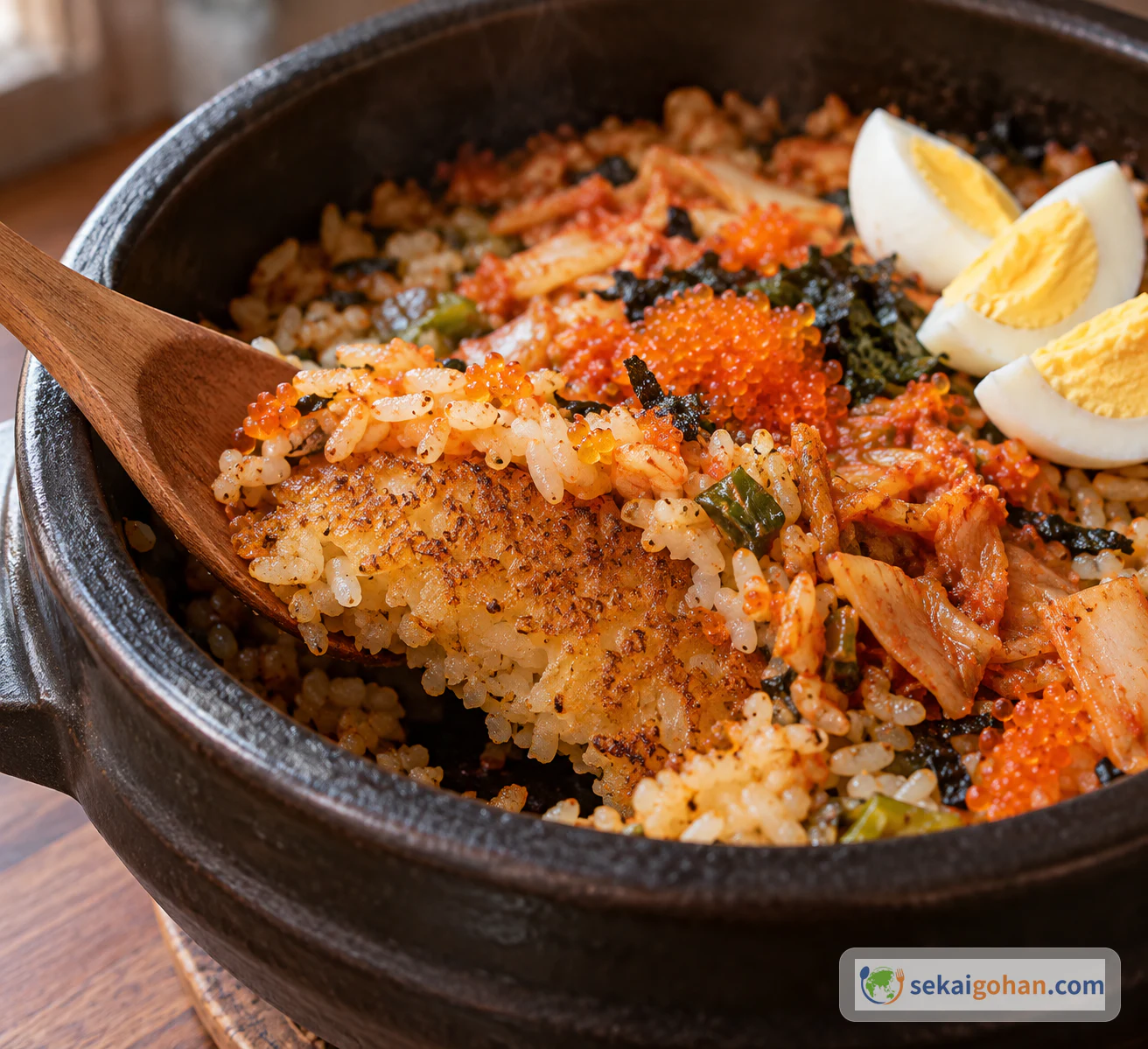
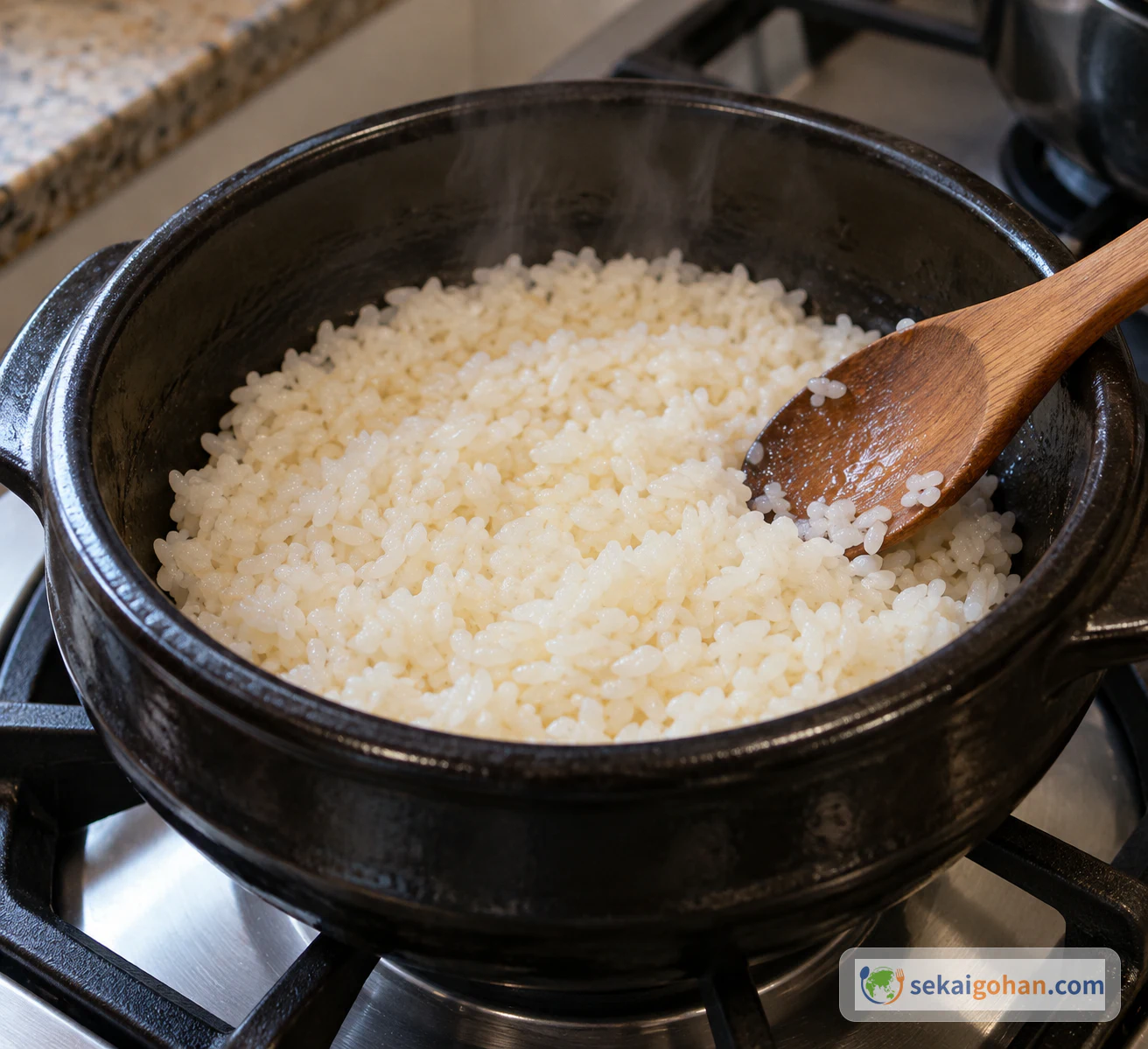
The crust you want is thin and golden. Before the toppings go on, lift a little rice at the edge with a wooden spoon and take a look.
| Problem | Likely cause | What to do |
|---|---|---|
| Rice is sticky, no crust forms | Rice not spread evenly; pot not hot enough | Press the rice flat in step 2, then cover and heat for about 3 minutes. Judge by the crackle and the bottom, not the clock alone |
| The bottom burns | Thin pan or heat too high | In a thin skillet, lower the heat and watch the sound and smell. Don't keep heating an empty pot |
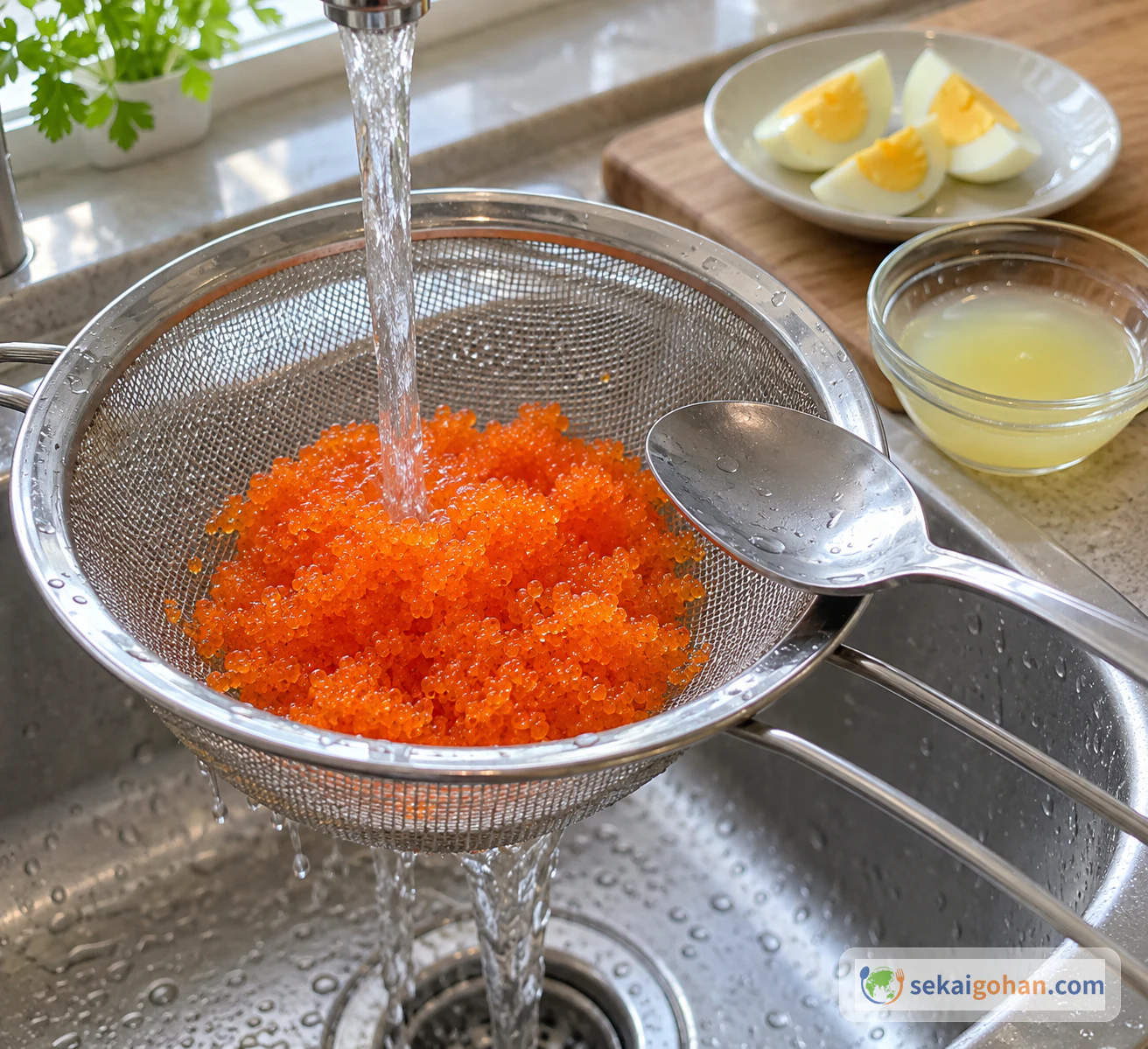
| Rice turns watery | Roe not drained | Press the roe gently in the strainer to drain it well; rinse only if the label allows |
| Too salty | Salt from the roe, kimchi and pickled radish adds up | Don't add salt. Taste the components before mixing, and go lighter on kimchi or pickled radish next time |
| Unsure whether the egg is cooked | Relying on the pot's heat | Hard-boil the egg in a separate pot until the yolk is set, as in step 1 |
Albap Variations
- A different roe. Flying fish roe is the most common, but albap is also made with other roe, such as salmon, sea urchin or trout. The bead size, saltiness and flavor change, so treat it as a different version, and still choose a product labeled ready to eat.
- Milder heat. If the kimchi is too spicy for you, spoon on less of it rather than adding other sauces or seasonings.
Frequently Asked Questions
Do I need a stone or earthenware pot?
No. A ttukbaegi keeps the rice hot and helps form the crust, but a skillet works too. It holds heat differently, so watch the crust rather than relying on the same timing. If your earthenware pot can't be heated empty, use a skillet.
Can I use raw kimchi?
The recipe calls for stir-fried kimchi. Make your own, or buy a store-bought one and follow the product label.
How should I thaw frozen flying fish roe?
Follow the package instructions first. Thaw frozen roe in the refrigerator rather than at room temperature, and keep its liquid away from other foods.
Can I store leftovers?
Eat albap as soon as it's made. The crisp bottom and the contrast of hot and cold don't last.