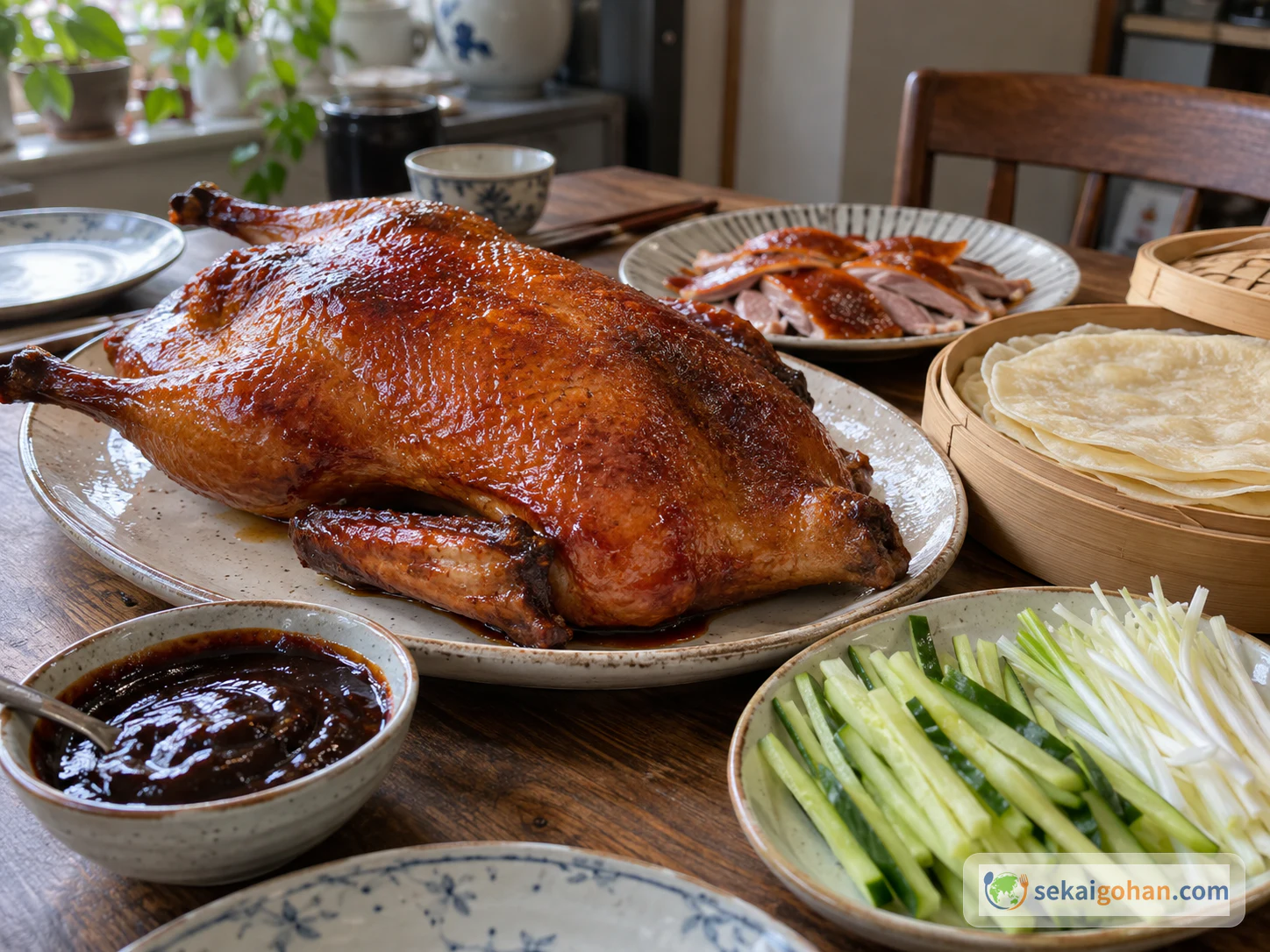
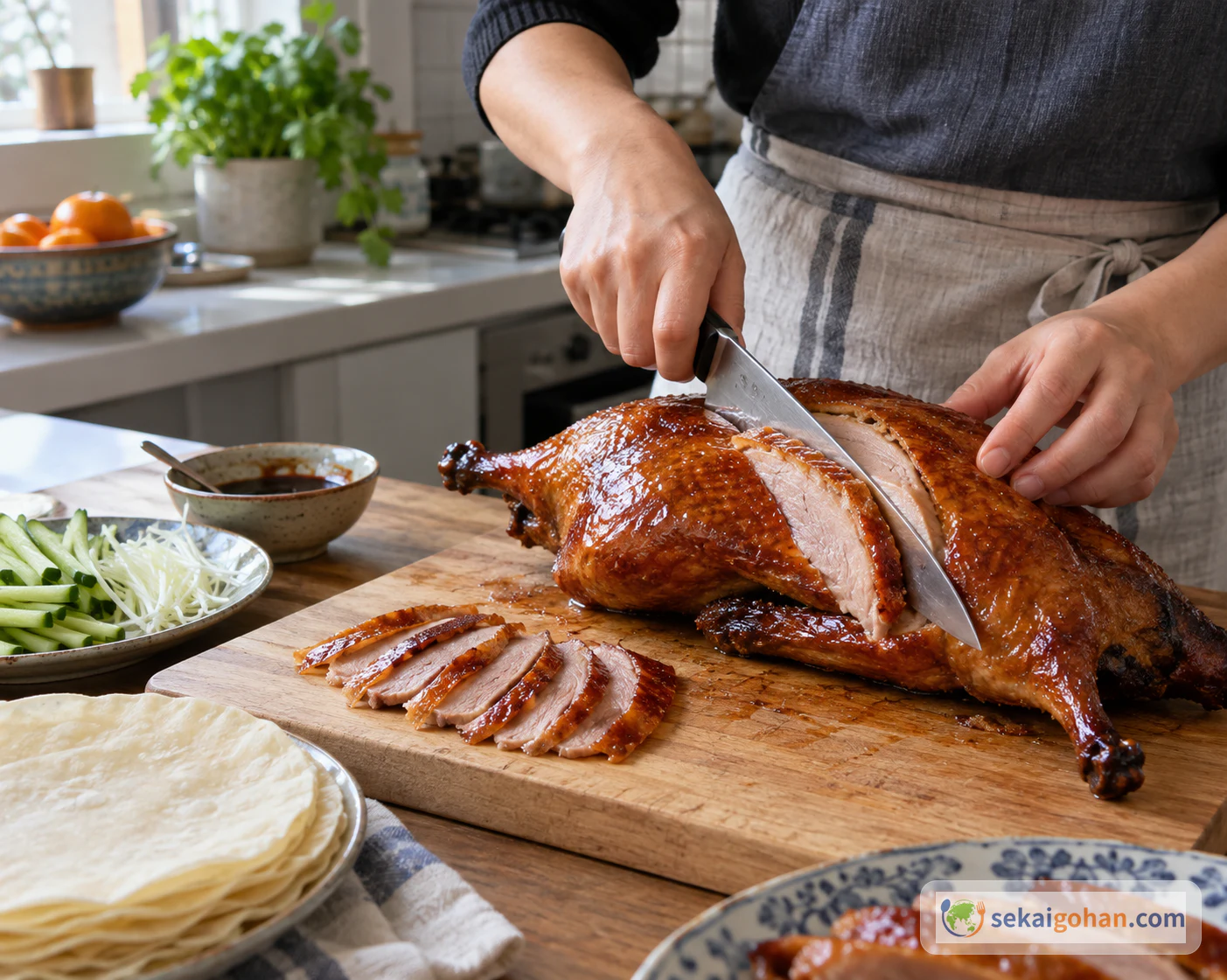
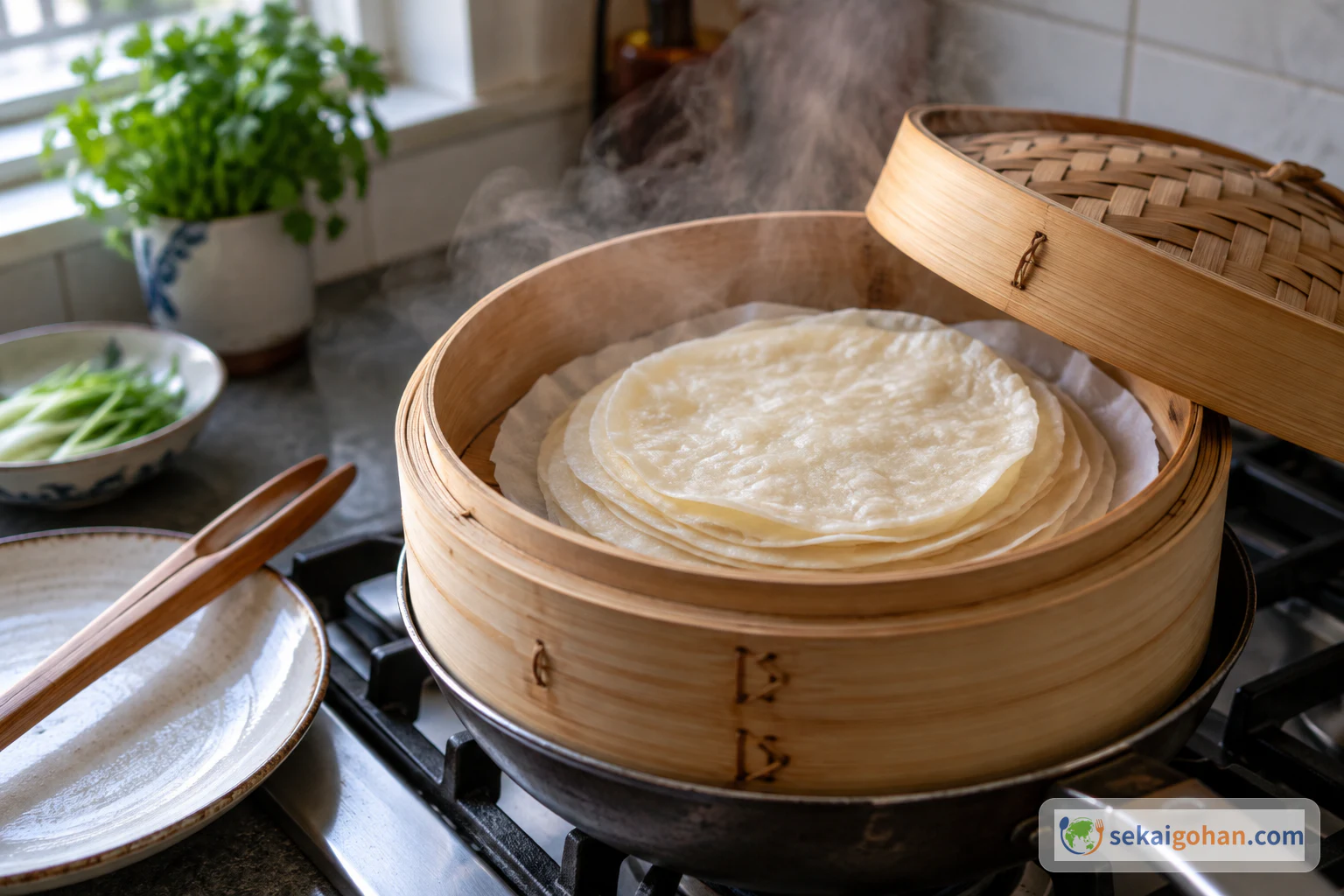
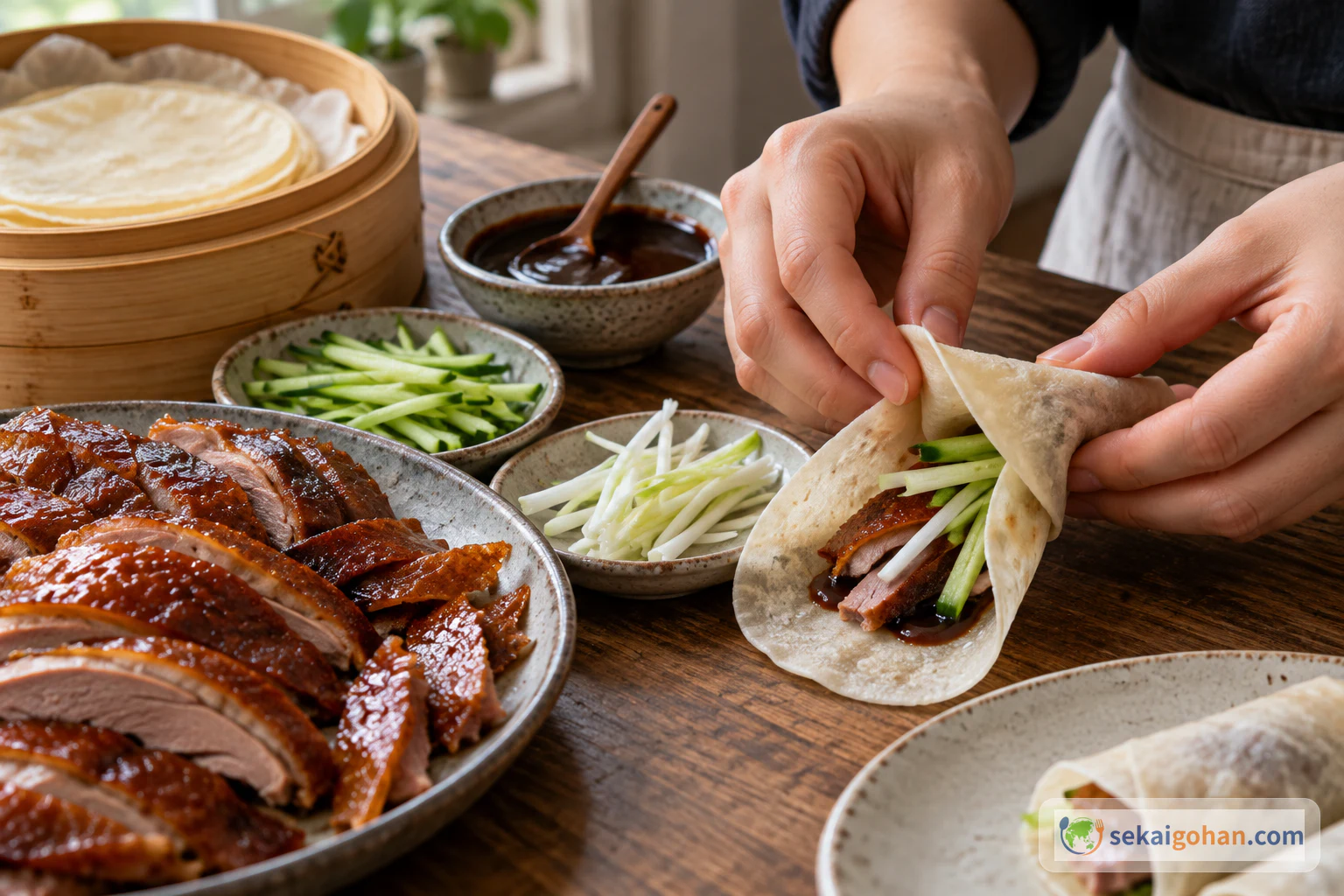
A thin pancake, warm from the steamer, with a small swipe of sweet bean sauce. On it goes a piece of duck with its crackling skin still attached, a few strips of cucumber and a baton of scallion, all rolled into one neat bite. That is Beijing roast duck (北京烤鸭, Běijīng kǎoyā): crisp skin and juicy meat, eaten with thin pancakes, sauce and vegetables. Rich duck meets sweet bean sauce, cool cucumber and sharp scallion, and the skin, thin, lightly glazed and roasted to a deep amber, is the part everyone reaches for first.
Peking Duck in Beijing and at Home
How Peking duck is eaten
Every part of the wrap has a job. The pancake carries everything, the sweet bean sauce adds sweetness and depth, and the fresh cucumber and scallion cut through the fat. The skin is what all of them are built around.
Duck houses and their ovens
Beijing's duck houses don't all roast the same way. One tradition hangs the ducks in the oven to roast. Bianyifang's method uses the menlu, an enclosed oven that cooks with stored heat rather than direct flame, and Bianyifang's technique entered China's National Intangible Cultural Heritage List in 2008. Roast duck also appears in imperial-court cooking and in historical cookbooks. Popular accounts push its origin further back, but no single founding date is established.
Making it in a home oven
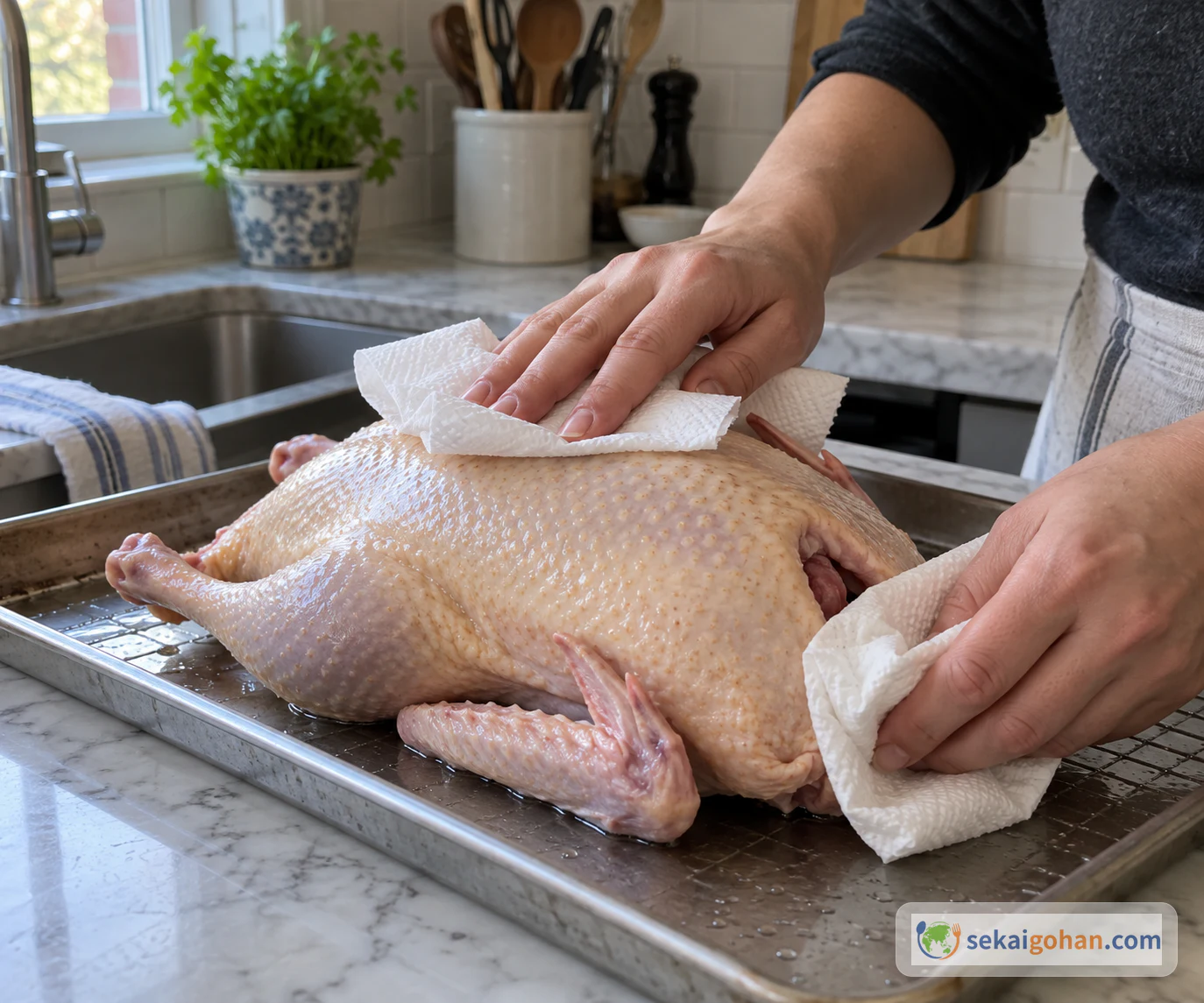
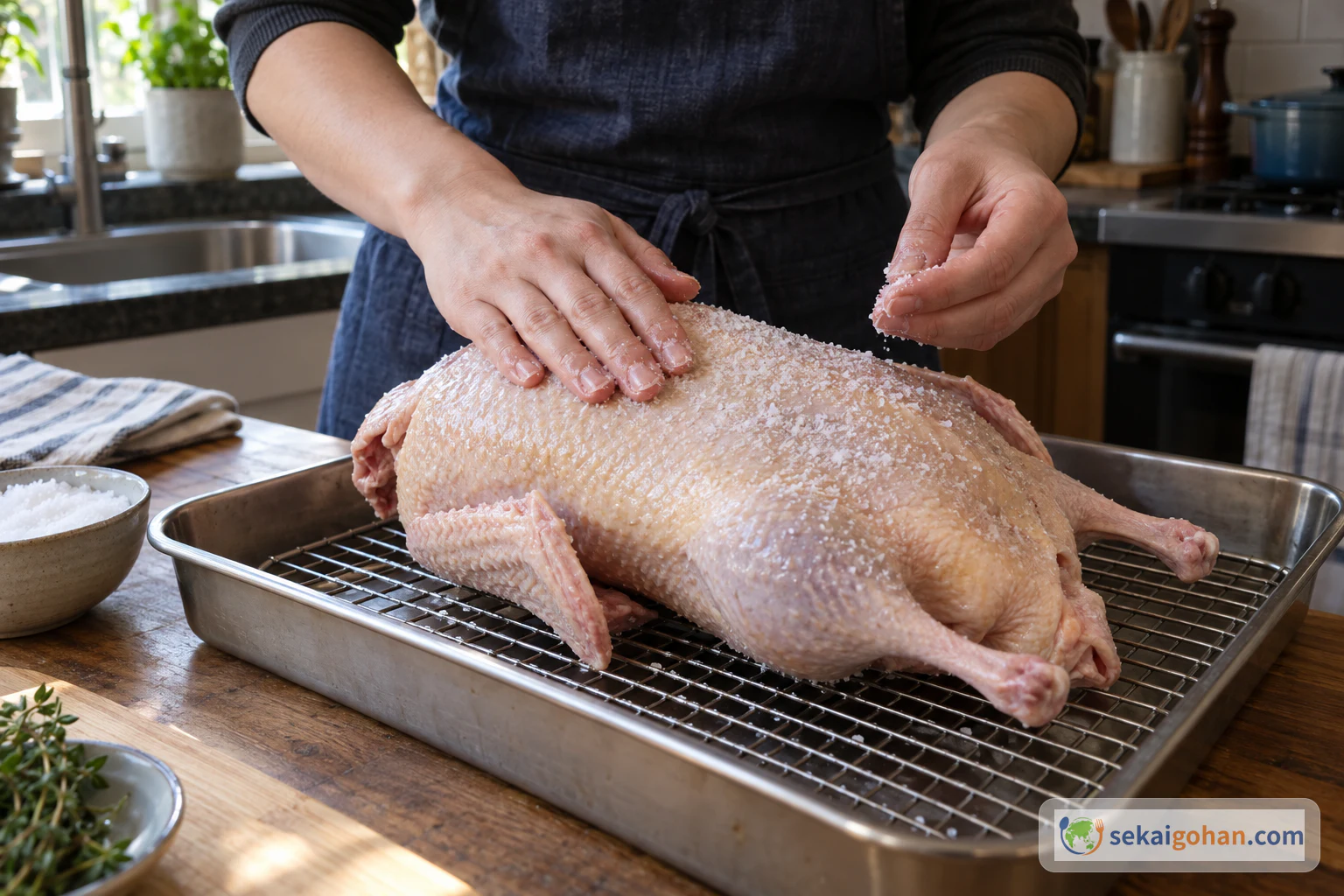
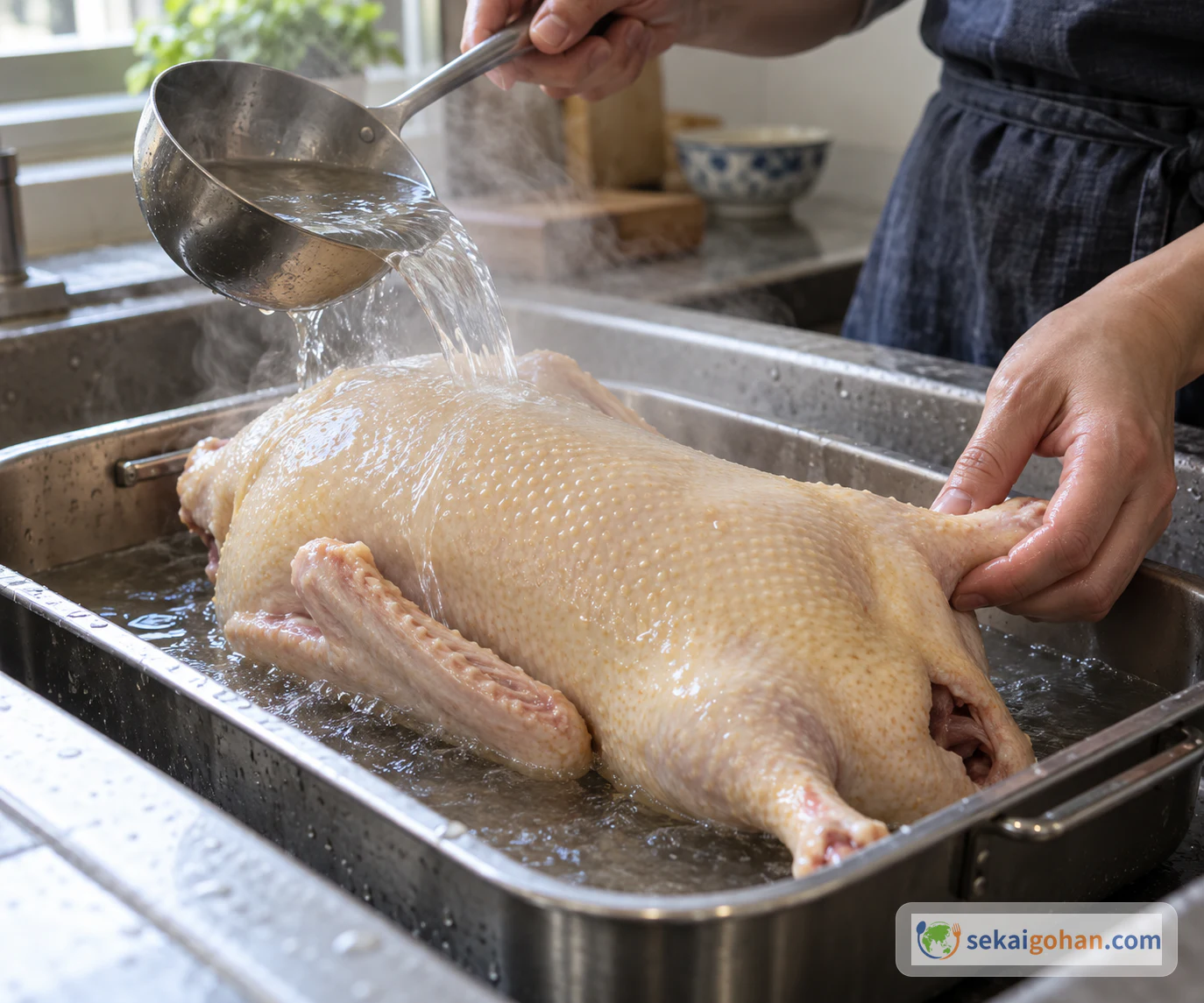
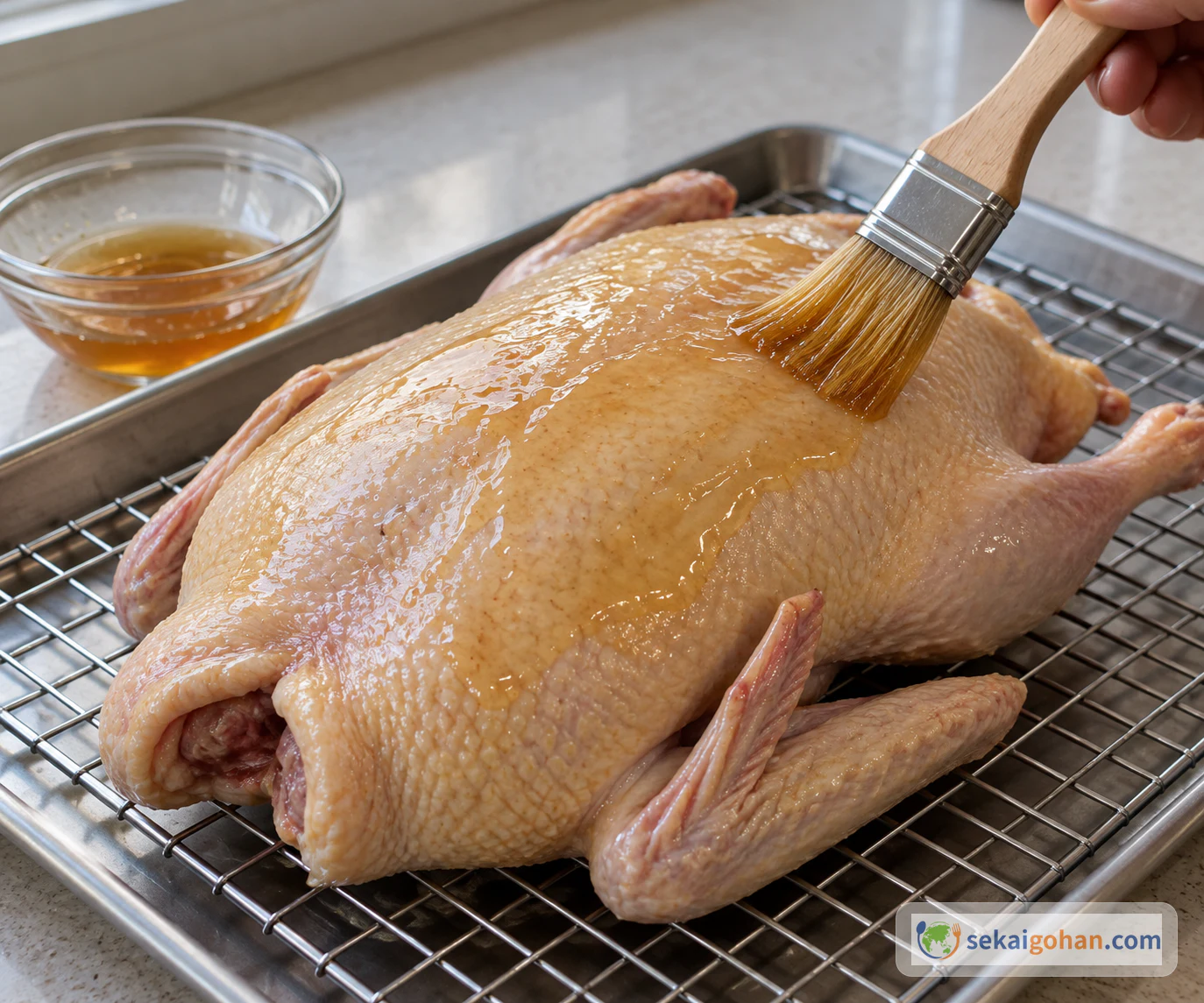
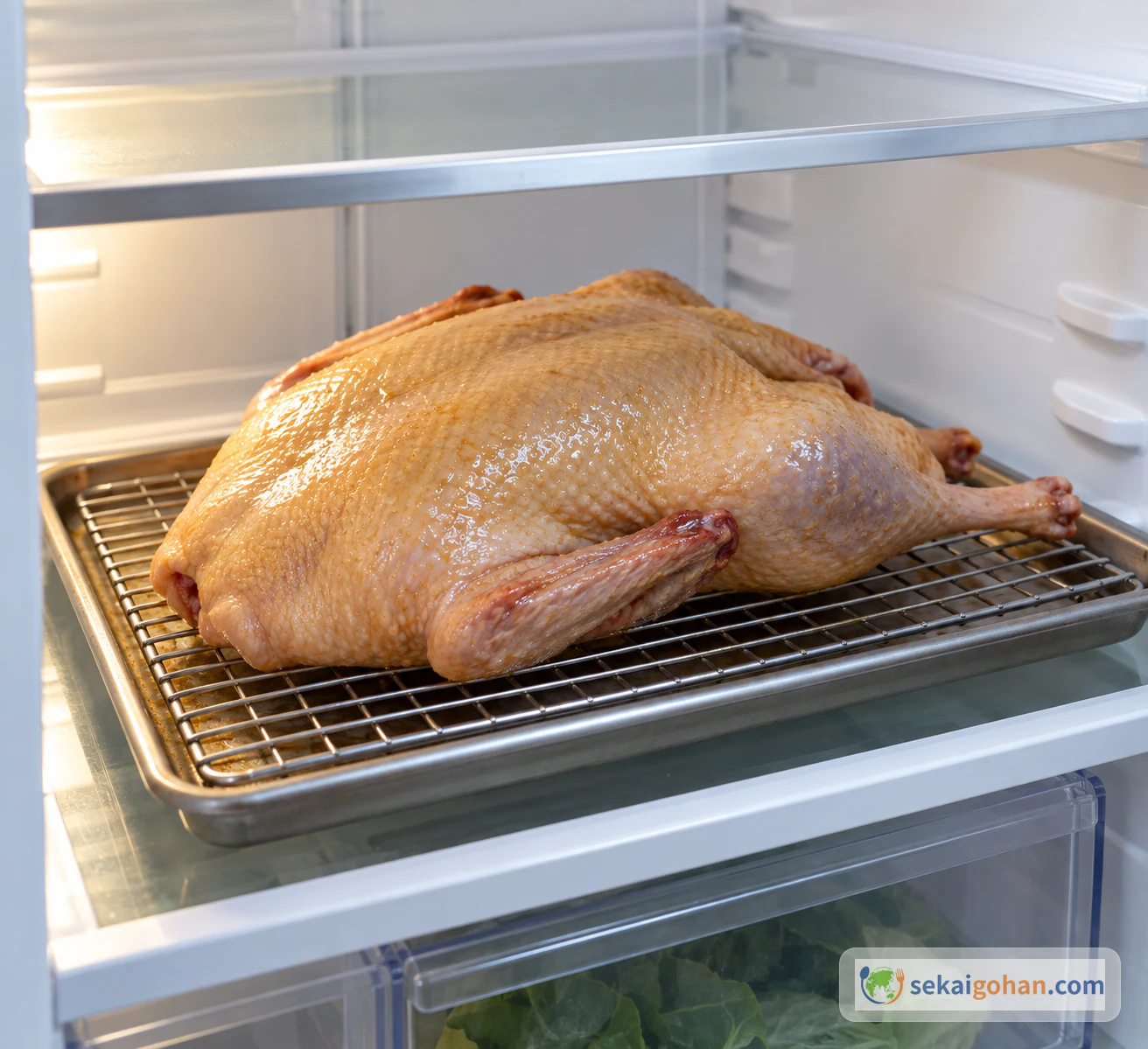
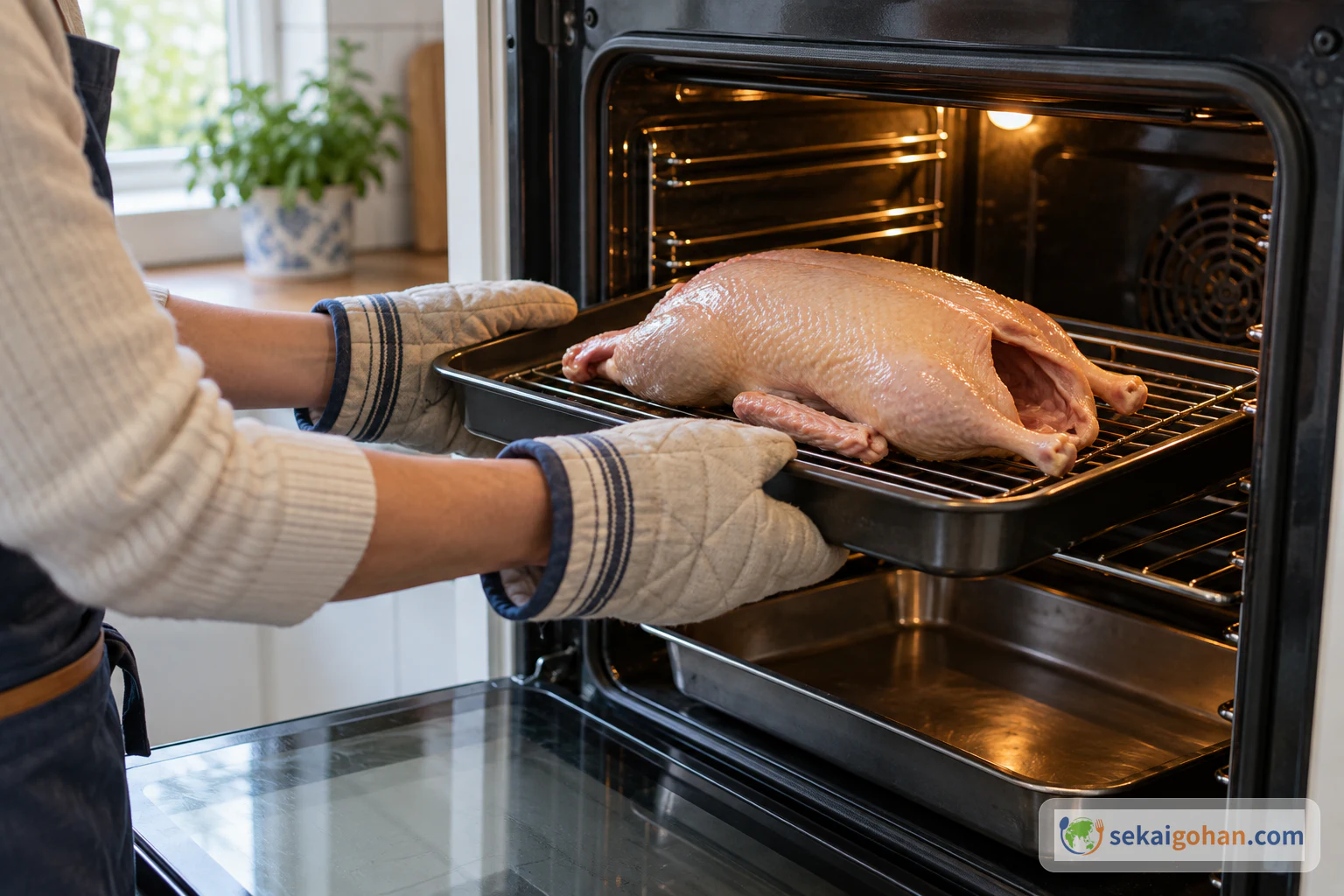
A home oven, with the duck on a rack above a tray, works differently from both Beijing methods. What carries over is the logic of the dish: salt, a scald of boiling water to tighten the skin, a thin maltose glaze, a long uncovered rest in the refrigerator to dry the skin, and a roast that starts hot and finishes lower.
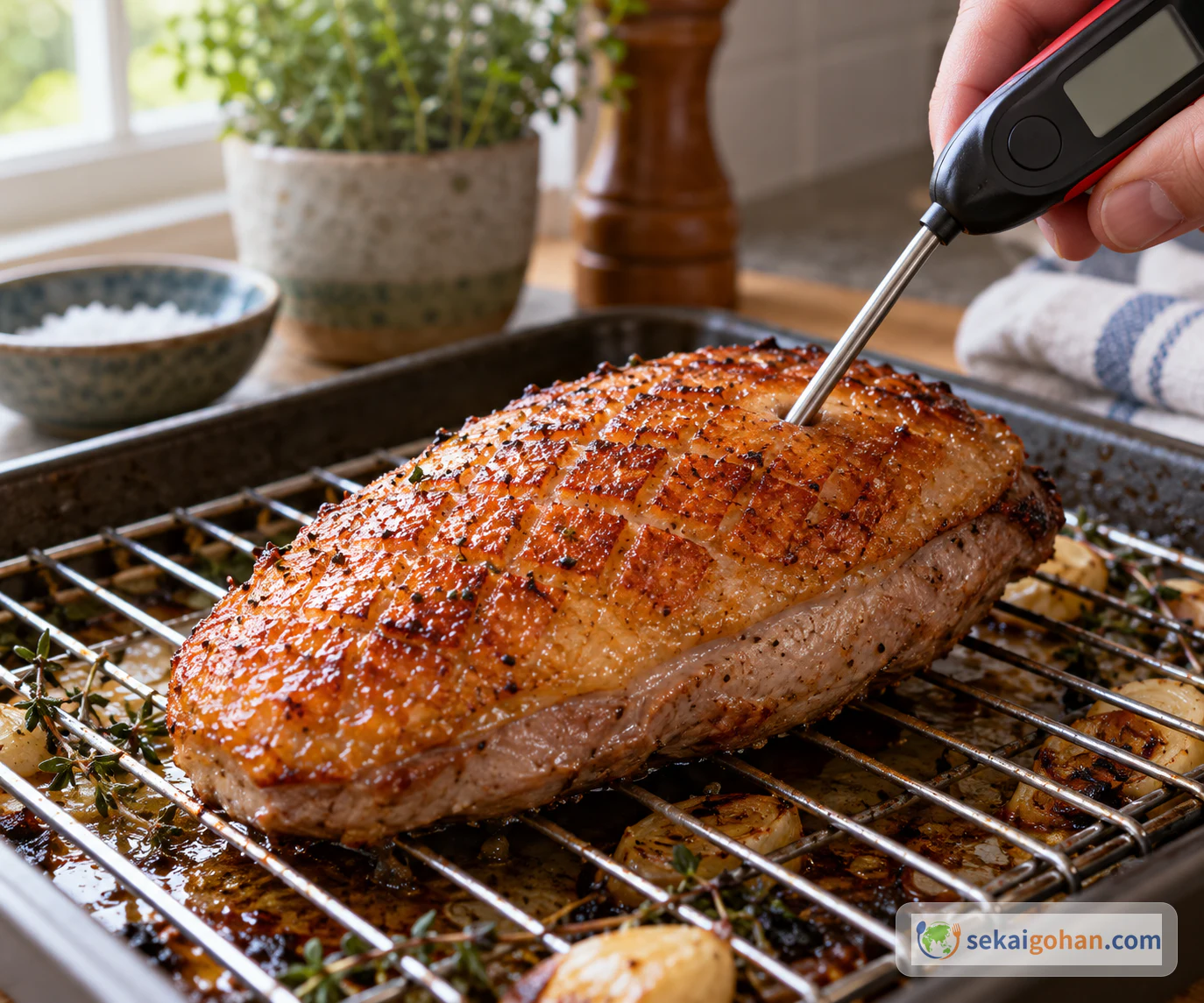
Plan ahead, because the skin needs 24 hours of drying in the refrigerator. Start at least a day before you want to eat. Doneness is judged with a thermometer rather than by the clock or the color: the thickest part of the breast, the innermost thigh and the innermost wing must all reach 74°C (165°F).
Our China country page gathers dishes from across the wider Chinese table. For another Chinese roast with a glossy finish, compare char siu; for something lighter from the dim sum side, try xiaolongbao.
Ingredients: One Whole Duck, About 5.5 lb (2.5 kg)
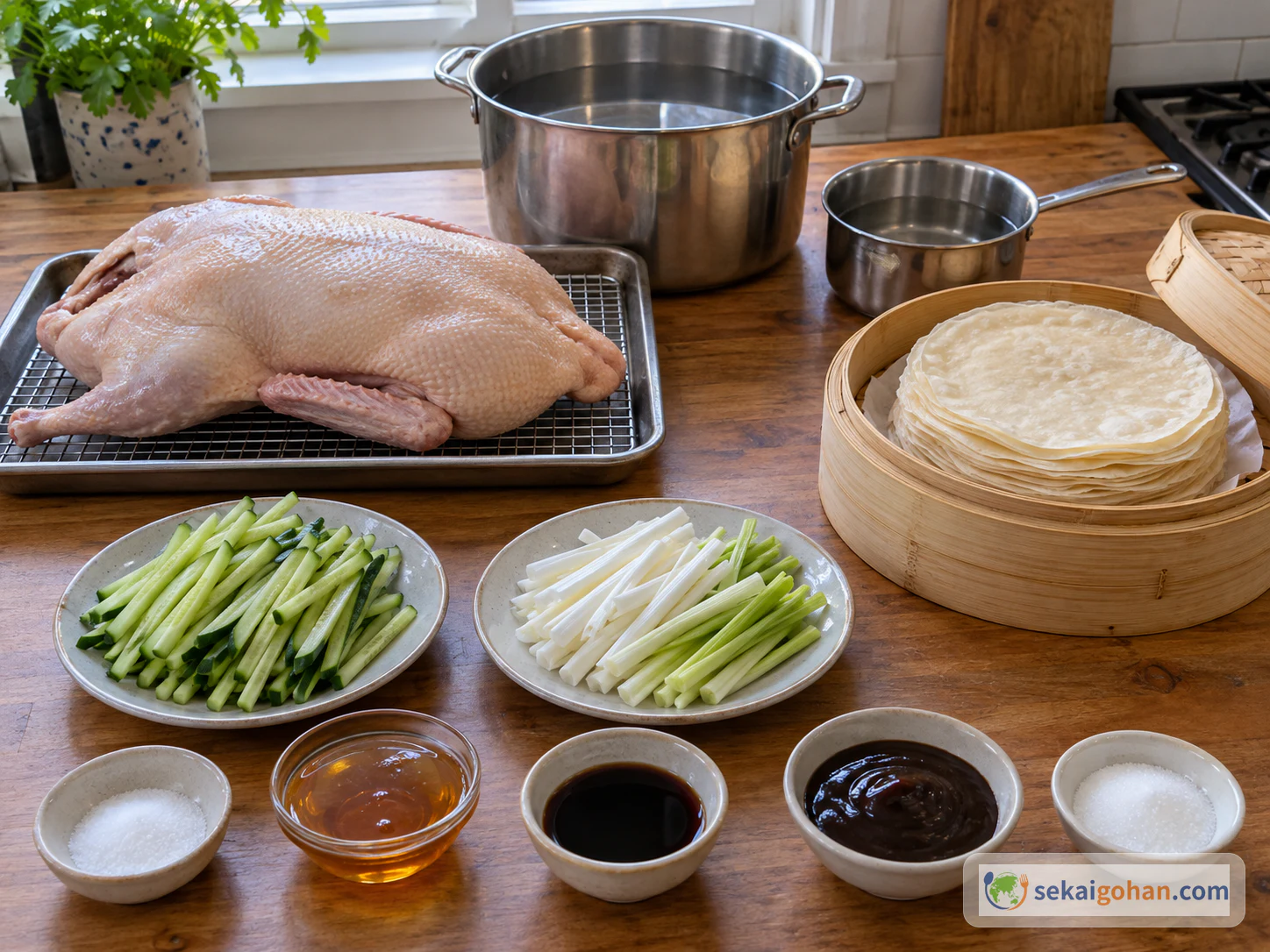
This is a whole-bird recipe. Salt is given by the spoon because grain size varies.
Keep raw duck cold at all times. Thaw it fully in the refrigerator, keep its drip away from other foods, and wash hands, boards and tools after handling it. Don't reuse brushes or trays that touched raw duck for serving, and don't pour leftover glaze over the finished duck without heating it. Check the labels: pancakes are wheat-based, and sweet bean sauce usually contains soy.
Not used in this version: the cavity aromatics
These fill the cavity in a stuffed version. Because this version does not stuff the duck, none of them are used, and they are not on the shopping list. The scallions for wrapping above are a separate, smaller use.
| Cavity aromatic | Amount |
|---|---|
| Scallions | 2 |
| Garlic | 1 head |
| Apples | 2 |
| Star anise | 4 |
| Bay leaves | 4 |
| Cassia cinnamon | 2 pieces |
Equipment
- Paper towels
- Wire rack and a rimmed tray that fits in your refrigerator
- Ladle, and a sink or deep container to catch the scalding water
- Pastry brush and a small bowl for the glaze
- Oven, with a roasting tray to catch fat on the lower level
- Aluminum foil for the wing and leg tips
- Instant-read meat thermometer
- Oven thermometer (useful because ovens vary)
- Carving knife and cutting board
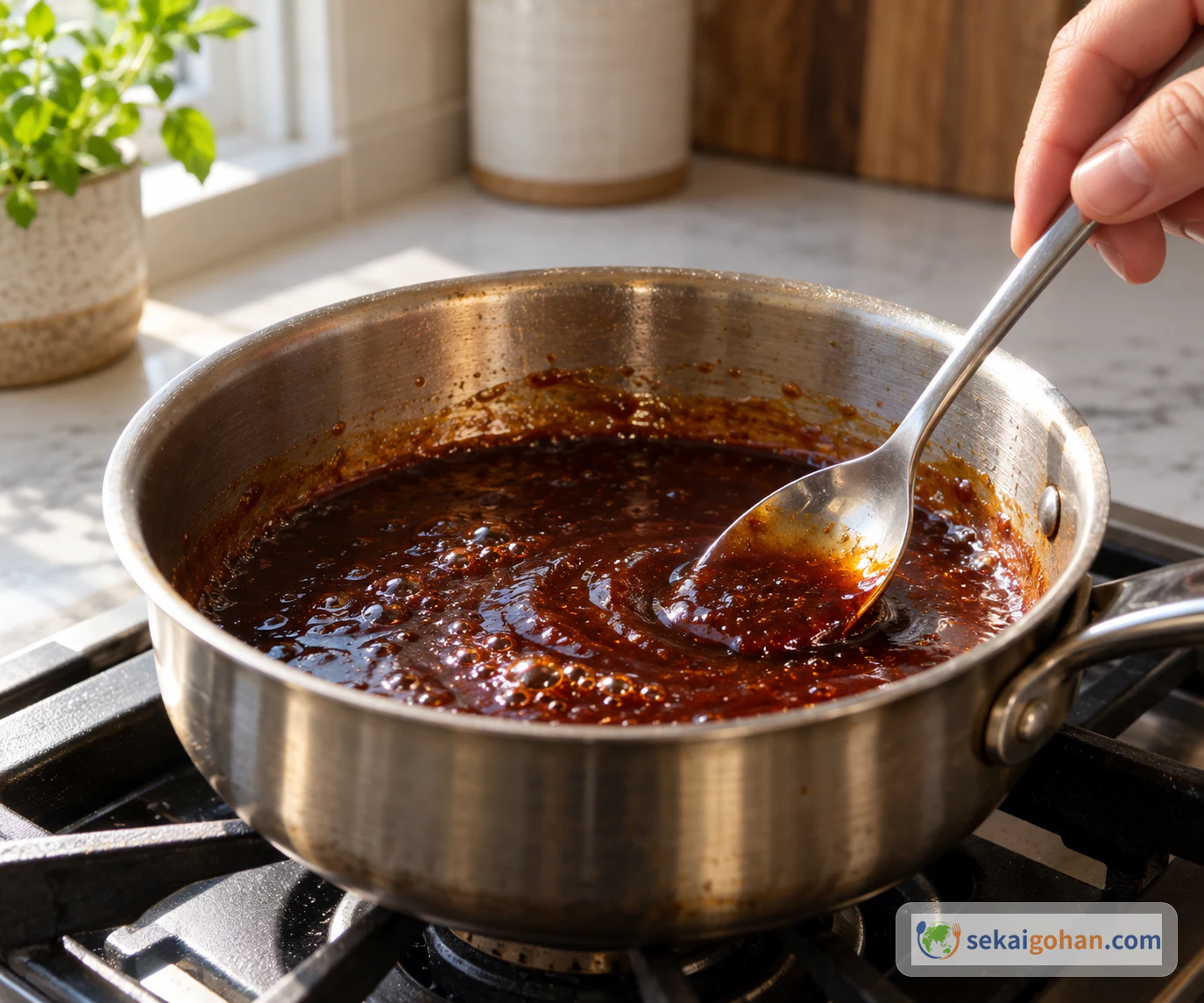
- Small pan for the sauce
- Steamer for the pancakes
Choosing Ingredients for Peking Duck
Whole duck. Look for one at a butcher, a duck specialist or an online supplier. Chicken can go through the same steps, but its fat and skin finish differently, and the result moves away from Peking duck.
Maltose. Honey works instead, but as its own glaze: 2 parts honey to 1 part hot water, measured together at that ratio rather than stirred into the ½ cup (120 ml) of hot water meant for the maltose. Expect the aroma, browning and texture of the glaze to change. Glucose syrup is a different ingredient from maltose.
Vinegar. Any vinegar works, and rice vinegar is easy to find. Switching the type gives a softer acidity if you want one, and lemon juice adds a citrus note.
Sweet bean sauce. Hoisin sauce, yellow soybean paste and plum sauce can stand in. Each differs in sweetness, saltiness and bean aroma, so add a little at a time and taste.
Pancakes. Store-bought Peking duck pancakes save a lot of work on the day. Spring roll wrappers or tortillas can stand in, though neither has the texture of a thin steamed wheat pancake.
Method: Salt, Scald, Glaze, Dry, Roast
Steps 1–4 happen on the first day, step 5 is 24 hours of refrigerator drying, and steps 6–9 happen on the day you eat. Roasting times are guides that vary with the size of the duck and your oven; the thermometer decides when it is done.
Peking Duck Troubleshooting and Safe Roasting
| Problem | Likely cause | What to do |
|---|---|---|
| The skin isn't crisp | Moisture left on the skin; the duck touched the tray; the glaze went on too thick | During drying, check that the skin surface is dry, keep the duck on a rack clear of the tray, and keep glaze coats thin. Rather than forcing it with prolonged high heat, watch internal temperature and skin color separately |
| Wing or leg tips burn | Thin parts brown faster; ovens vary | Cover the tips with foil. Treat the temperatures and times as guides, and use an oven thermometer as well as a meat thermometer |
| One of the three points is below 165°F (74°C) | Larger duck or a cooler oven | Keep roasting and measure again at the breast, inner thigh and inner wing. Go by the thermometer, not color or juices |
| Slices are uneven | Home carving is different from a restaurant's | The flavor is the same. Keep the skin with the meat where you can |
Keep raw duck in the refrigerator at all times, including the resting stages, and roast the bird unstuffed. Thaw it fully, wash your tools, and keep raw duck and its drips away from everything else.
Peking Duck Leftovers and Storage
The leftover bones make a good soup with napa cabbage or winter melon. Simmer them thoroughly and season with salt and white pepper.
Put leftover roast duck into clean, shallow containers and refrigerate it promptly. When reheating, heat it all the way through to the center.
Frequently Asked Questions
What temperature should Peking duck reach?
The thickest part of the breast, the innermost thigh and the innermost wing should all reach 74°C (165°F), measured without touching bone. Once the duck reaches that temperature, it is safe even if some of the meat still looks pink.
Is Bianyifang's menlu roasting the same as a home oven?
No. The menlu is an enclosed oven that roasts with stored heat rather than direct flame. A home oven with a rack and tray works differently, which is why this recipe relies on drying the skin and checking with a thermometer.