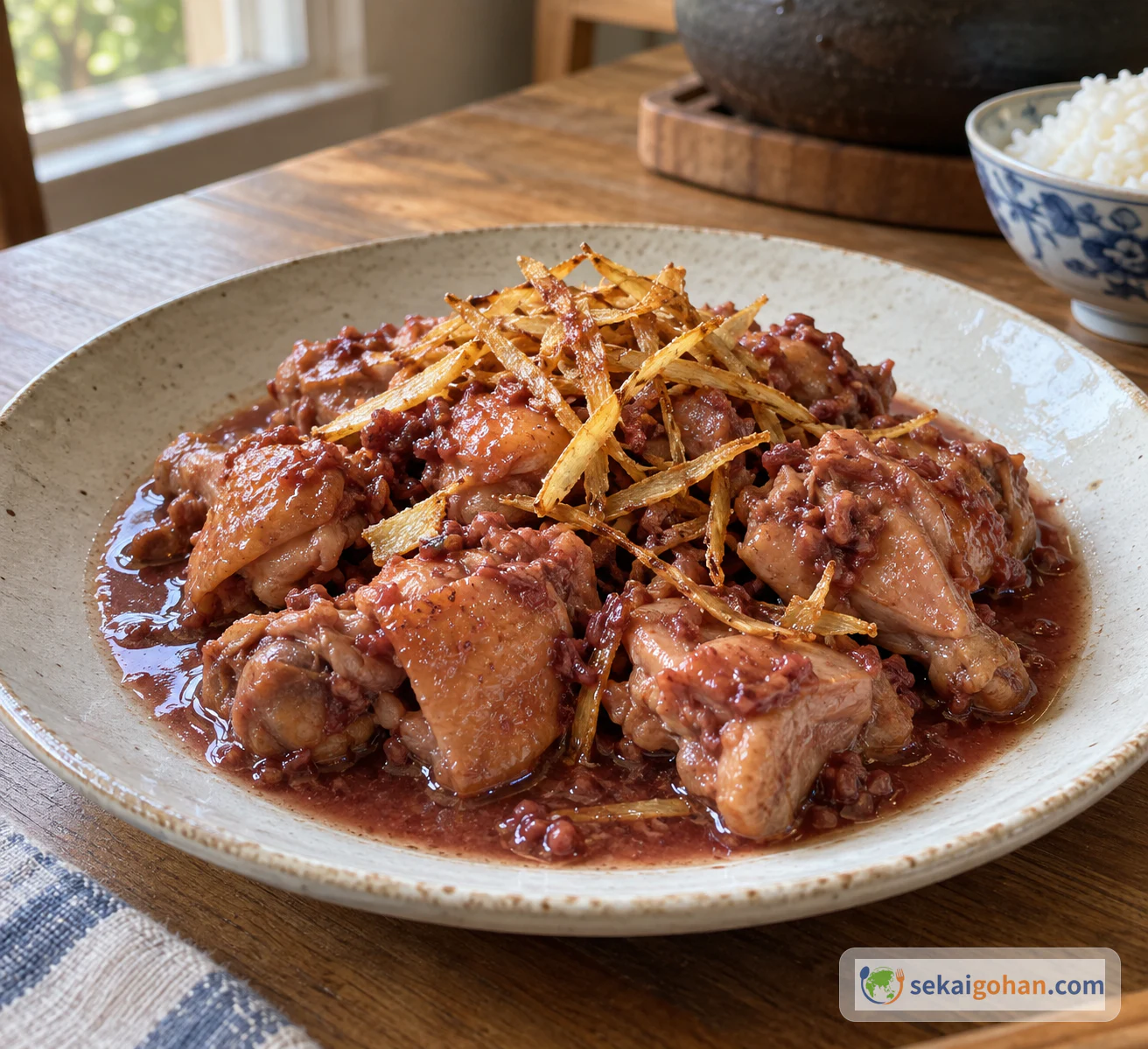
Foochow-style hong zao ji: chicken thigh coated in a gravy of red rice wine lees and glutinous rice wine, topped with fried ginger
CuisineChinese

Hong Zao Ji: Foochow-Style Chicken Braised in Red Rice Wine Lees (紅糟雞)

How to make hong zao ji (紅糟鶏 / 红糟鸡 / 紅糟雞), a Foochow-style home dish of chicken thigh marinated in red glutinous rice wine lees and braised in red glutinous rice wine with fried ginger. Covers the 500 g recipe step by step, why this is not grape red wine chicken, how to shop for the specialty ingredients, checking doneness with a thermometer, honest substitutions, and how it differs from other red-lees chicken dishes around Fuzhou.

Level: Beginner

Cooking flow

Cooking steps

STEP 11 / 6

Marinate the chicken in the refrigerator for 30 minutes

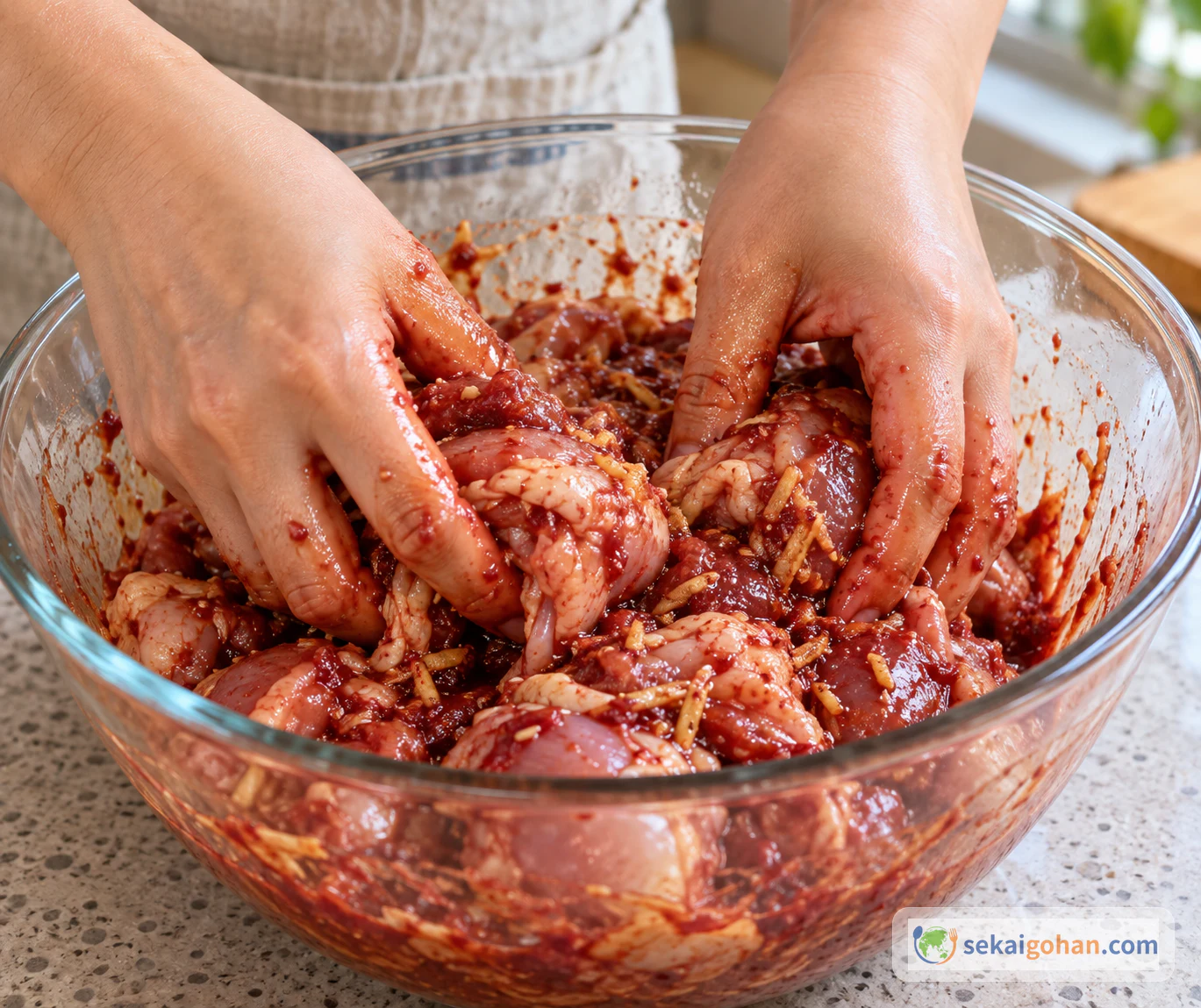
Mixing chicken thigh with red wine lees, sesame oil and ginger juice
Coat each piece of chicken with the red marinade

Put the chicken pieces in a clean glass bowl and add 1 heaped tbsp red wine lees, 1 tsp sesame oil and 1/2 tbsp ginger juice. Mix with your hands until every piece is coated red.

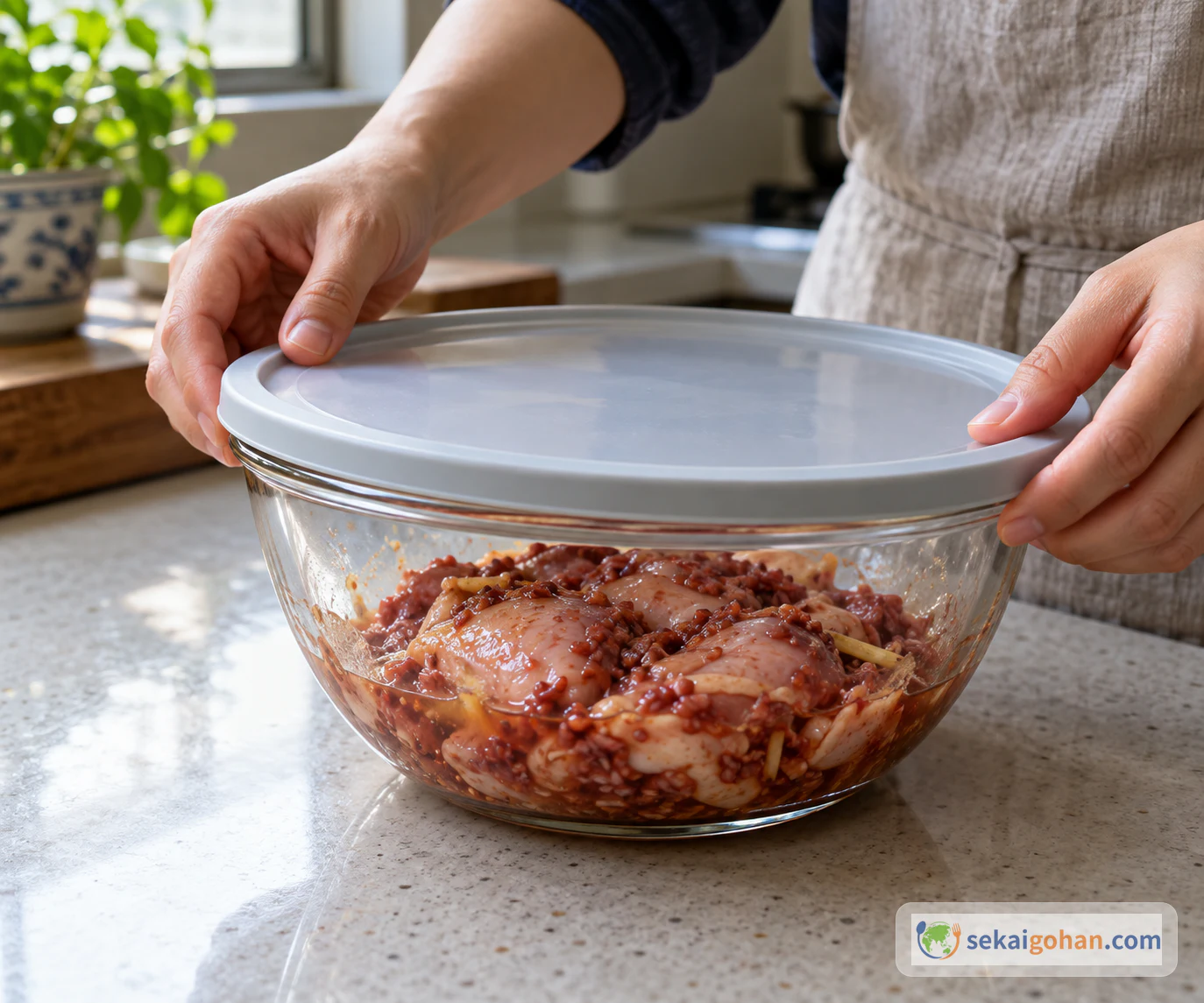
Cover the bowl with a fitted lid.

Covering the bowl of chicken mixed with red wine lees
Cover the bowl before it goes into the refrigerator

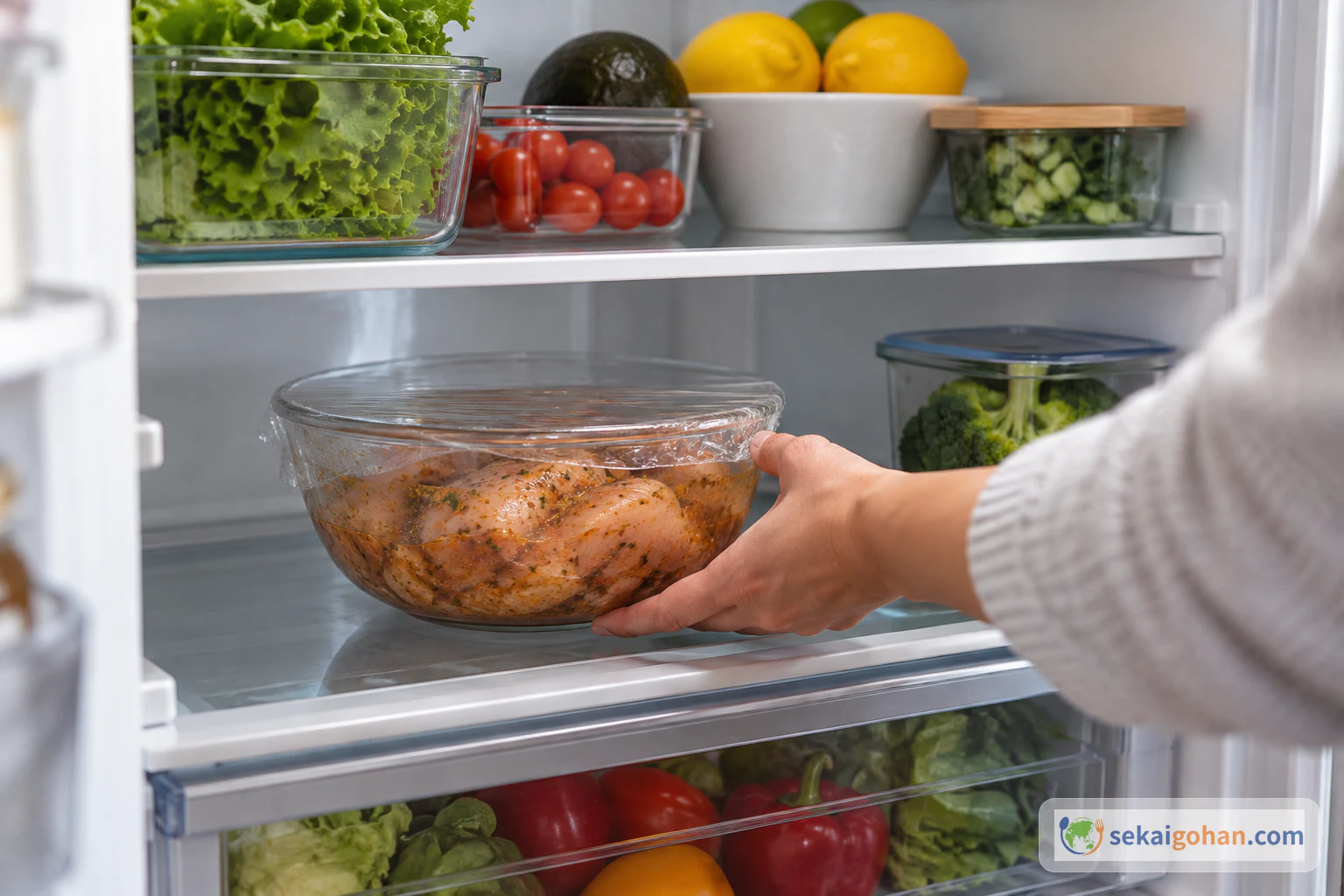
Put the covered bowl in the refrigerator, away from ready-to-eat food, and marinate for 30 minutes. Wash your hands and everything the raw chicken touched.

Placing the covered bowl of marinating chicken on a refrigerator shelf
Marinate the raw chicken in the refrigerator for 30 minutes
STEP 22 / 6

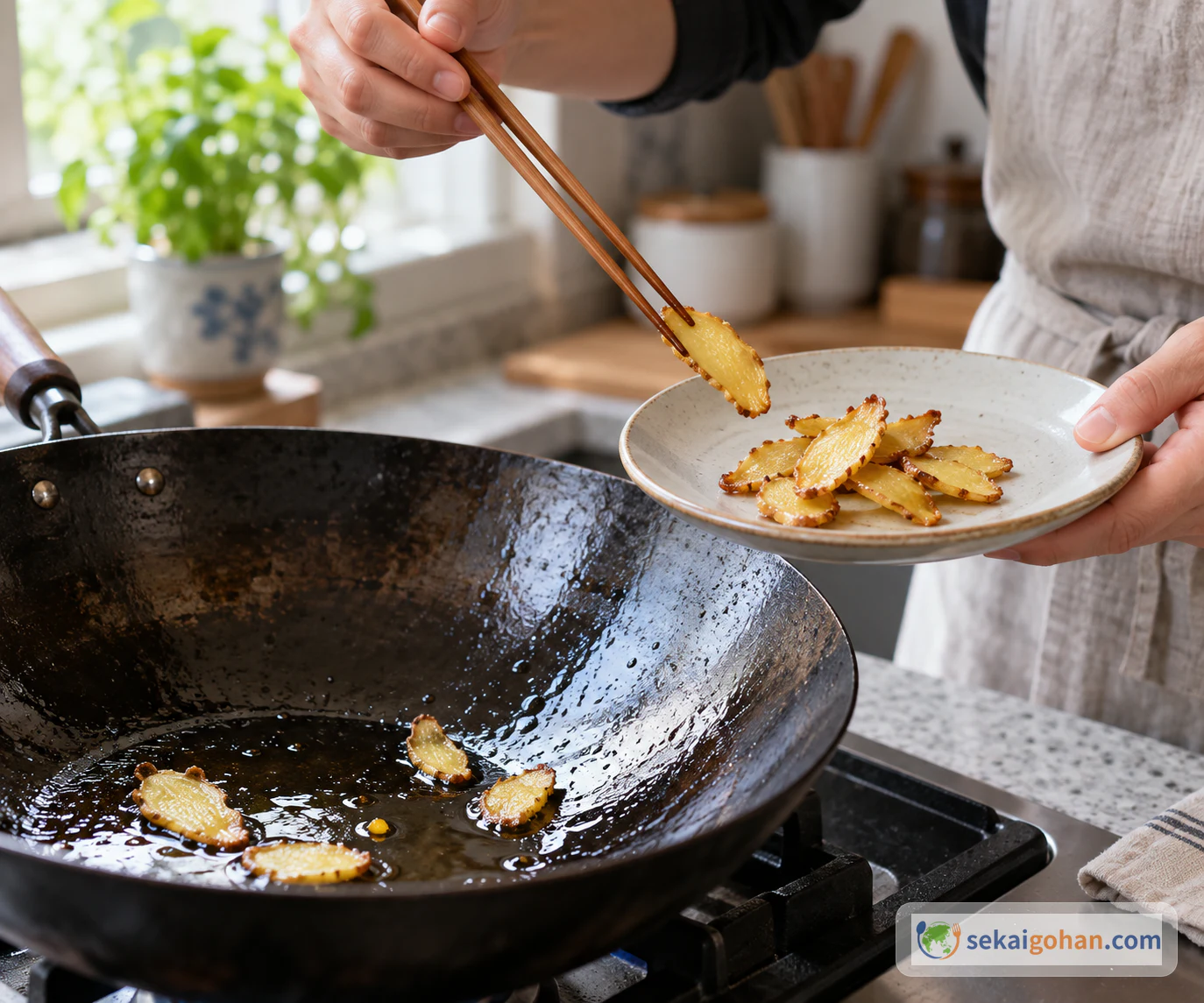
Fry the ginger slices and set them aside

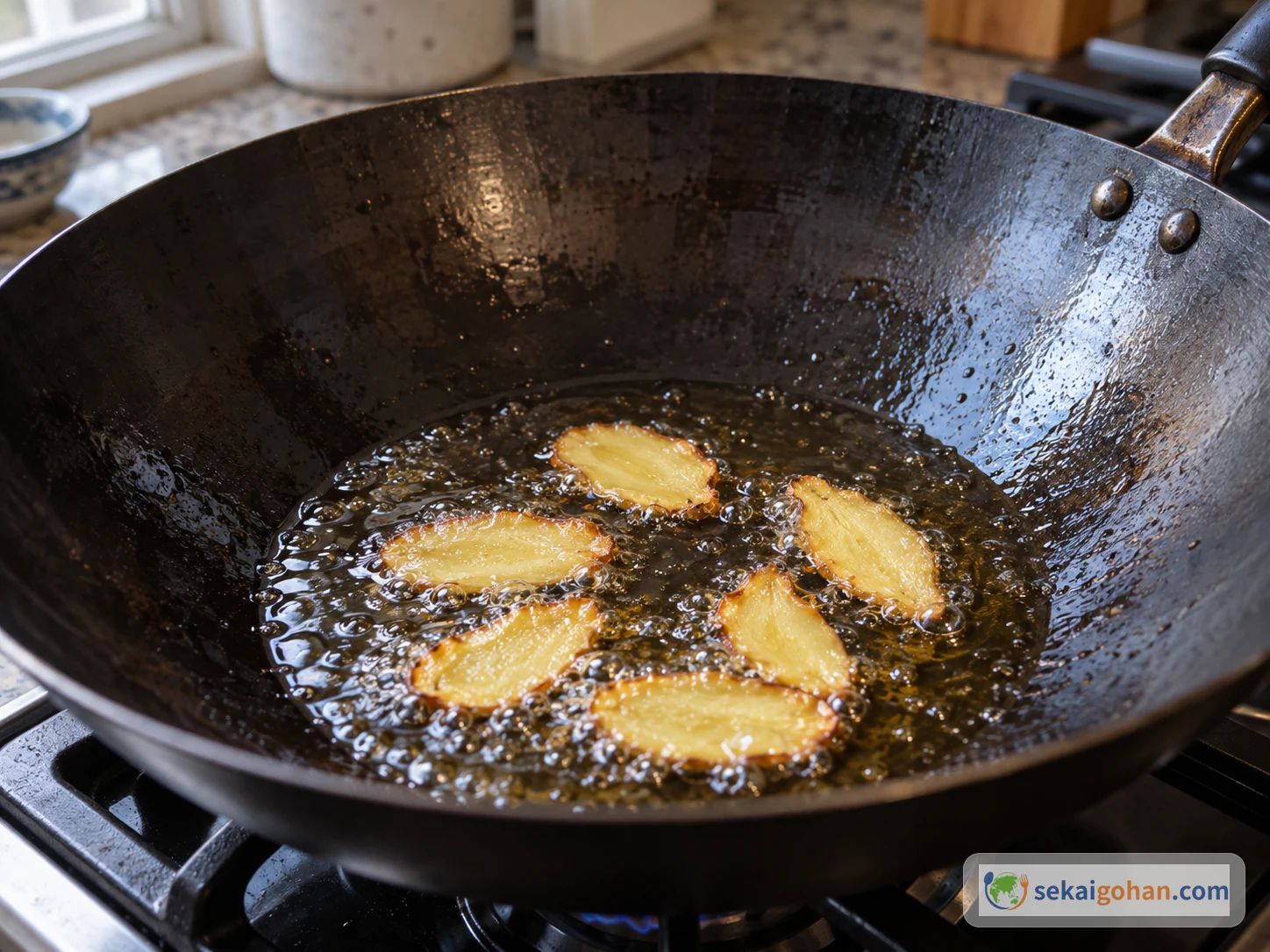
Frying six thin slices of ginger in a wok of heated sesame oil and vegetable oil
Fry the thin ginger slices in the two oils until crisp

Heat 1 tbsp sesame oil and 1 tbsp olive or vegetable oil in a wok. Add the 6 thin ginger slices and fry them until crisp and lightly golden.

Lift the ginger out with chopsticks onto a small plate and keep the oil in the wok.

Moving the fried ginger from the wok to a small plate
Reserve the fried ginger for the topping
STEP 33 / 6

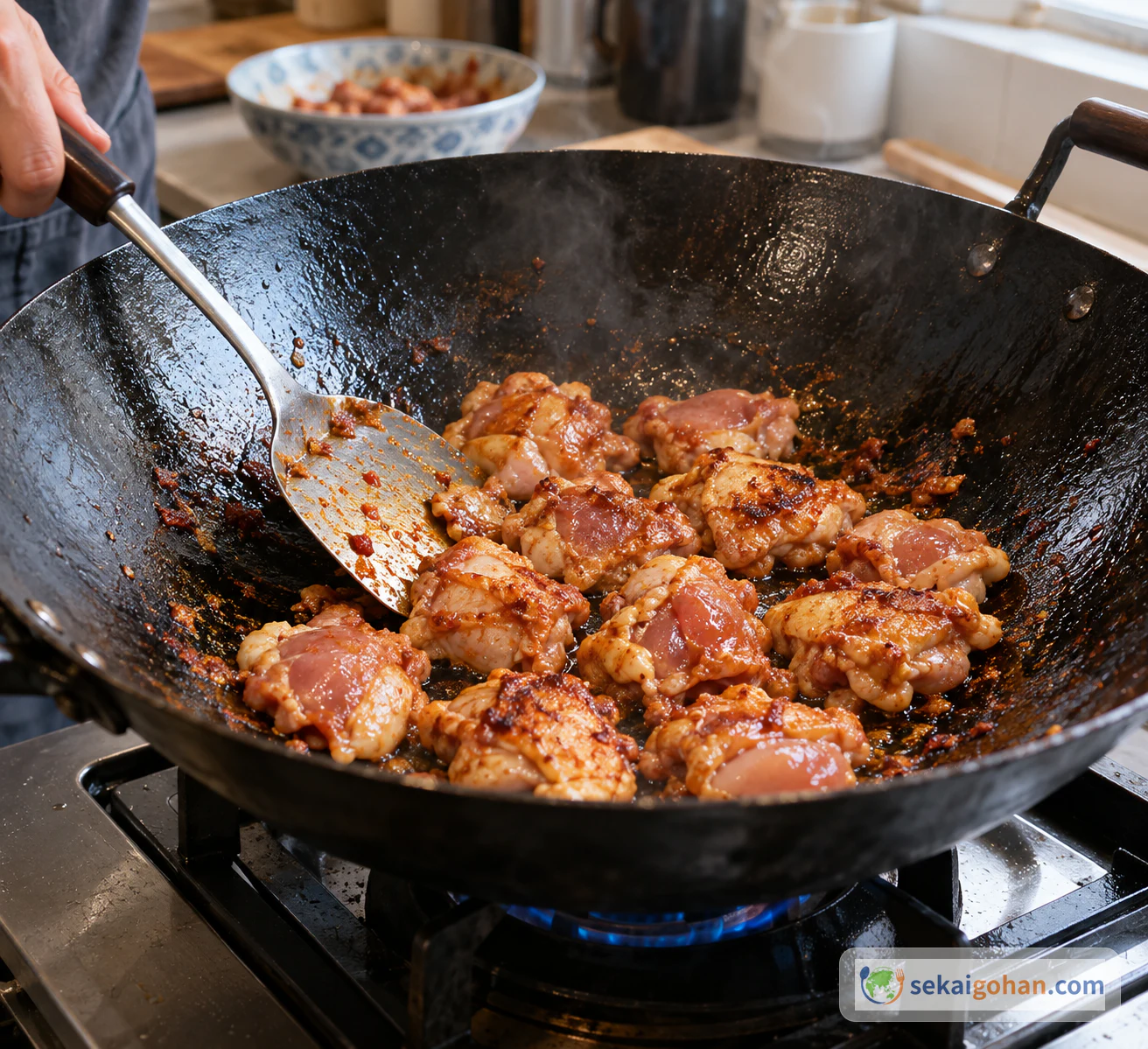
Stir-fry the marinated chicken

Stir-frying chicken thigh coated in red wine lees in a wok
Cook the surface of the chicken in the remaining oil

Add the marinated chicken to the oil left in the wok and stir-fry until the surface of each piece is cooked. Continue with the braise, then check the center with a thermometer.

STEP 44 / 6

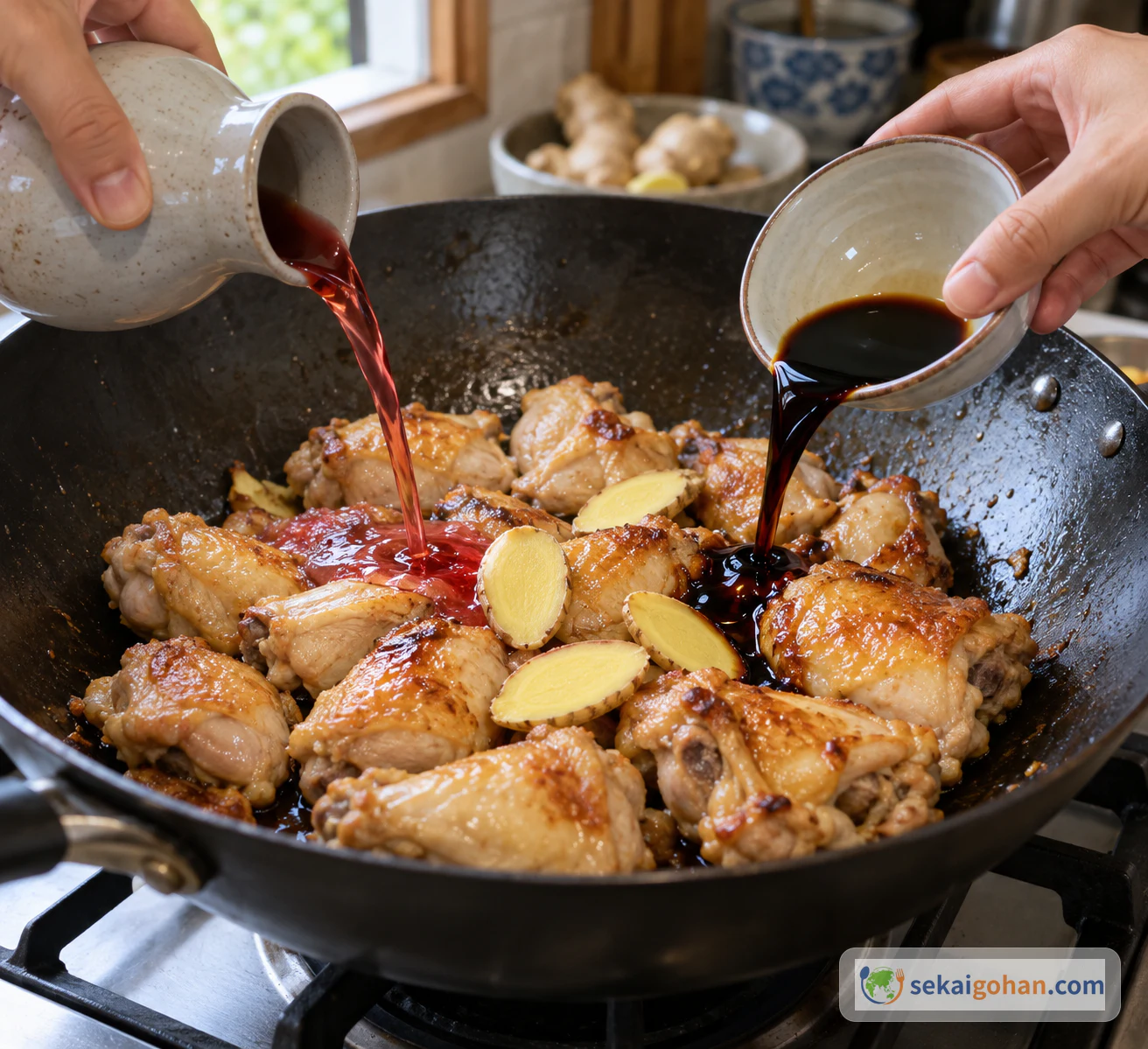
Add the wine, ginger and soy sauce, then simmer covered

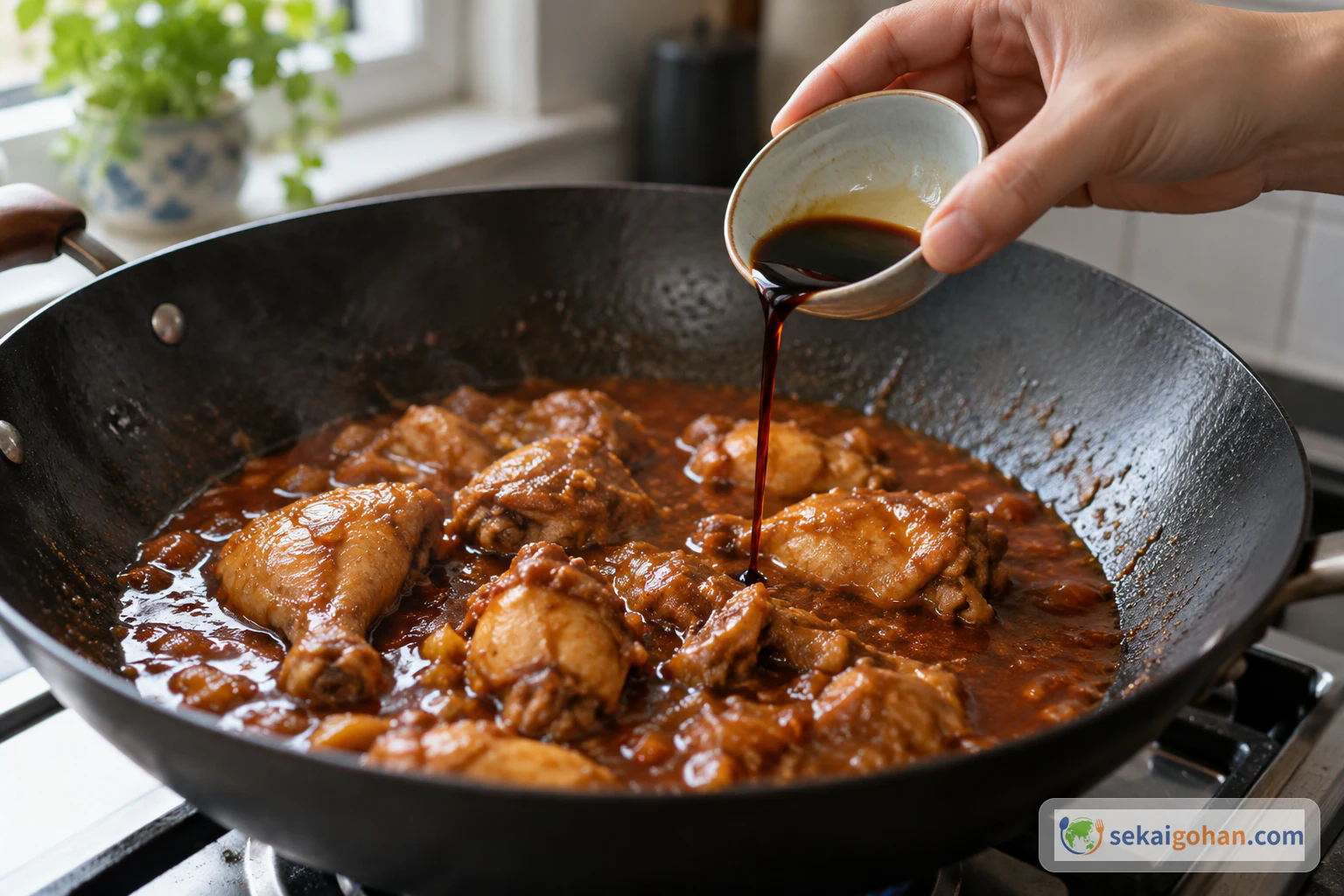
Adding red glutinous rice wine, four slices of ginger and light soy sauce to the stir-fried chicken
Add the red wine, the braising ginger and the light soy sauce

Pour in ¾ cup (200 ml) red glutinous rice wine, and add the 4 ginger slices and 3/4 tbsp light soy sauce.

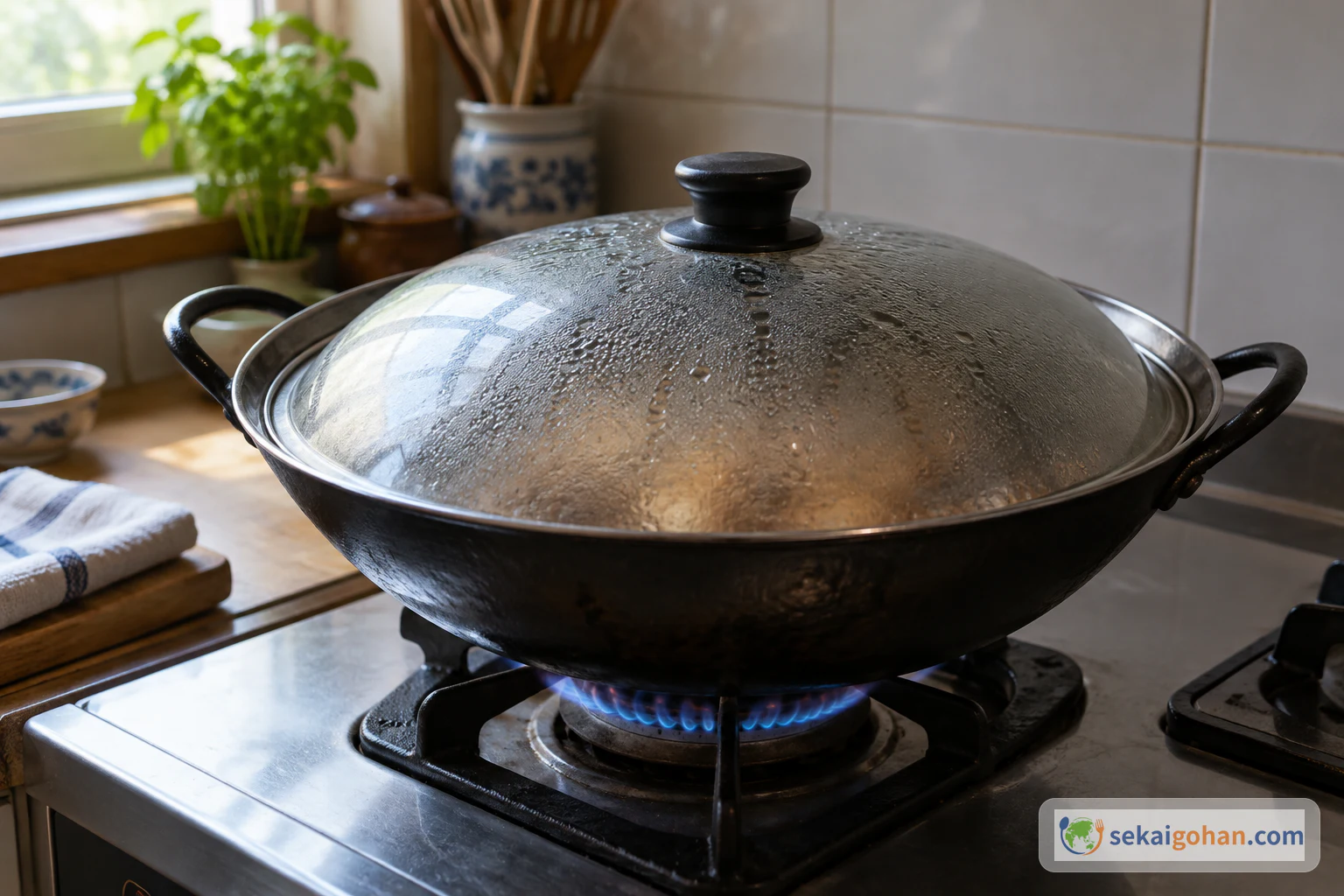
Cover the wok and simmer for about 5 minutes.

Simmering the chicken with red wine and seasonings under the wok lid
Simmer covered for about 5 minutes
STEP 55 / 6

Turn the chicken, add hot water, simmer until done, then season

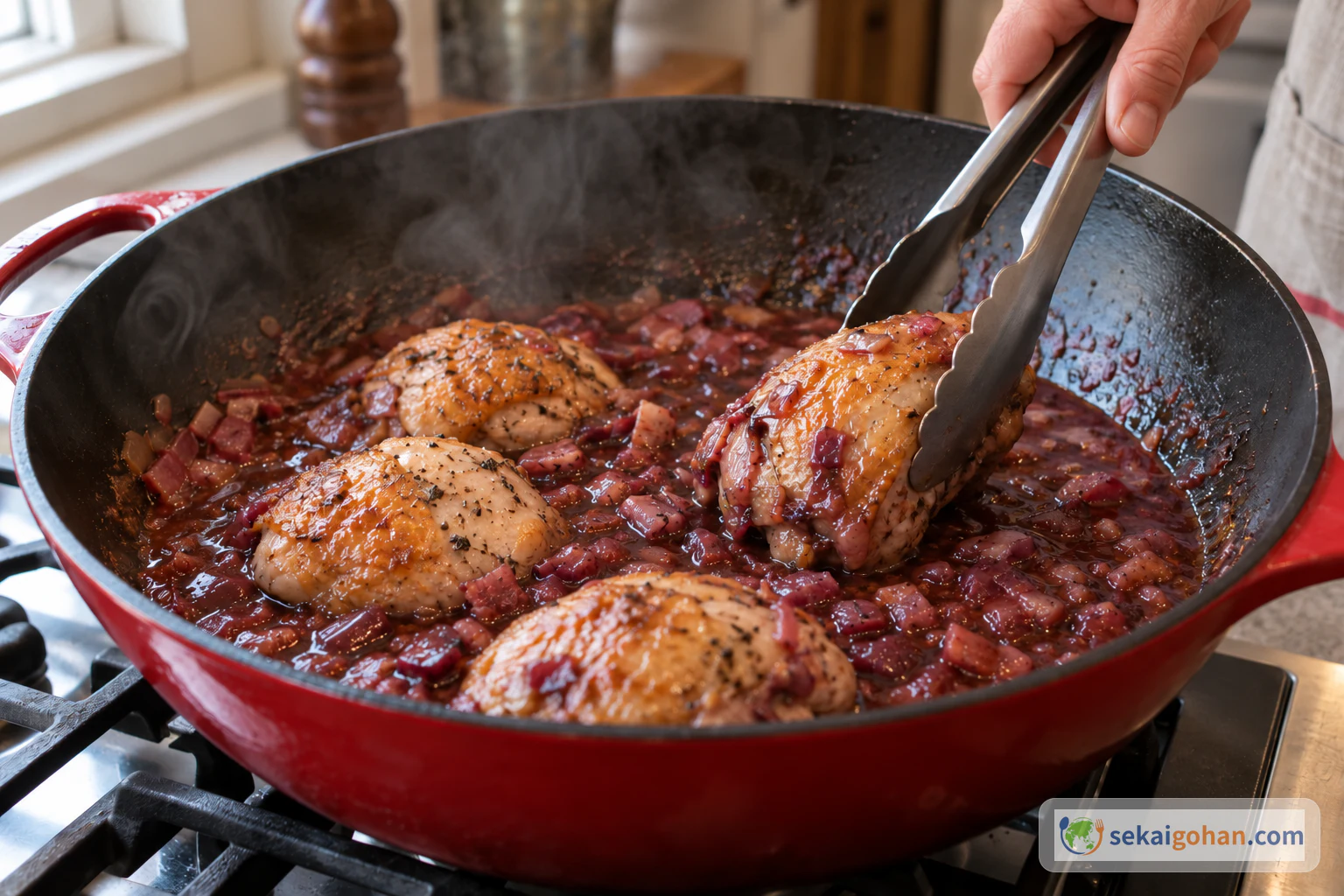
Turning the chicken with tongs after the first simmer
Turn the chicken after the first simmer

Open the lid and turn the chicken pieces with tongs so the other sides sit in the gravy.

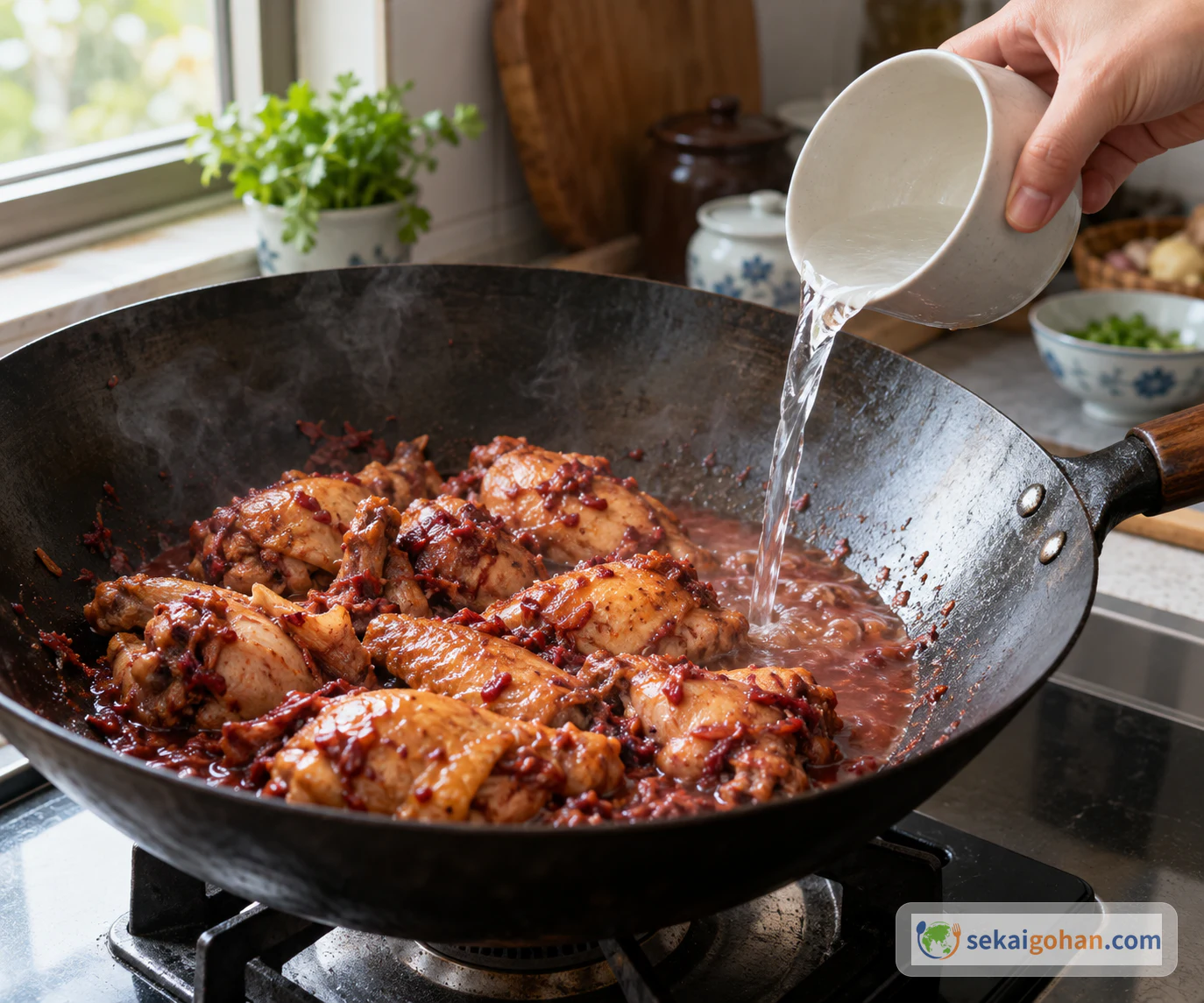
Pour in ½ cup (100 ml) hot water.

Pouring 100 ml hot water into the wok of turned chicken
Add the hot water once the chicken is turned

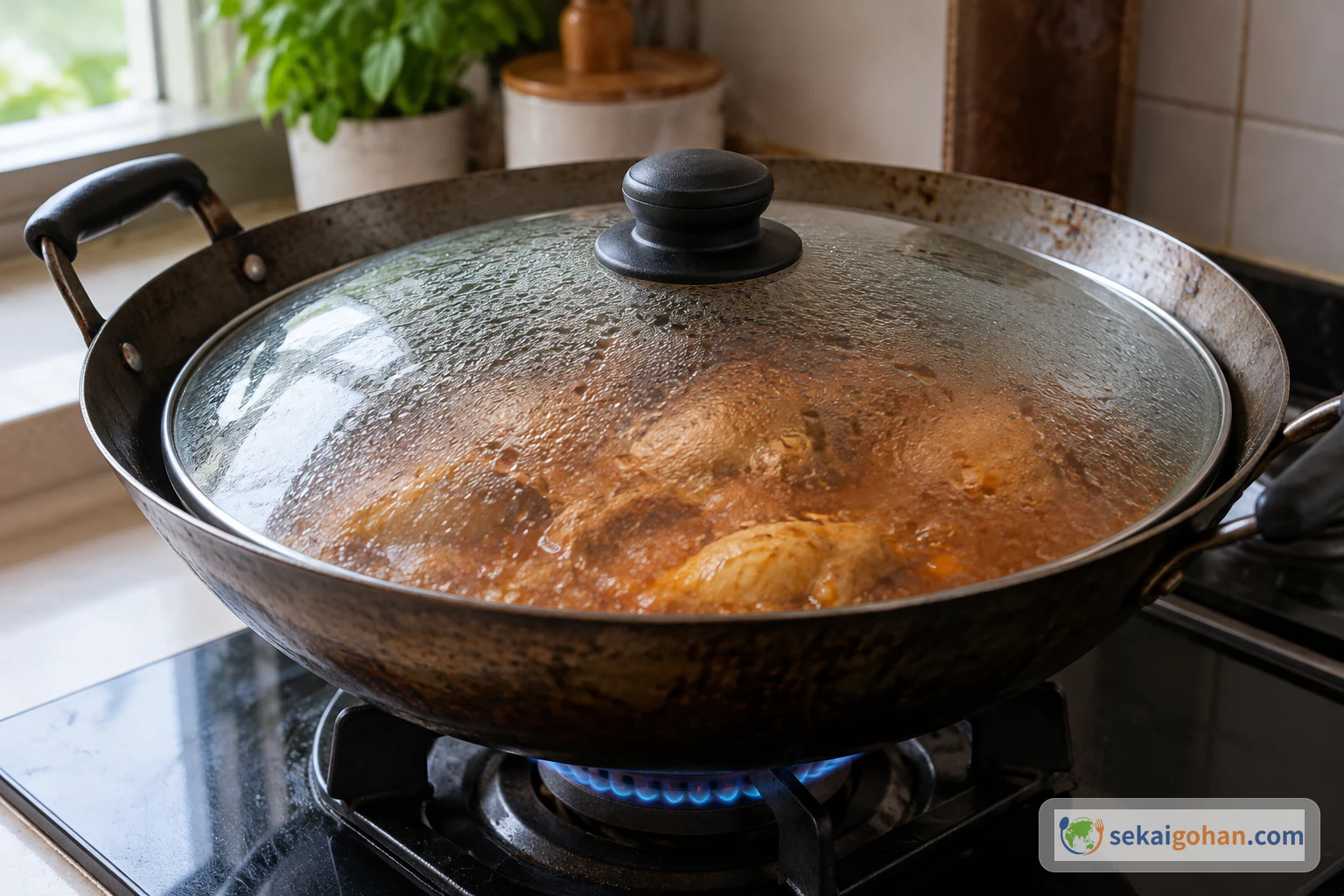
Cover again and simmer for about 5 minutes more, or until the chicken is cooked through.

Simmering the chicken with the added hot water under the wok lid
Simmer covered again for about 5 minutes

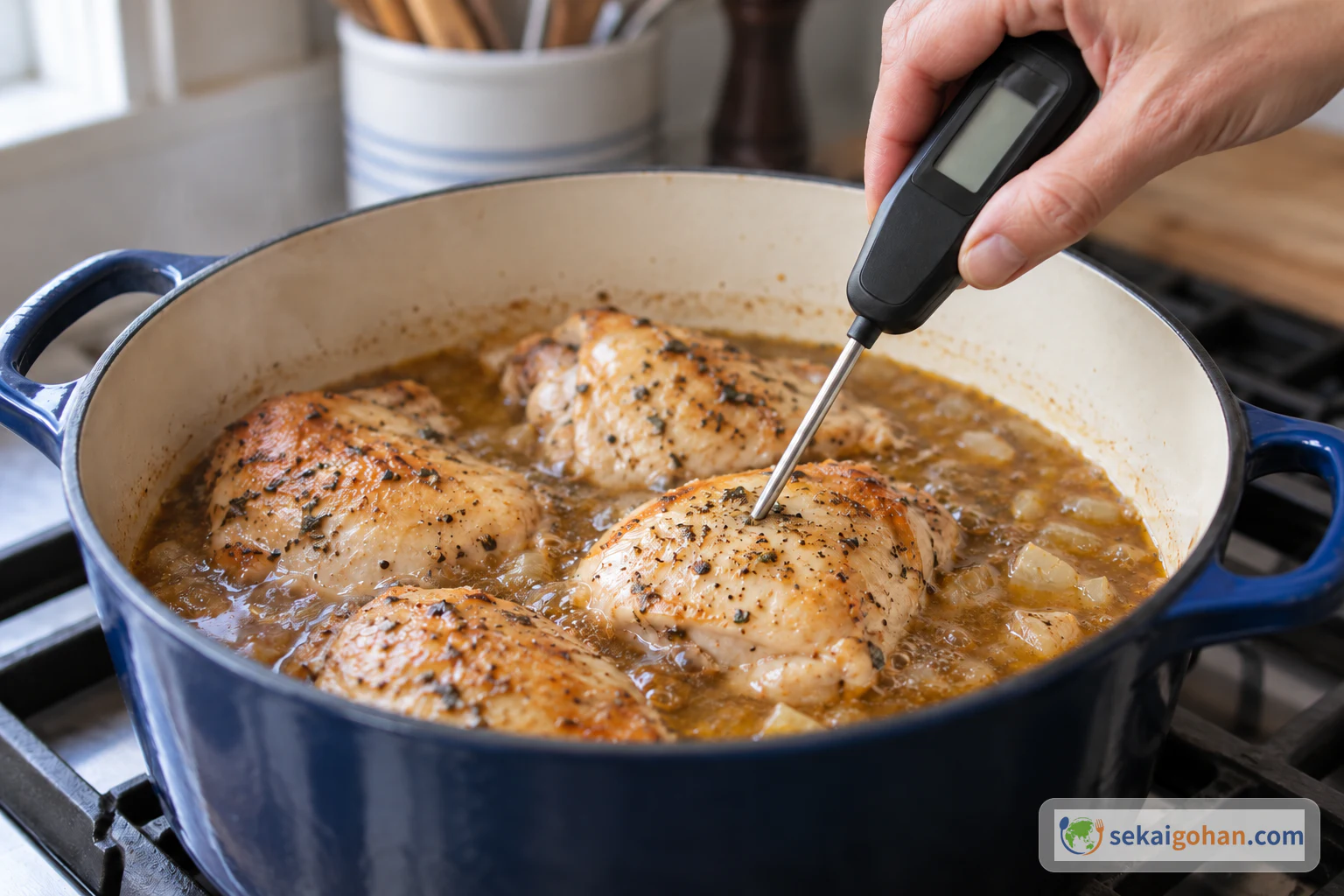
Insert a thermometer into the thickest piece of chicken. It is done when the center reaches 167°F (75°C) and stays there for at least 1 minute. If it has not, cover the wok, keep simmering, and check again.

Inserting a thermometer into the thickest part of the chicken to check the center temperature
Check the thickest piece for 75°C held for at least 1 minute

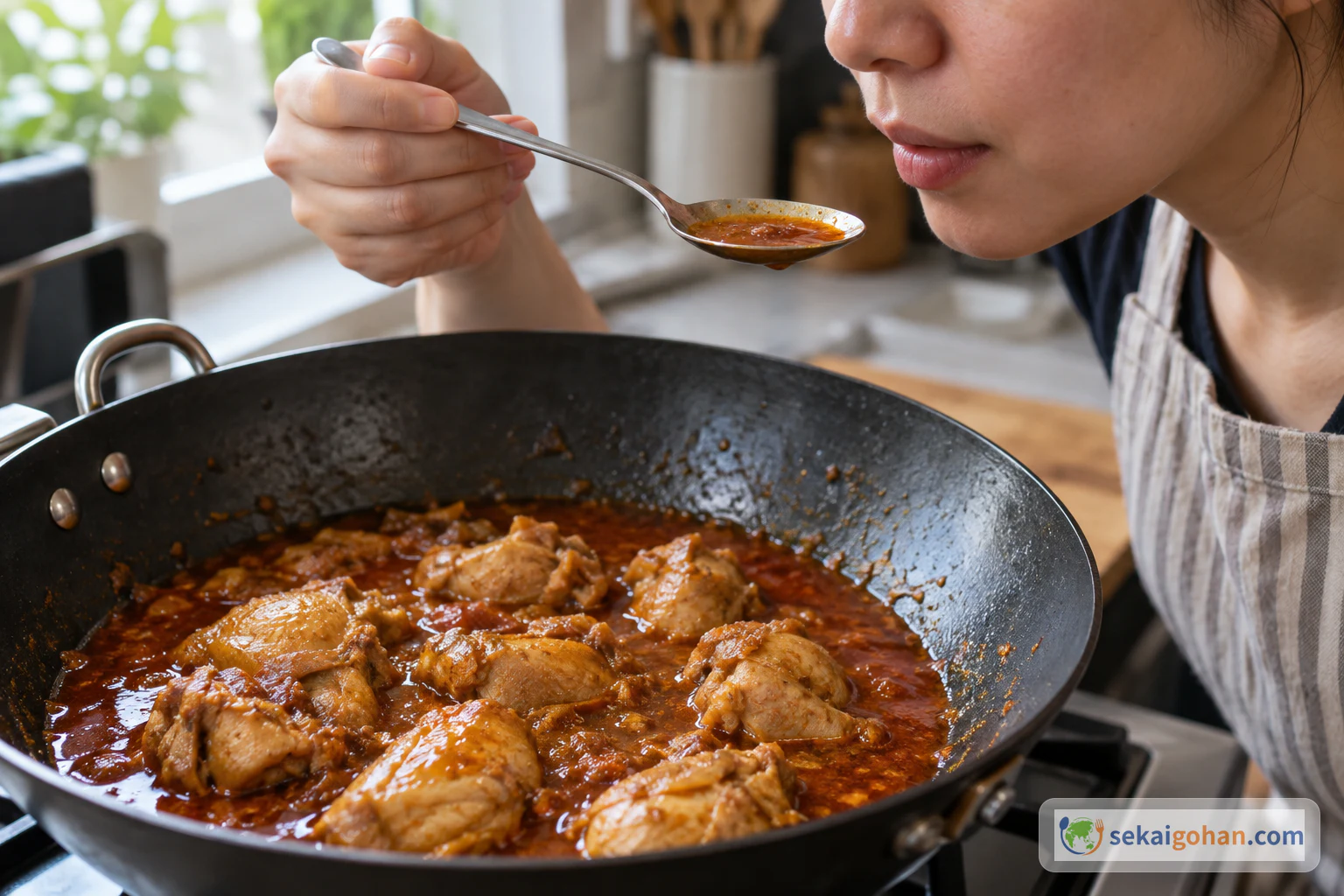
Once the chicken is fully cooked, taste the gravy with a small spoon.

Tasting the gravy with a small spoon to check the saltiness
Taste the gravy after the chicken is cooked

If it needs more salt, add light soy sauce or salt, to taste.

Adding soy sauce or salt to the tasted gravy to adjust the seasoning
Adjust with light soy sauce or salt only if needed
STEP 66 / 6

Plate and top with the fried ginger

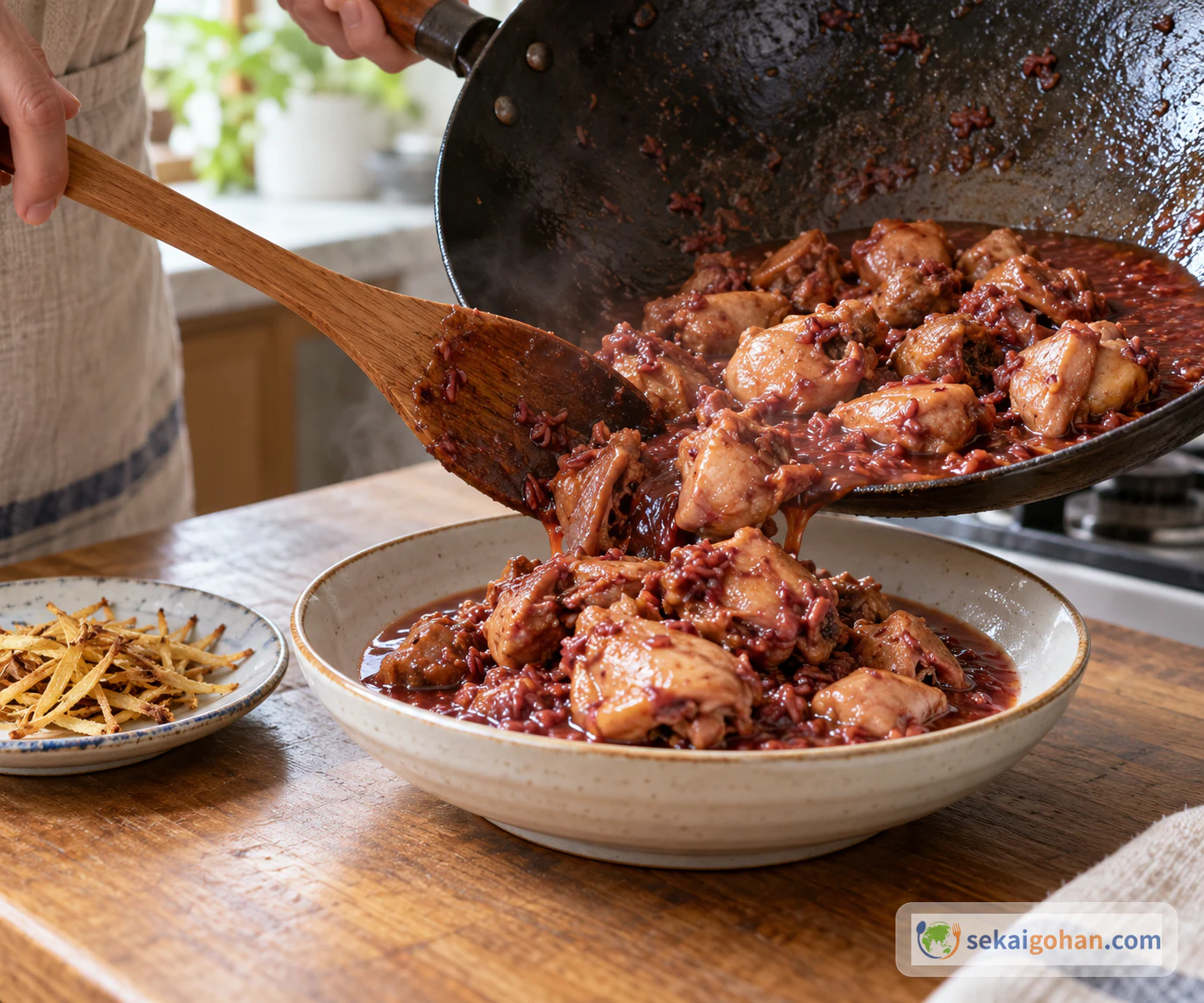
Moving the cooked chicken and gravy into a serving dish
Move the chicken and gravy to the dish

Transfer the chicken and its gravy to a serving dish.

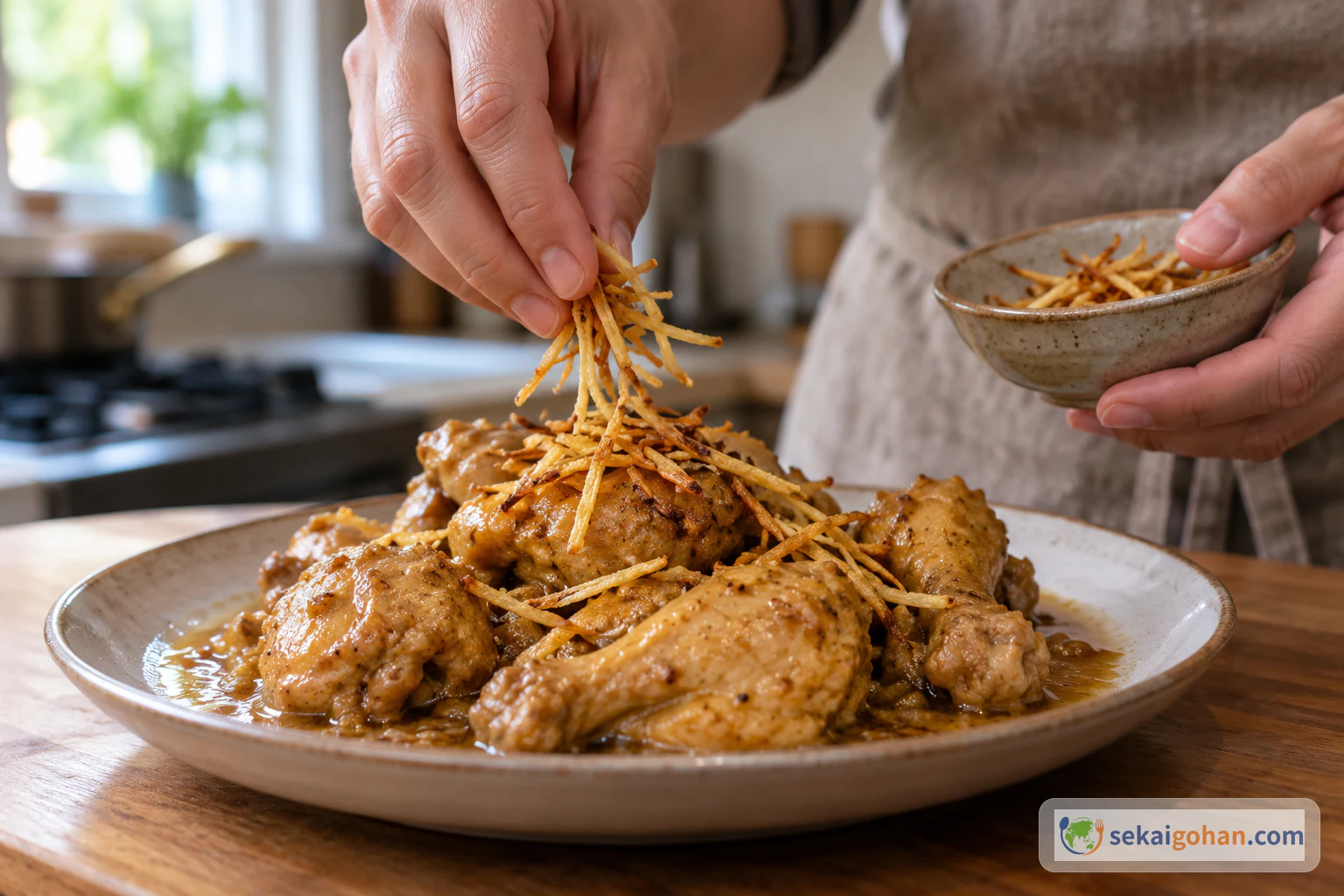
Scatter the reserved fried ginger over the top and serve.

Topping the plated hong zao ji with the reserved fried ginger
Finish with the crisp fried ginger
0 / 0
Ingredients

Ingredients

1 / 1

Ingredients

Ingredient Amount Role
Chicken thigh 1 lb (500 g) The main ingredient. Cut into small pieces
Red glutinous rice wine lees (紅糟 / 红糟 / ang chow) 1 heaped tbsp Marinade. Gives the red color and fermented aroma
Sesame oil 1 tsp Marinade
Ginger juice 1/2 tbsp Marinade. Grate fresh ginger and squeeze; measure the juice
Sesame oil 1 tbsp For frying the ginger and then the chicken
Olive oil or vegetable oil 1 tbsp For frying, together with the sesame oil
Ginger, thinly sliced 6 slices Fried crisp and set aside as the topping
Red glutinous rice wine (红槽酒) ¾ cup (200 ml) Braising liquid
Ginger, sliced 4 slices Simmered with the chicken
Chinese light soy sauce (生抽) 3/4 tbsp Seasoning for the braise
Hot water ½ cup (100 ml) Added for the second simmer
Light soy sauce or salt to taste Final seasoning after tasting the gravy
0 / 0

Six thin slices of ginger sizzle in a wok until crisp, then wait on a small plate. Into the same oil go small pieces of chicken thigh already stained red with wine lees, then a pour of red glutinous rice wine, and the lid goes on. That is the whole rhythm of hong zao ji (紅糟鶏 / 红糟鸡 / 紅糟雞), a short, warm braise from the Foochow kitchen. What you get is chicken in a deep red, modest gravy that clings to every piece, with the fermented aroma of the lees, the scent of rice wine and the toasty edge of fried ginger.

Hong Zao Ji and Red Wine Lees

Hong zao ji is a homely dish, cooked in Fuzhou-area kitchens and in Foochow communities abroad. In Singapore it is well known in the local Chinese Foo Chow (Hock Chew) community. The written forms are 红糟鸡 (simplified) and 紅糟雞 (traditional), and in English it often goes by "red wine chicken." That "red wine" is red glutinous rice wine, not wine made from grapes.

What red lees are

Hong zao (紅糟) is the red, paste-like residue left after cooked glutinous rice is fermented with red yeast to make wine. On shop shelves it appears as red glutinous rice wine lees, 紅糟, 紅槽 or ang chow. The wine from the same kind of fermentation, red glutinous rice wine (红槽酒), is the braising liquid here. Neither is grape red wine, and neither is the same as red yeast rice grains, powders or supplements, which are different products.

Red-lees chicken around Fuzhou

Red lees turn up in more than one chicken dish from the Fuzhou area, and the names and methods don't line up into a single standard. There is no single place of origin or province-wide standard form. In Changle, a local chicken braised with red wine lees is called 红糟焖鸡; it uses half a chicken and 1.75 oz (50 g) of red lees with ginger, oil and water, in a different order of steps. It is red in color and made for celebratory tables.

In Jingxi, Minhou, the local version is 醉糟鸡. There the chicken is cooked and then plunged into ice water for crisp skin, a cooled dish quite unlike this warm braise. For more dishes from across the country, see Chinese recipes.

At the table after childbirth

Hong zao ji is also eaten as confinement food, the meals after giving birth. Red lees are sometimes linked to recovery, but no health benefit is confirmed.

Ingredients for 1 lb (500 g) Chicken Thigh
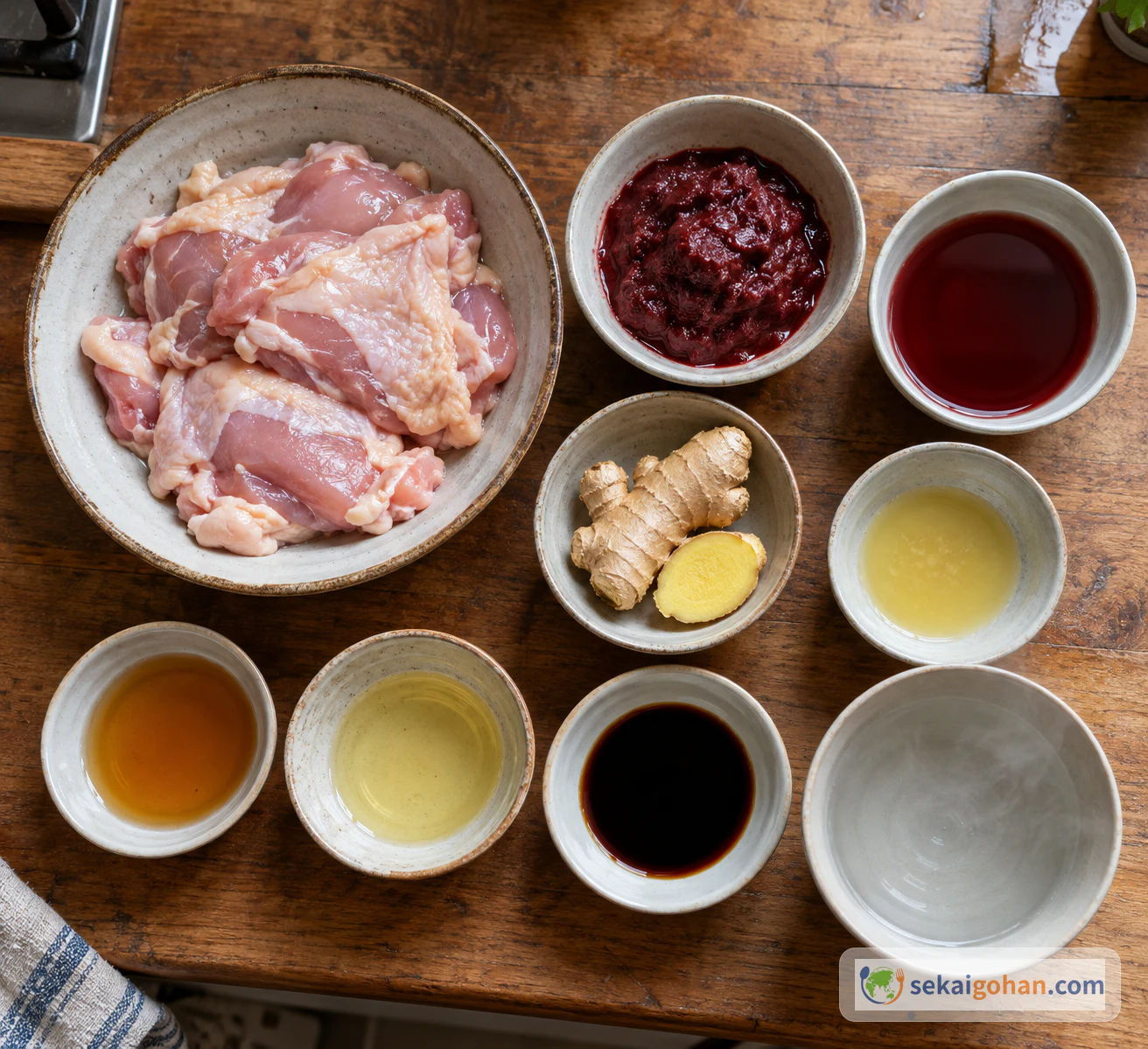
Ingredients for hong zao ji: chicken thigh, red rice wine lees, red glutinous rice wine, ginger, sesame oil, vegetable oil, light soy sauce and hot water
Chicken thigh, red lees, red glutinous rice wine, ginger, two oils, light soy sauce and hot water

Red lees differ in saltiness from one product to the next, so taste the gravy at the end before adding more soy sauce or salt. Soy sauce contains soy, and sesame oil is used twice in this recipe. Check the labels of the lees and the rice wine for their ingredients and allergen statements.

Equipment

  • Wok with a lid
  • Glass bowl with a fitted lid, for marinating
  • Grater, for the ginger juice
  • Chopsticks, for lifting out the fried ginger
  • Spatula and tongs
  • Small spoon, for tasting
  • Instant-read food thermometer
  • Small plate and a serving dish

Choosing Ingredients for Hong Zao Ji

Red lees. Look for a commercially prepared, food-grade product labeled 紅糟, 紅槽, red glutinous rice wine lees or ang chow, and follow the storage directions on the package. The lees carry the dish's color and fermented character, so they have no substitute; red yeast rice grains, powders and supplements won't work in their place.

Red glutinous rice wine. If you can't find it, use regular Chinese rice wine or water. Either one changes the aroma and color. Grape red wine won't do.

Light soy sauce. Use Chinese light soy sauce (生抽). Japanese usukuchi ("light") soy sauce is a different product and won't swap in measure for measure.

Frying oil. For less sesame aroma, fry in an ordinary cooking oil instead of the 1 tbsp of sesame oil. Keep the 1 tsp of sesame oil in the marinade as it is.

Thermometer. A simple instant-read food thermometer is what tells you the chicken is done. The simmering times are guides, not a safety endpoint, and the raw chicken should marinate in the refrigerator.

Method: From a Chilled Marinade to a Covered Braise

Chicken safety

Keep raw chicken and its juices away from other food, and wash the bowl, board and utensils that touched it. The chicken is done only when the thickest part reaches 167°F (75°C) and stays there for at least 1 minute, measured with a thermometer. Color, surface browning or simmering time alone are not enough to judge.

Common Problems with Hong Zao Ji

Condition Likely reason What to do
The chicken is below 167°F (75°C) after both simmers Piece size and heat change the time needed Cover and keep simmering, then measure the thickest piece again. Don't serve until it holds 167°F (75°C) for at least 1 minute
The gravy tastes too salty Red lees differ in saltiness by product Skip the extra soy sauce or salt at the end. Next time, taste before adding anything beyond the 3/4 tbsp
The gravy tastes flat Final seasoning Add light soy sauce or salt a little at a time, tasting as you go
The sesame aroma is too strong Sesame oil in both the marinade and the frying oil Next time, fry in ordinary cooking oil

Variations and Leftovers

Try one change at a time rather than stacking them. A half chicken can stand in for thigh, but its pieces vary in size and thickness, so ignore the thigh timings and measure the thickest piece for 167°F (75°C) held for at least 1 minute. Swapping water for the rice wine softens the rice-wine aroma, though the lees remain and the dish is still not alcohol-free.

For a finishing touch, pour 2 tbsp red glutinous rice wine over the plated dish and add coriander if you like. That wine isn't heated at all, so leave it off for anyone who needs to avoid alcohol.

Don't leave the cooked chicken at room temperature for long. Divide leftovers into shallow containers so they cool quickly, refrigerate them, and reheat thoroughly before eating.

Frequently Asked Questions

Does the alcohol cook off?

Don't count on it. The braise uses ¾ cup (200 ml) of rice wine, so this recipe isn't suitable for anyone who must strictly avoid alcohol.

How long should I simmer it to be safe?

Plan on about 10 minutes of preparation and 20 of cooking, plus the 30-minute marinade, but let the thermometer decide. The thickest part of the chicken should reach 167°F (75°C) and stay there for at least 1 minute.
Sources

  • wiffy, "Red Glutinous Wine Chicken Recipe (Hong Zao Ji)," Noob Cook (published 2011, updated January 2014). The author's description of the dish as a Foo Chow / Hock Chew community home dish, learning to love it through their mother, and its confinement-food context. https://noobcook.com/hong-zao-ji/
  • wiffy, "Red Glutinous Wine Chicken Recipe (Hong Zao Ji)," page 2, Noob Cook. The 500 g chicken-thigh quantities, the 30-minute marinade and the order of steps; the rice wine, water and frying-oil alternatives; the half-chicken option; the note that lees vary in saltiness; the optional finishing wine and coriander; and the comment that grape red wine is not close in taste. https://noobcook.com/hong-zao-ji/2/
  • wiffy, "About the noob cook," Noob Cook. The author's Singapore background and the blog as a collection of dishes the author has made. https://noobcook.com/about/
  • Changle News, "红糟美食," hosted by the Changle District People's Government (2020). A separate local red-lee braised chicken, 红糟焖鸡, using half a chicken and 50 g red lees with a different method, and its red celebratory presentation. https://www.fzcl.gov.cn/xjwz/ztzl/clly/mstc/202003/t20200318_3222103.htm
  • Jiao Tong (焦桐), "飲食關鍵詞:紅糟雞," Merit Times (2011). The description of red lees as the residue from fermenting cooked glutinous rice with red yeast, and the existence of multiple regional and preparation variants. https://www.merit-times.com.tw/NewsPage.aspx?unid=246284
  • Minhou County People's Government, "这口醉糟鸡,是地道的闽侯味,也是他的匠心路" (2026). Chef Lin Changsheng's Jingxi, Minhou 醉糟鸡 and its method of cooling the cooked chicken in ice water. https://www.minhou.gov.cn/xjwz/mlmh/mytc/202603/t20260324_5299493.htm
  • Ministry of Health, Labour and Welfare (Japan), "家庭での食中毒予防" (Preventing food poisoning at home). The household guideline of a 75°C core temperature for at least 1 minute, not leaving cooked food at room temperature for long, cooling leftovers quickly in shallow containers, and reheating thoroughly. https://www.mhlw.go.jp/stf/seisakunitsuite/bunya/kenkou_iryou/shokuhin/syokuchu/01_00008.html