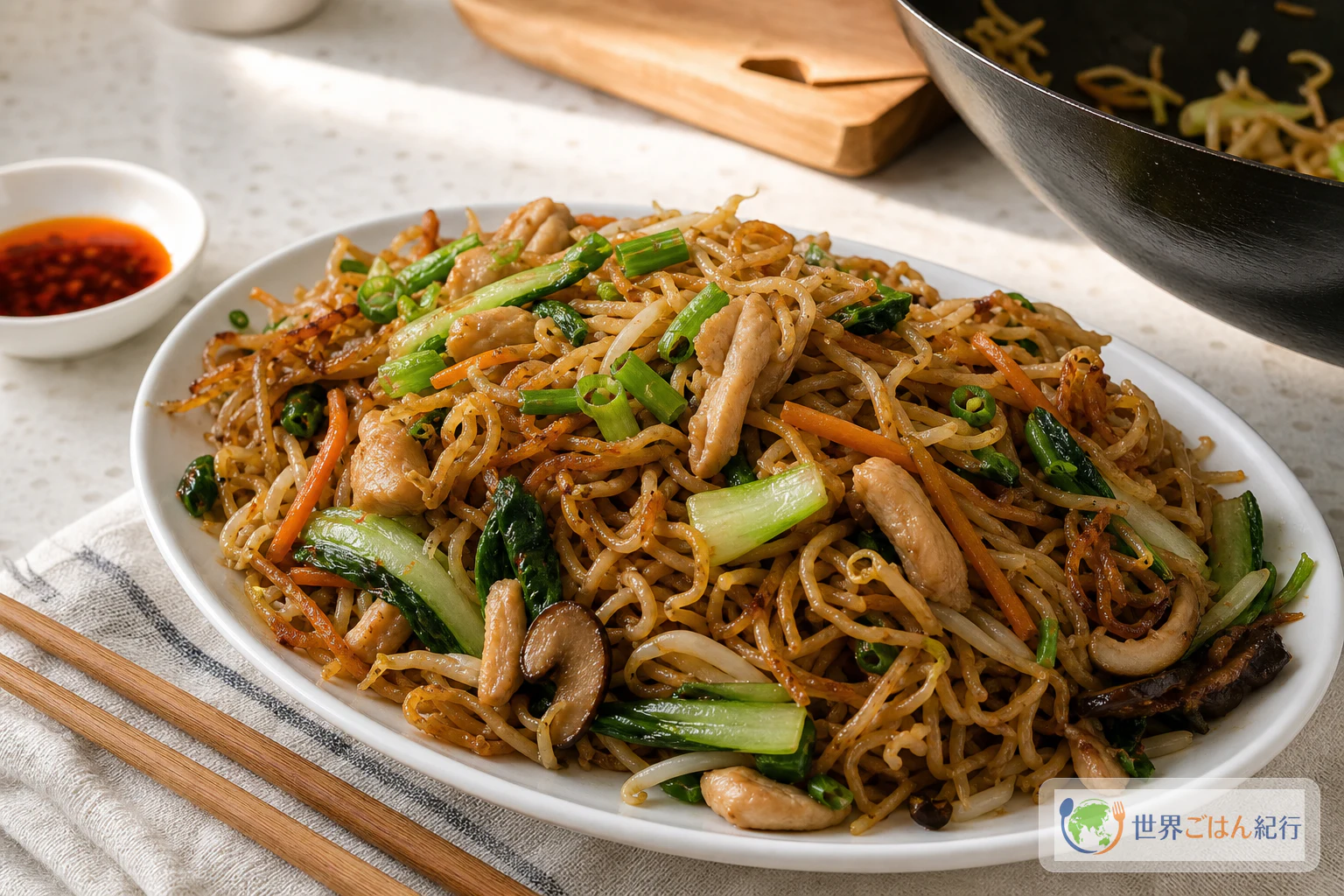
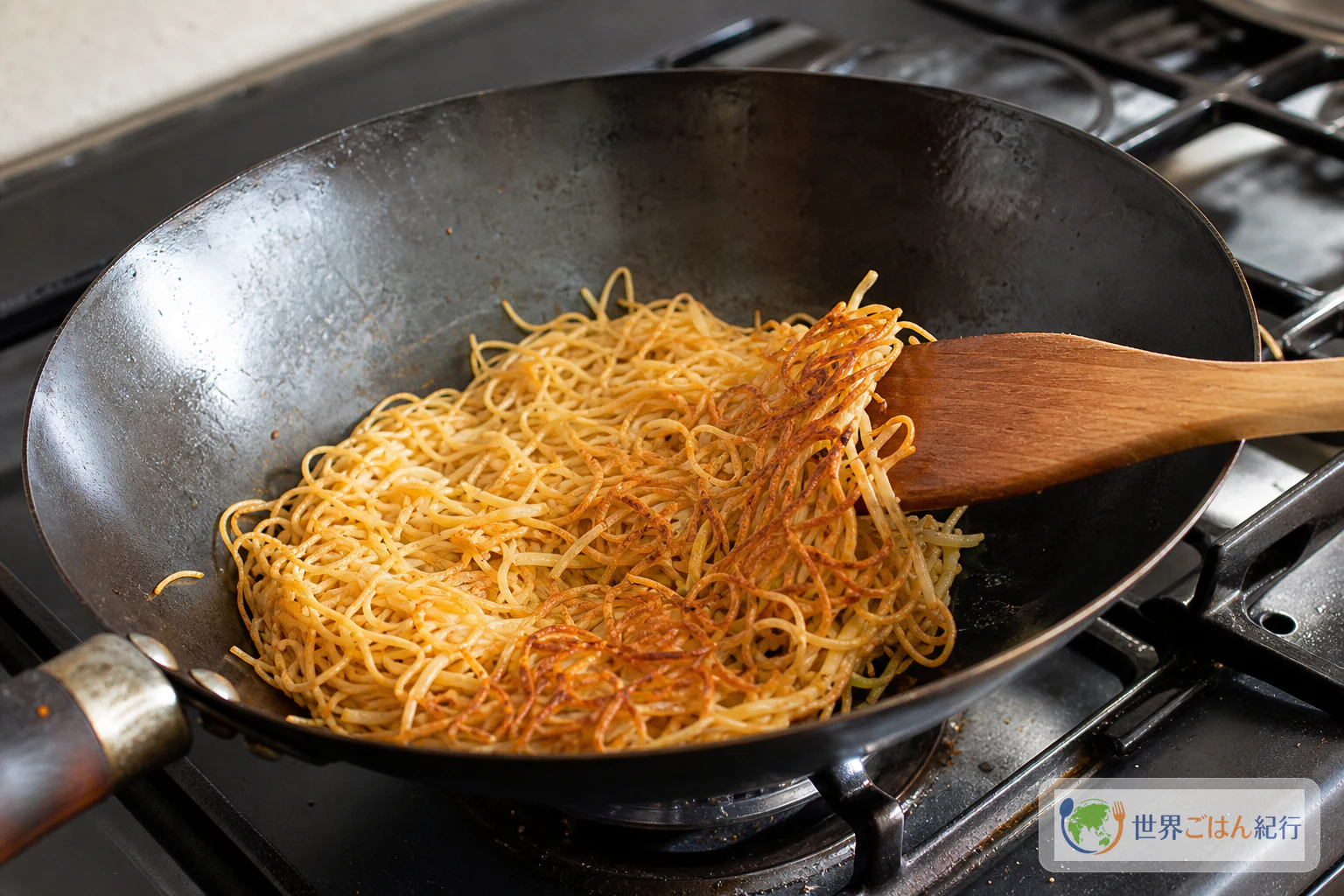
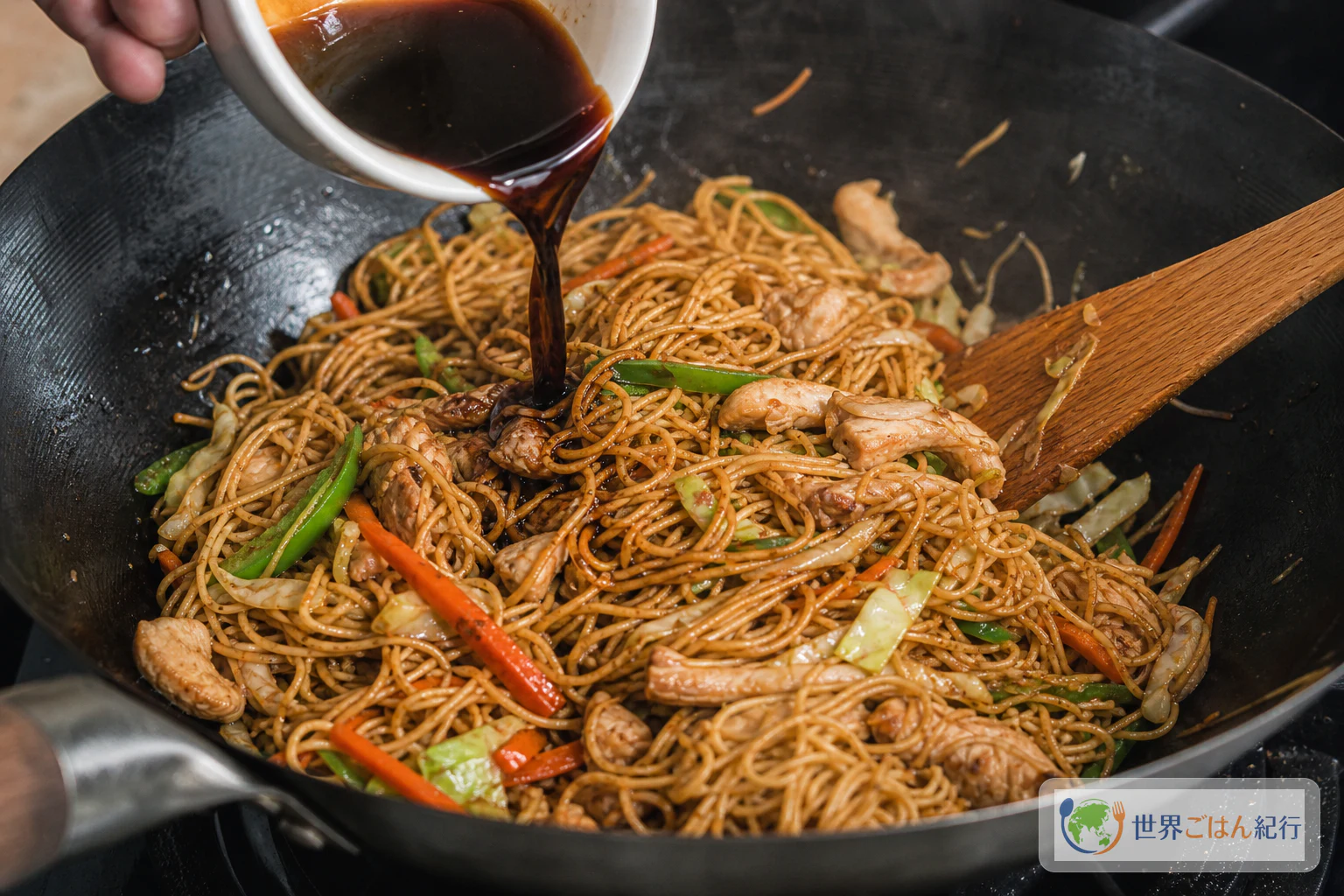
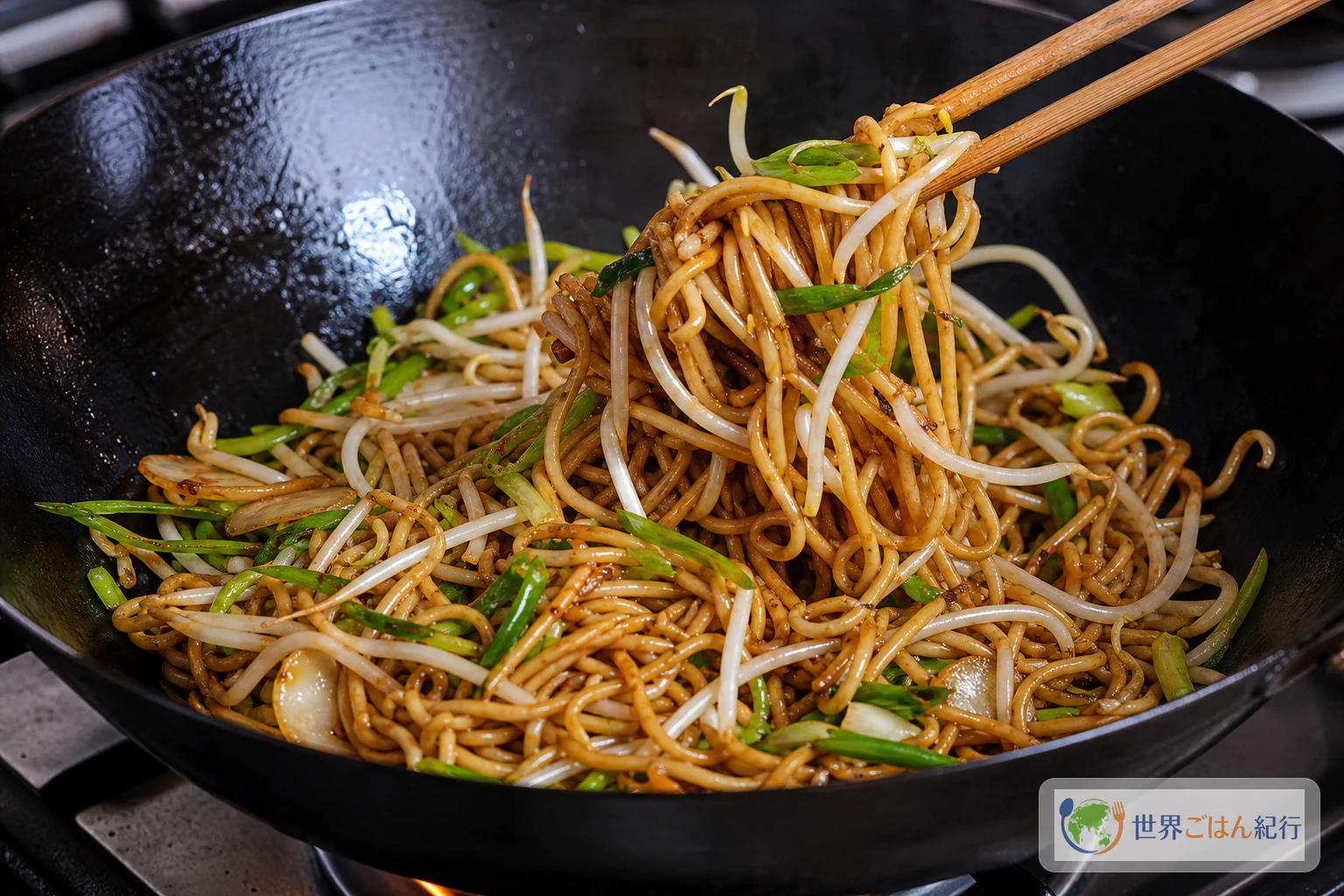
Swirl oil around a wok, spread out the loosened noodles, and for the first few dozen seconds nothing seems to happen. Then the edges firm up, and when you turn them with a spatula you see a light golden color and the toasty smell of stir-fried noodles rises. That browning is what makes chow mein. The name means, literally, "stir-fried noodles," and the dish came out of Guangdong. This Cantonese version tastes of soy sauce, oyster sauce and white pepper, with a little dark soy for color.
What chow mein is and where it comes from
Chow mein is less a fixed recipe than a cooking method: Chinese stir-fried noodles that spread from Guangdong around the world with Chinese emigrants, changing shape wherever they landed. North American Chinese restaurants distinguish "crispy chow mein" from "steamed chow mein," and the term can mean different things on the East Coast and the West Coast. Indo-Chinese cooking has street-style chowmein heavy on cabbage, carrot and green chili. In Southeast Asia, the Chinese communities made stir-fried noodles with local sweet soy sauces and fish sauces.
In Chinese it's written 炒麵 (traditional) or 炒面 (simplified); the Mandarin pinyin is chǎo miàn, and in Cantonese it's cháau mihn. The English chow mein is the spelling that took hold among emigrant communities.
It looks a lot like Japanese yakisoba, but the flavor is built differently. Instead of leaning on a sweet sauce, you dry the surface of the noodles, sear them against the wok, and build aroma with soy sauce, dark soy sauce (laochou), oyster sauce and white pepper. Unlike biangbiang noodles, where you make the noodles yourself, the challenge here is handling store-bought noodles. On days when you'd rather have soft noodles that soak up sauce, turn the same Chinese noodles into lo mein.
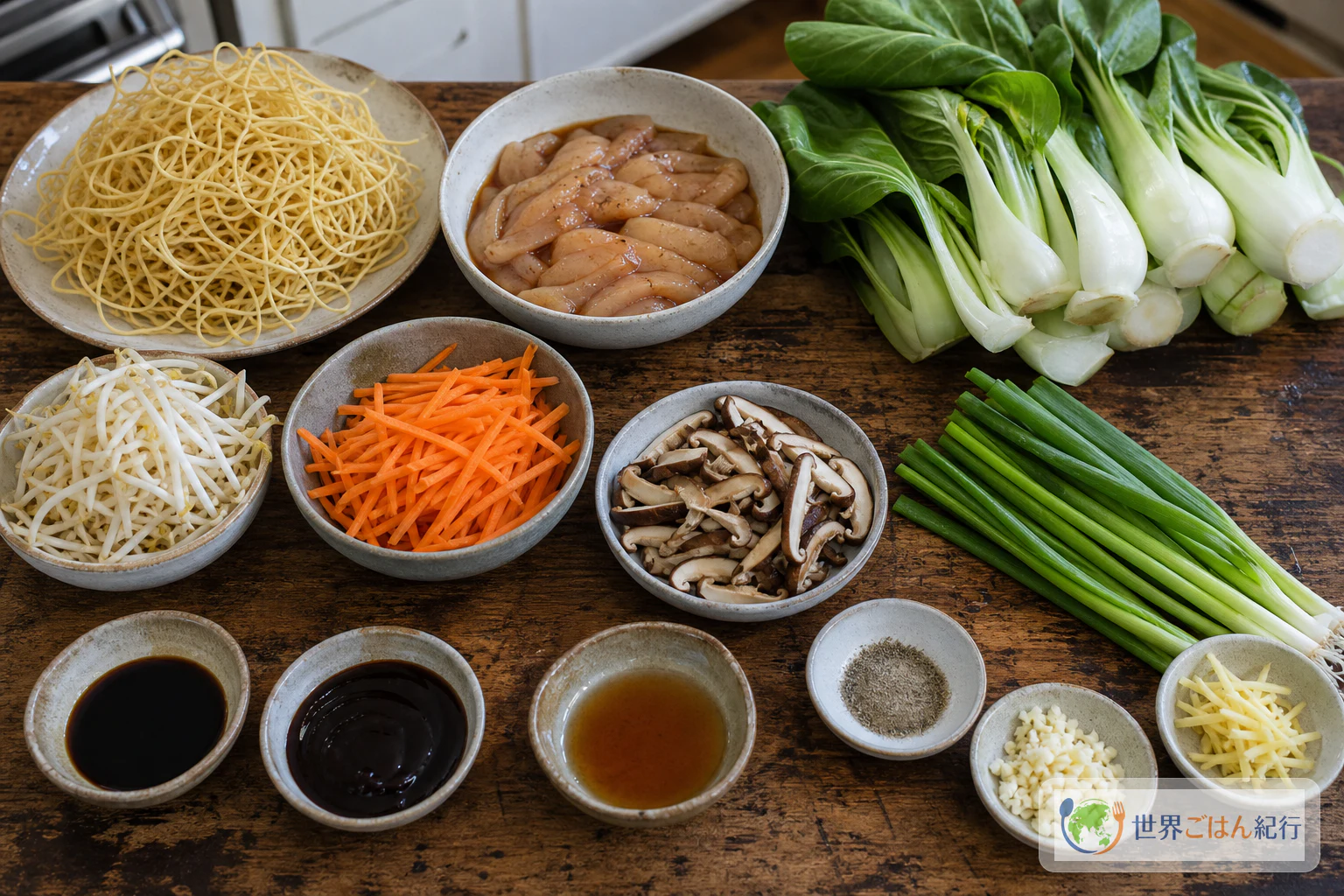
Ingredients (serves 2): proportions for a home kitchen
This makes two servings as a main course for dinner. On days you want more vegetables you can add another head of bok choy, but in that case don't skip the step of searing the noodles, because the moisture from the vegetables easily makes everything heavy.
This dish contains wheat, soy, chicken, and sesame (the sesame oil added at the end). Some noodles contain egg, and oyster sauce contains seafood. If anyone has a sesame allergy, leave out the sesame oil and finish with rice bran oil instead. Check the labels on the noodles, oyster sauce and chicken stock for egg, dairy, seafood or gelatin before serving anyone with an allergy.
How to choose the noodles
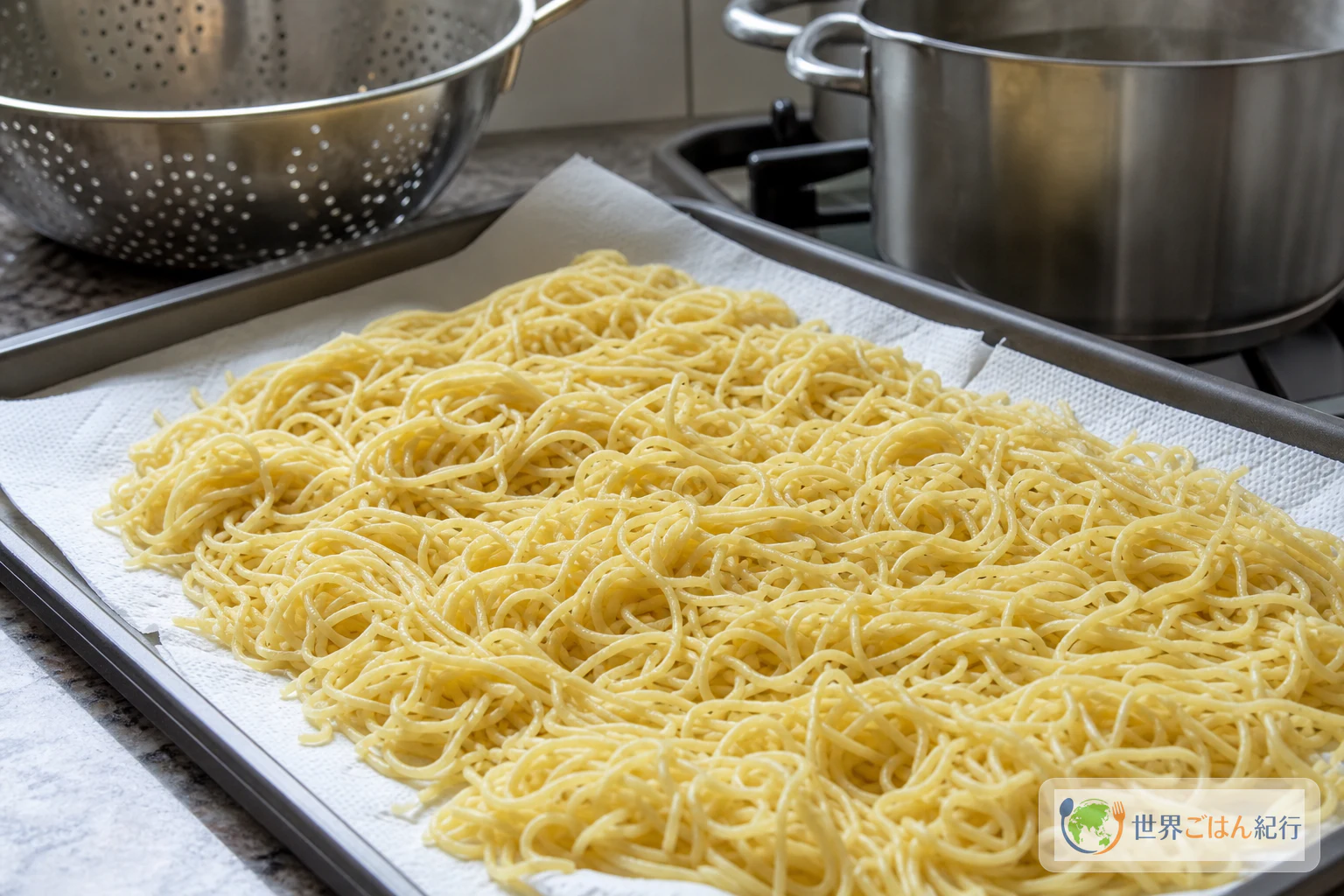
The easiest to work with are thin steamed Chinese noodles. If using steamed yakisoba noodles, choose ones without a powdered sauce packet, warm them in the bag in a 600 W microwave for just 30 seconds and loosen them. If you stir-fry them straight from the bag, the surface moisture mixes with the oil and they turn sticky easily.
If using dried noodles, boil them slightly less than the package says, drain and spread them out to dry for 5 minutes. Aim for noodles with no white core in the center and a dry surface, which cuts down on failures.
Choosing ingredients and substitutes for chow mein
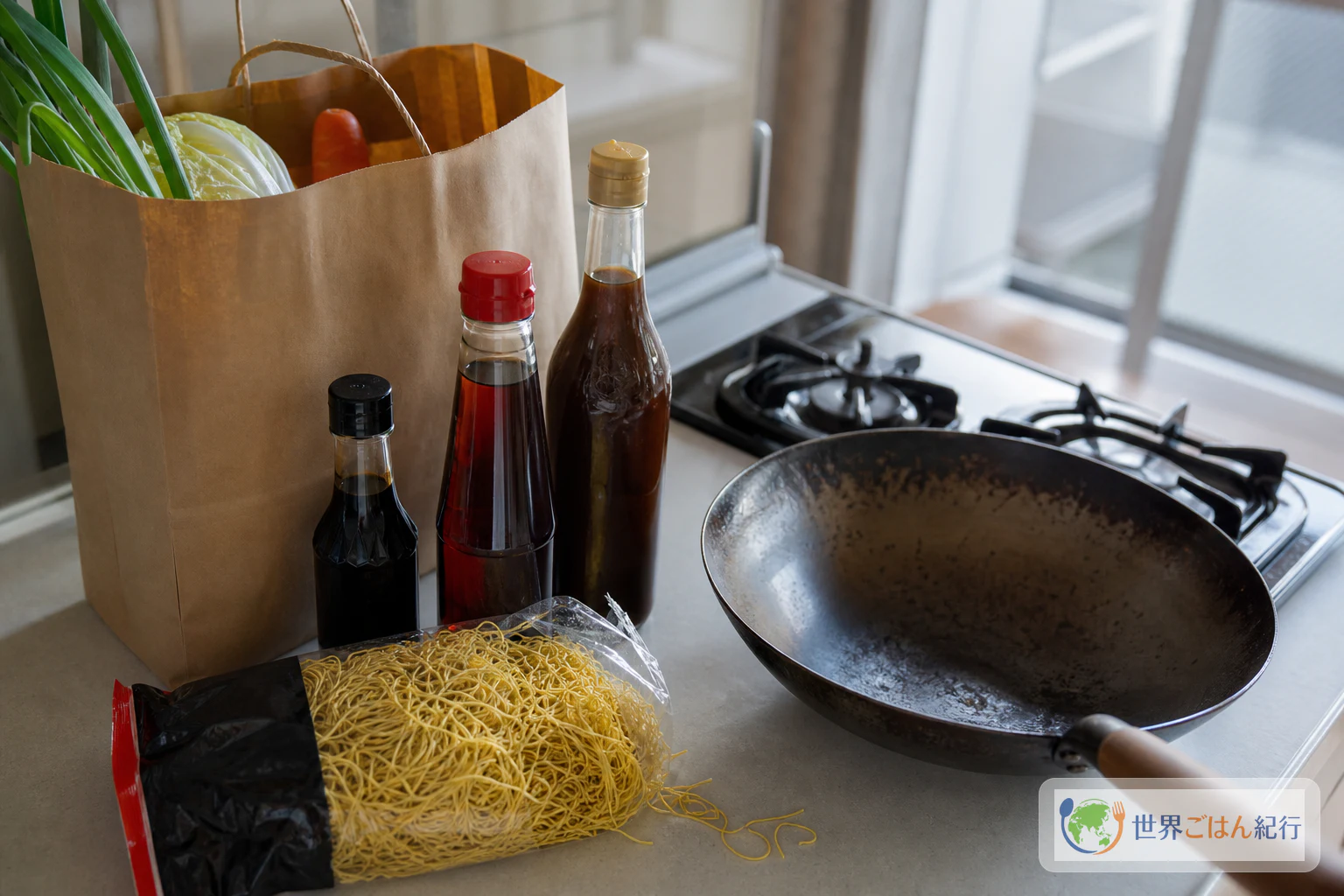
Chicken, bok choy and bean sprouts are easy to find at any supermarket. What decides the result is three things: the right noodles, dark soy sauce for color, and a pan wide enough to spread and sear the noodles.
Noodles
Thin Chinese egg noodles are ideal. If you can't find them, dried noodles for pancit canton are easier to manage for moisture than steamed yakisoba noodles, and they're good for practicing the boil, dry and stir-fry sequence.
If you do use Japanese yakisoba noodles, leave out the included sauce. That powdered sauce is delicious on yakisoba, but it buries the soy sauce and white pepper aroma of chow mein. Sear the noodles first and reduce the chicken stock in the sauce to 1 tbsp. If the noodles are so soft they look like they'll break when seared, don't force them; eat them like lo mein, letting them soak up the sauce briefly.
Dark soy sauce, oyster sauce and Shaoxing wine
A small amount of dark soy sauce adds color and a caramel-like roundness. Too much turns the noodles black and heavy, so for two servings, starting with 1 tsp is plenty. It's quite different from regular soy sauce, so if you want the right color, a small bottle is worth having, and you can use it in Southeast Asian stir-fried noodles like char kway teow, too. Oyster sauce is the backbone of savoriness, and Shaoxing wine rounds off the sharp edges of the aroma.
The pan
Spreading the noodles out decides the result. Without a wok, use a deep skillet of 10 inches (26 cm) or more. Put two servings in at once and stir, and they steam instead of searing.
What you can swap
| Point to decide | Closer to the original | Practical at home | Effect on the result |
|---|---|---|---|
| Noodles | Thin Chinese egg noodles | Steamed yakisoba noodles, or dried noodles boiled briefly | Steamed noodles hold more moisture, so drying them matters |
| Color | 1 tsp dark soy sauce | A little regular soy sauce and sugar | The depth of color and aroma are weaker |
| Wine | Shaoxing wine | Sake | The aroma is lighter, but fine for a home version |
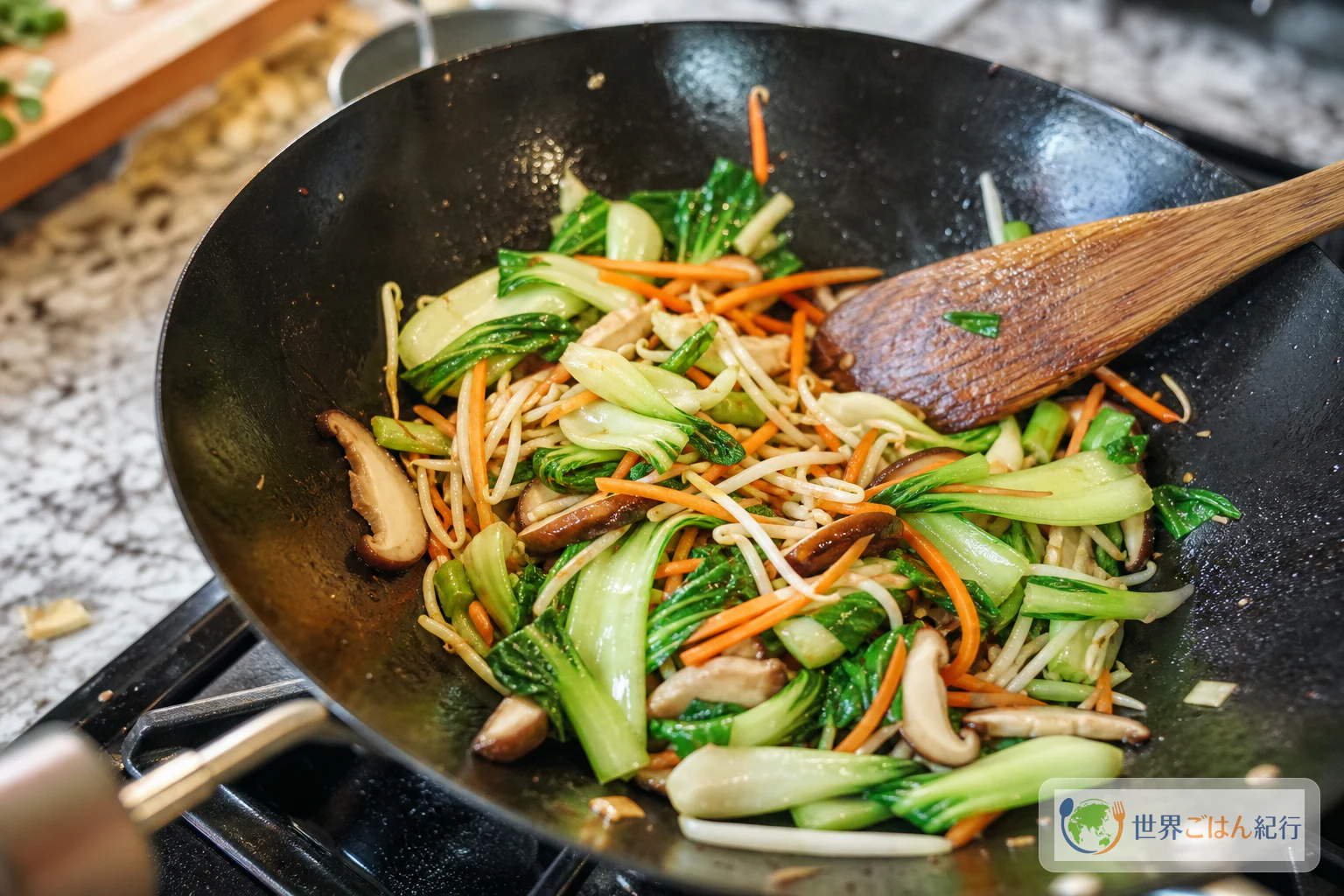
| Vegetables | Bok choy, bean sprouts, shiitake | Komatsuna, cabbage, shimeji | Stir-fry watery vegetables briefly |
| Meat | Chicken, char siu, shrimp | Thinly sliced pork, fried tofu | Stir-fry first according to how long it takes to cook |
| Pan | Wok | Wide deep skillet | Cook no more than two servings at a time |
For something other than chicken, cut Cantonese char siu, with its sweet glaze and fat, into strips and add it at the final combining step. It's already cooked, so just warm it through.
Method: dry the noodles, then combine over high heat
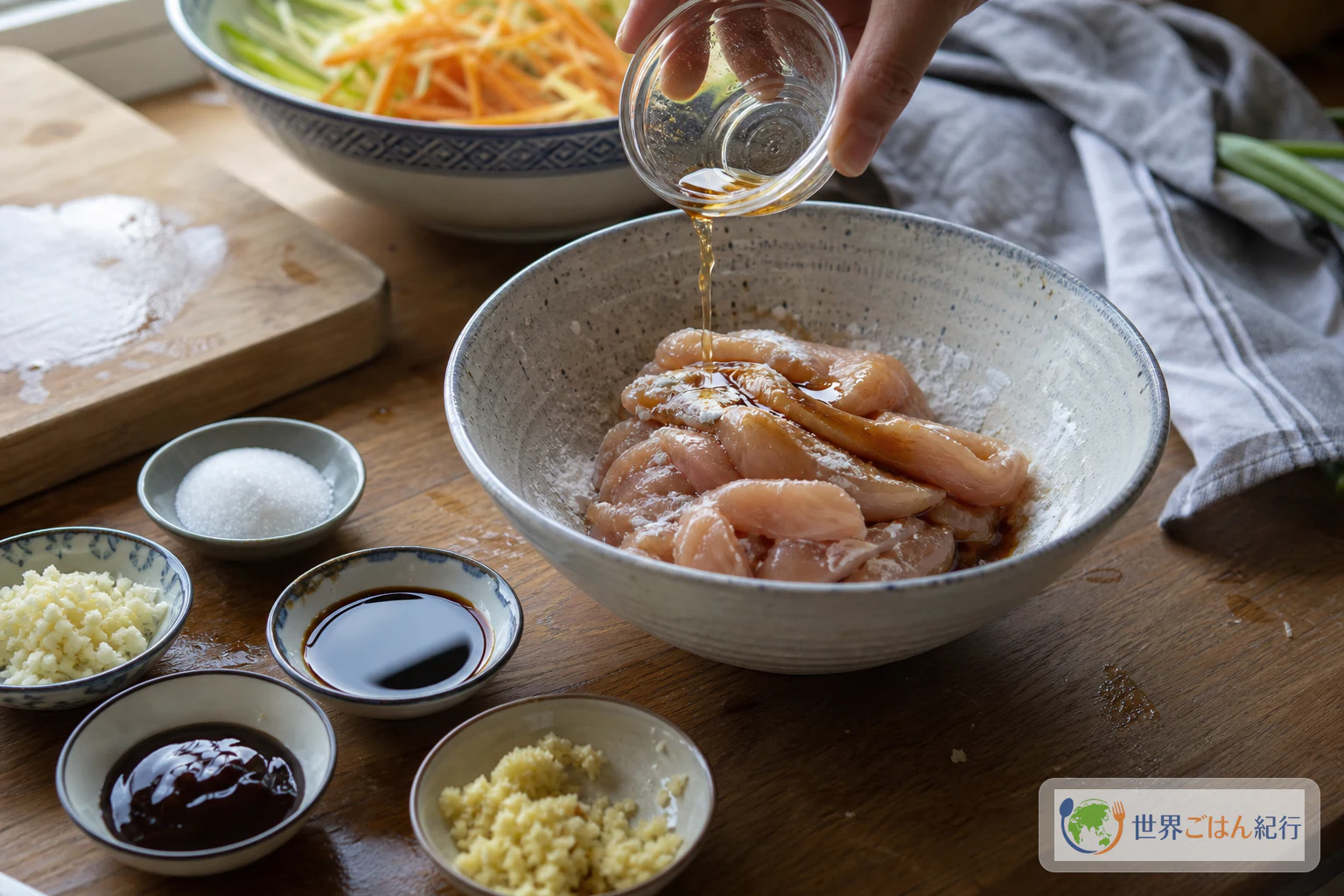
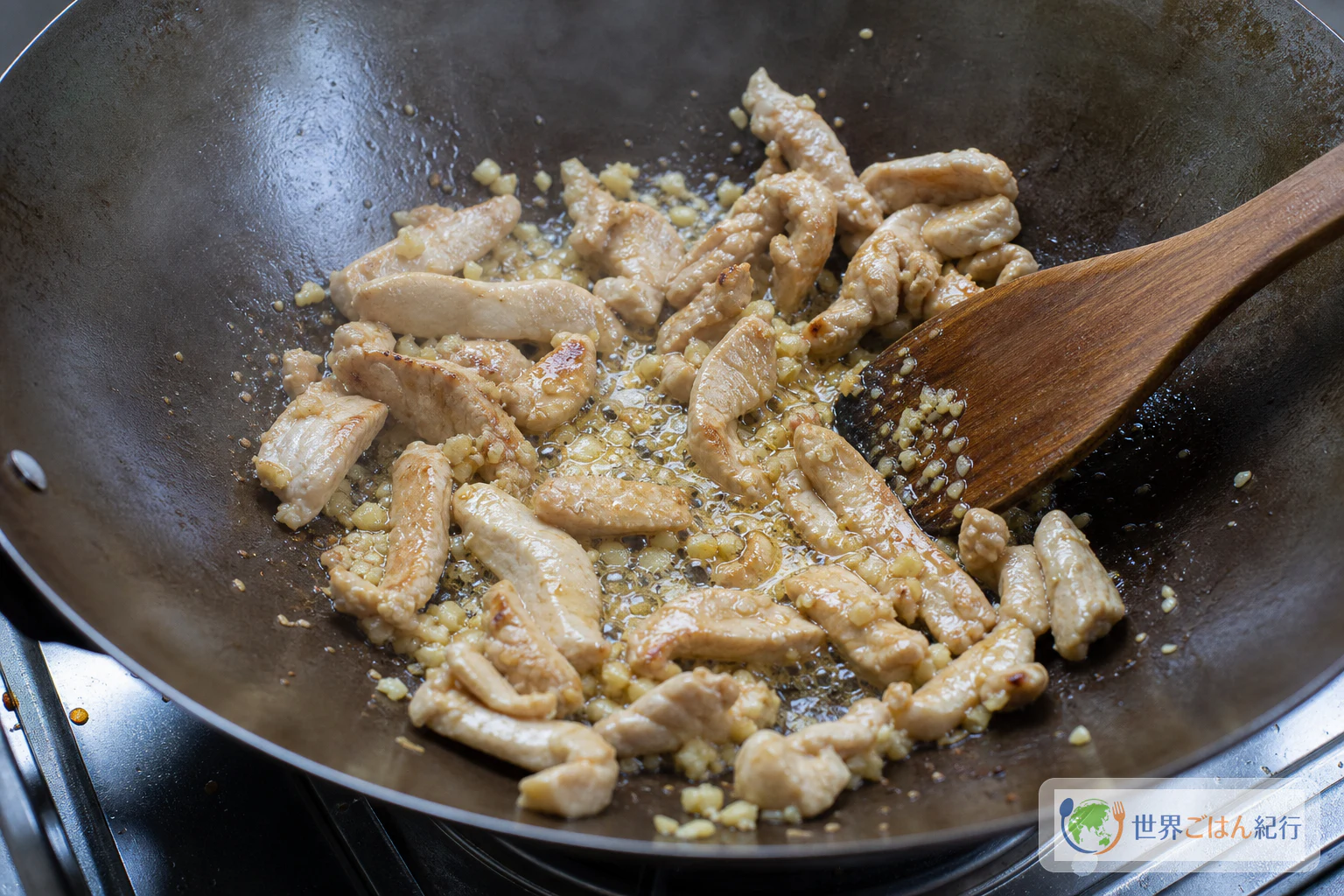
Before you turn on the heat, have the sauce, the marinated chicken, the cut vegetables and the dried noodles all within reach.
Chow mein moves fast, so if you open the fridge midway, the noodles stick to the bottom of the pan or the vegetables release water.
Common chow mein problems and how to fix them
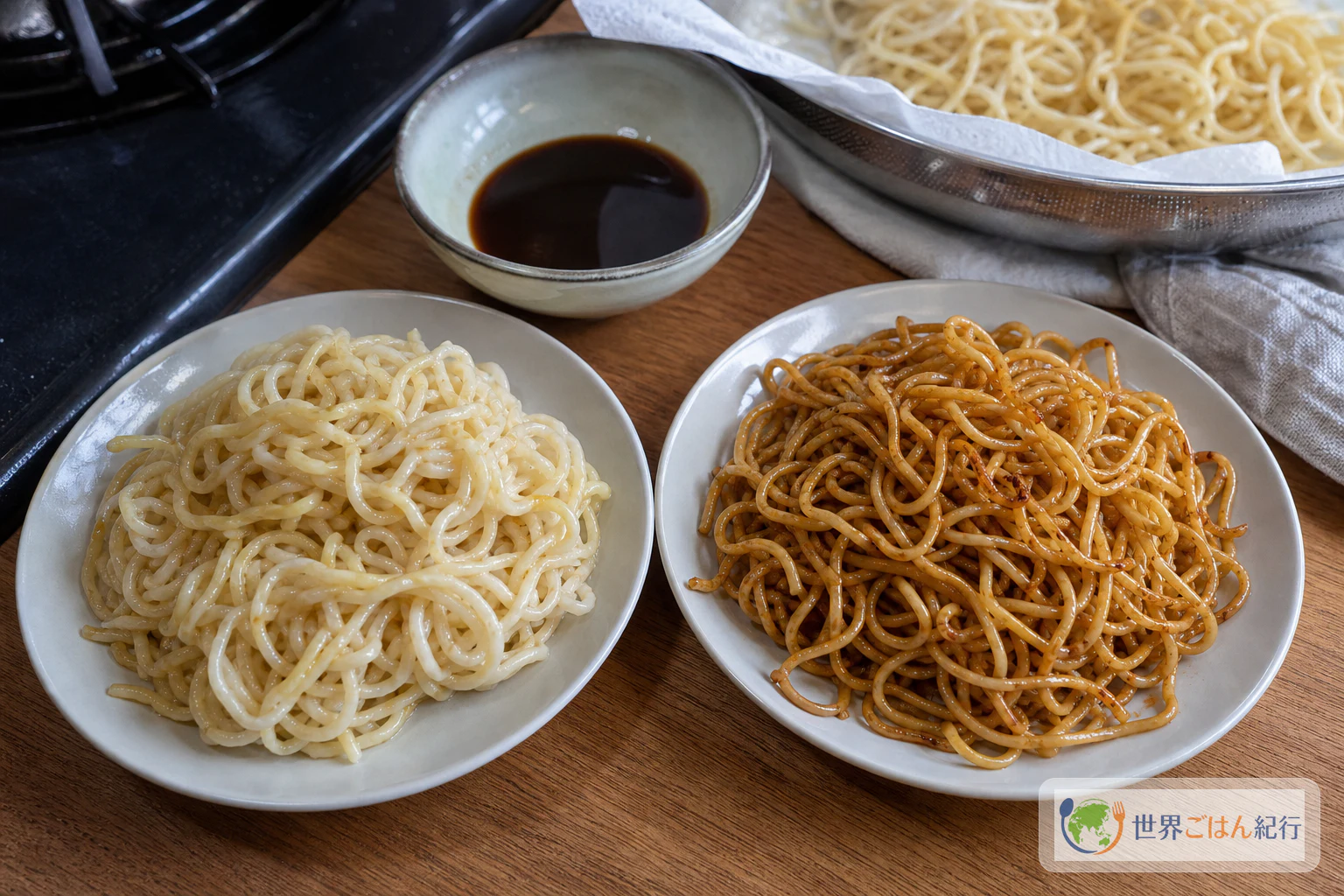
The first priority at home is not letting it turn watery, and the most common failure is sticky noodles. The cause isn't the seasoning but the surface moisture of the noodles and how crowded the pan is. Seasoning more strongly won't fix it, so go by the symptoms.
| Problem | Cause | Fix |
|---|---|---|
| The noodles clump | They were stir-fried right after boiling, or there wasn't enough oil | Spread them on a tray to dry for 5 minutes, toss with 1 tsp oil, then return them |
| It's watery | The vegetables were cooked too long, or the pan is too small | Take the noodles out, cook off moisture over high heat for 30 seconds, then return them |
| It's bland | The sauce dropped to the bottom and didn't coat the noodles | Mix 1 tsp soy sauce and 1 tsp oyster sauce and add down the side of the pan |
| The color is too dark | Too much dark soy sauce | Add 1.75 oz (50 g) bean sprouts and a few more noodles; next time stop at 1 tsp |
| The chicken is tough | Stir-fried long without a marinade | Next time work in starch and oil and take it out partway |
| The bean sprouts are limp | Added too early, or sat in salt too long | Add them only for the last 60 seconds. Pat them dry well |
When it looks like it's about to burn, resist pouring in a lot of water, or you'll end up closer to braised noodles than stir-fried ones. Add hot water 1 tbsp at a time down the side of the pan and let it turn to steam right away over high heat.
Serving, storing and variations
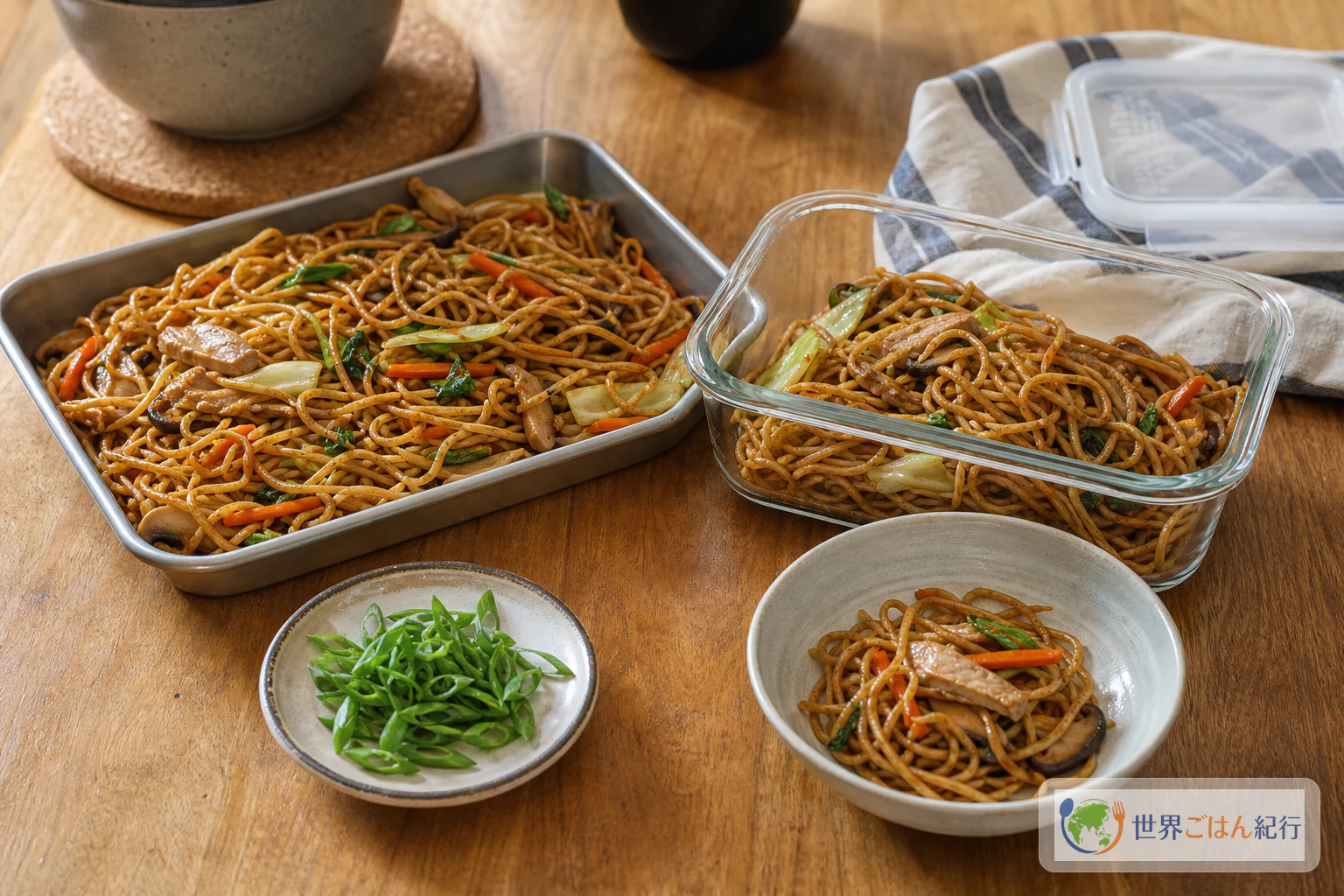
Chow mein is best freshly made, with a tangy side dish alongside. A small serving of Buddha's delight (luohan zhai) broadens the vegetables on the table. If you like comparing noodle dishes, try japchae, with its chewy glass noodles, char kway teow, finished with rice noodles and sweet soy sauce, and pancit canton, where dried noodles soak up broth.
For leftovers, don't pack them hot into a deep container. Spread them on a tray or large plate to cool for about 10 minutes, then transfer to a container, refrigerate, and finish by the next day.
The microwave works for reheating, but the noodles lose some aroma. Better: heat 1 tsp oil in a skillet over medium heat for 1 minute, add the chow mein, sprinkle with 1 tbsp hot water and cover for 60 seconds. Uncover, turn the heat to medium-high and toss for 60 more seconds to drive off the moisture. The bean sprouts won't regain their crunch, so bring back some aroma with chopped scallions or white pepper.
For heat, stir-fry just 1/2 tsp doubanjiang with the aromatics for a Sichuan-style variation. The Cantonese version leads with white pepper and dark soy instead, a different direction from dishes turned red with doubanjiang, like mapo tofu.
Frequently asked questions
Can I use yakisoba noodles instead of Chinese noodles?
Yes. Warm steamed yakisoba noodles in the bag in a 600 W microwave for 30 seconds and loosen them. Spread them on a tray to dry and sear them before combining with the fillings so they don't turn sticky.
What if I don't have dark soy sauce?
Substitute 1/2 tsp regular soy sauce mixed with a pinch of sugar. The color will be lighter, but the flavor comes together. Adding more soy sauce to darken it only makes it salty, so a slightly paler color is fine.
Can I make it without oyster sauce?
If anyone has a seafood allergy or dislikes it, leave it out and use 1 tbsp soy sauce, 1 tsp mirin, 2 tbsp chicken stock and a heavier hand with the white pepper. The savoriness will be lighter, but the aroma of the seared noodles makes up for it. For a fully plant-based version, replace the chicken with fried tofu and the chicken stock with kombu dashi.
Is searing the noodles first essential?
On a home stove, yes, it's the more reliable approach. Restaurant burners are much stronger and can drive off the moisture from vegetables in an instant, so everything can be stir-fried in one go. At home, drying and searing the noodles first, stir-frying the chicken and vegetables separately, and combining briefly at the end keeps them from turning gummy when the sauce goes in.
Can I make a big batch at once?
We don't recommend it. In a 10 inches (26 cm) home skillet, two servings is the limit. For four servings, sear the noodles in two batches, stir-fry the fillings in two batches, and toss everything lightly in a large bowl at the end to keep it from turning watery.