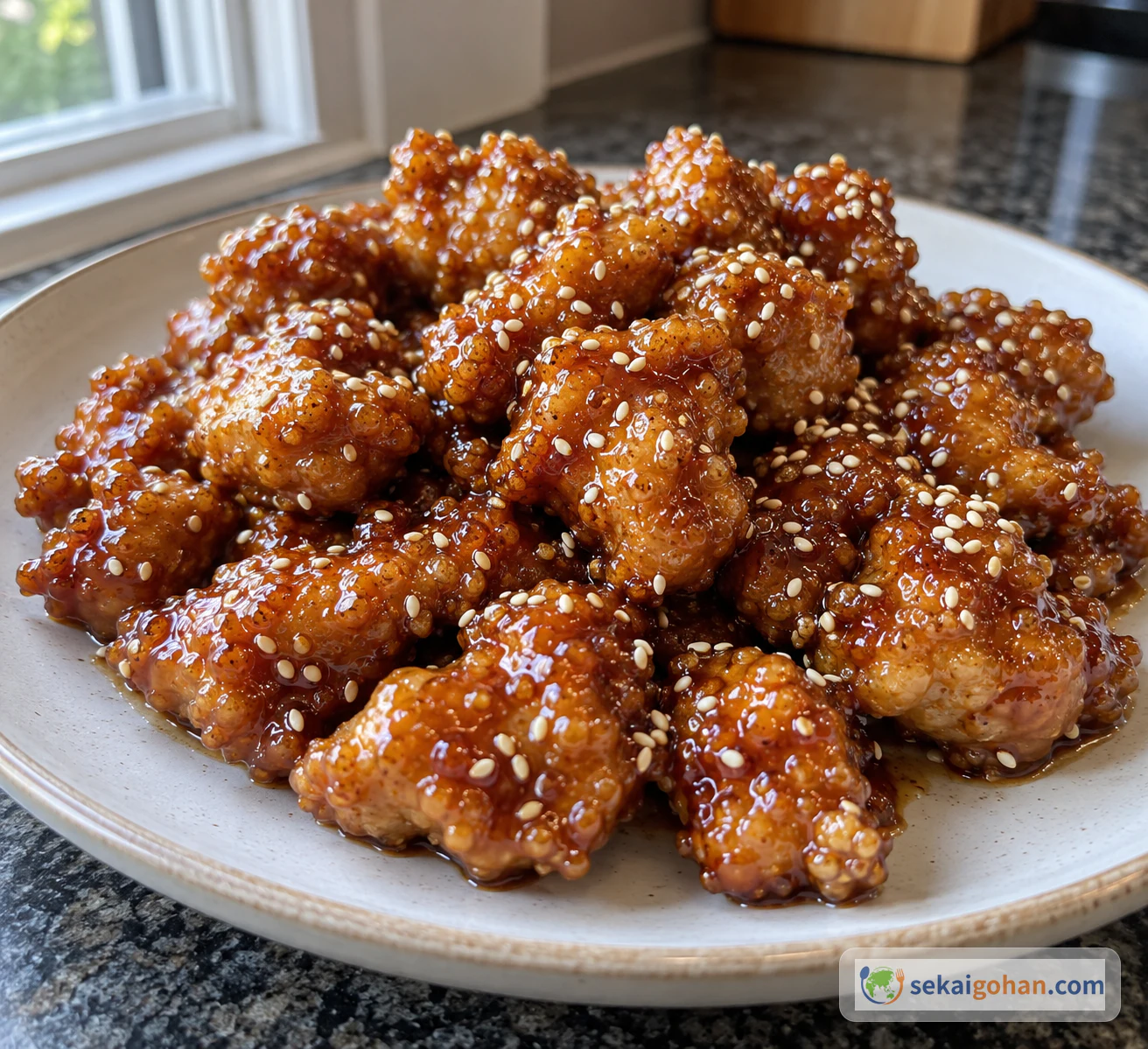
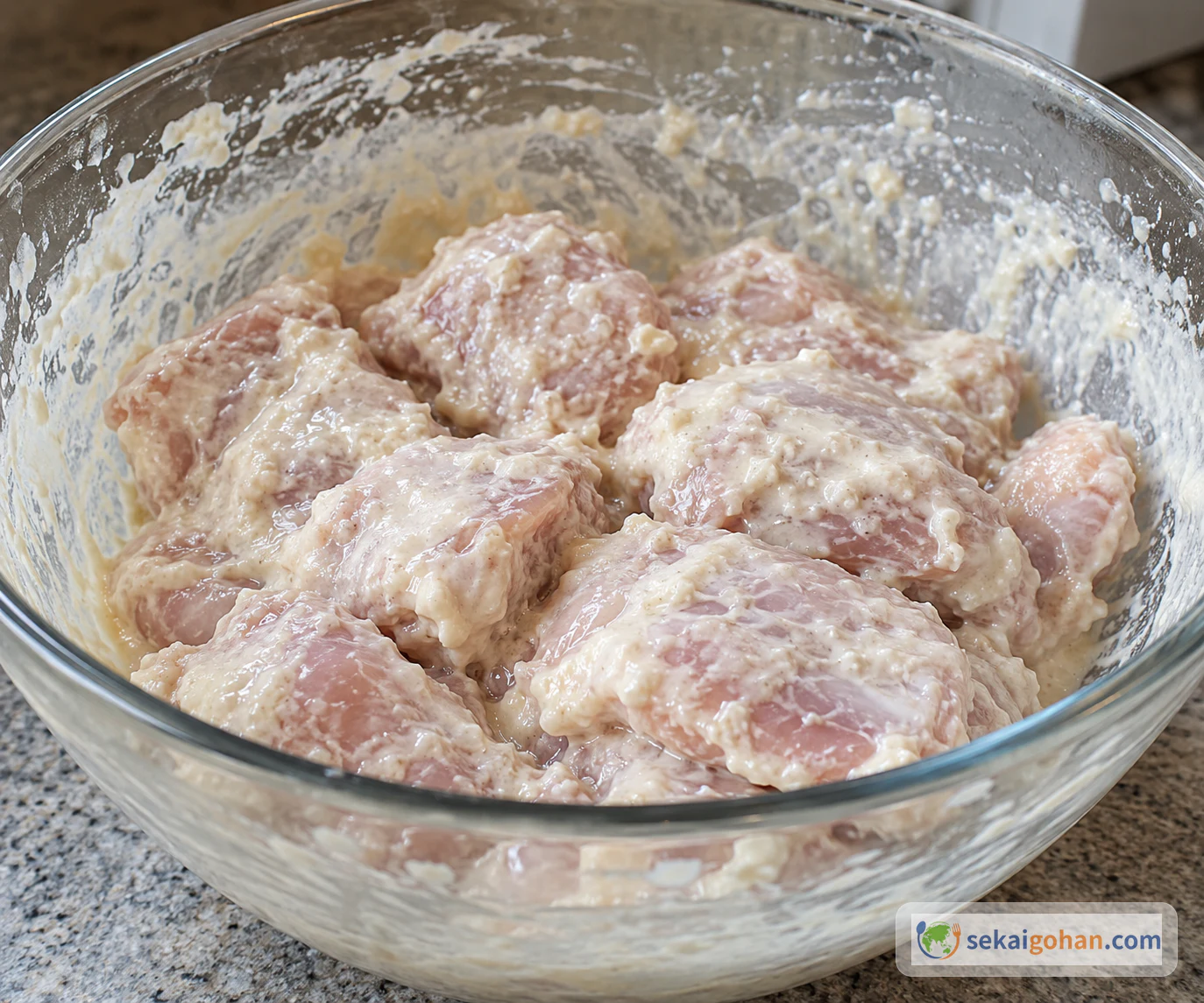
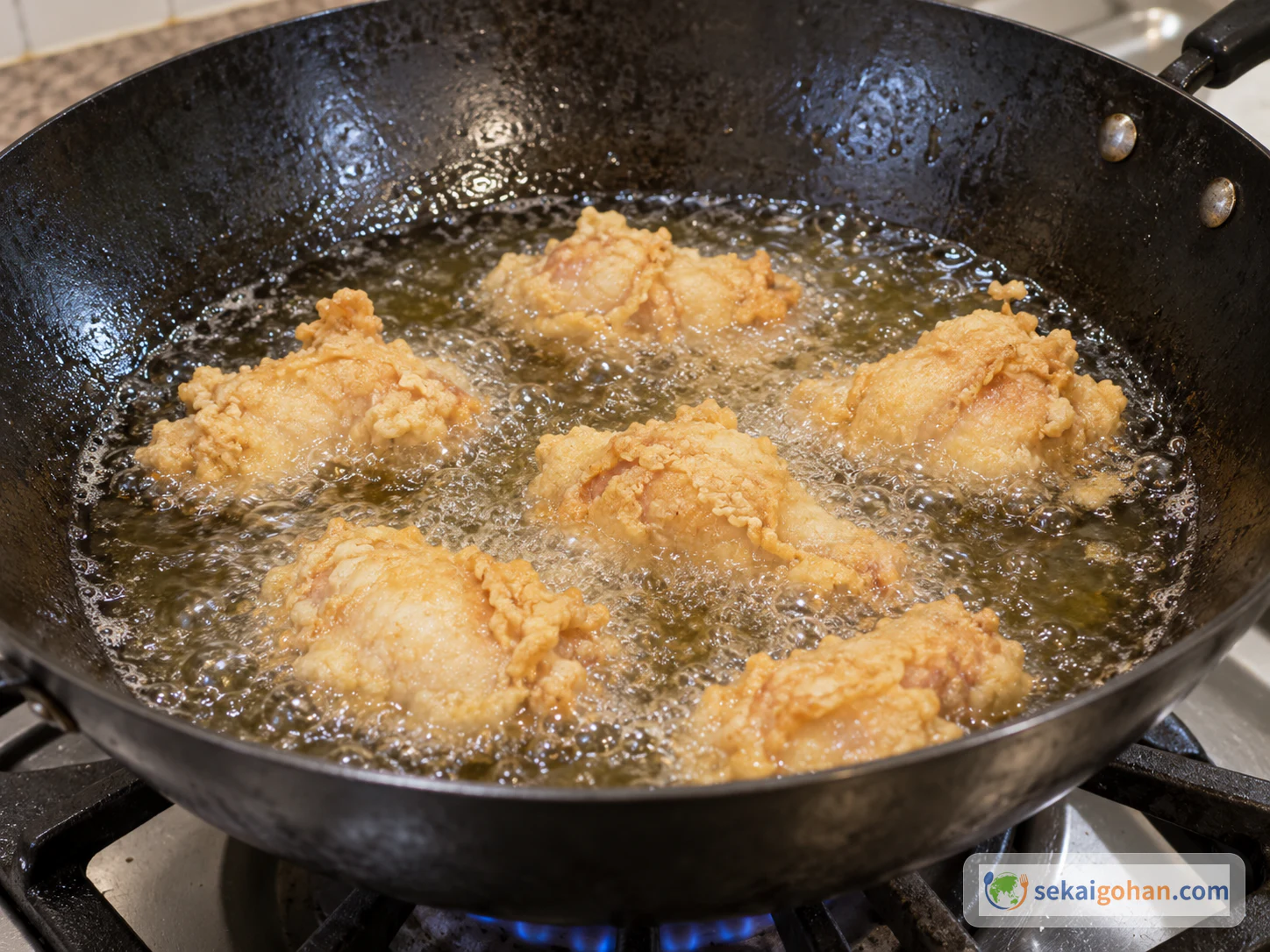
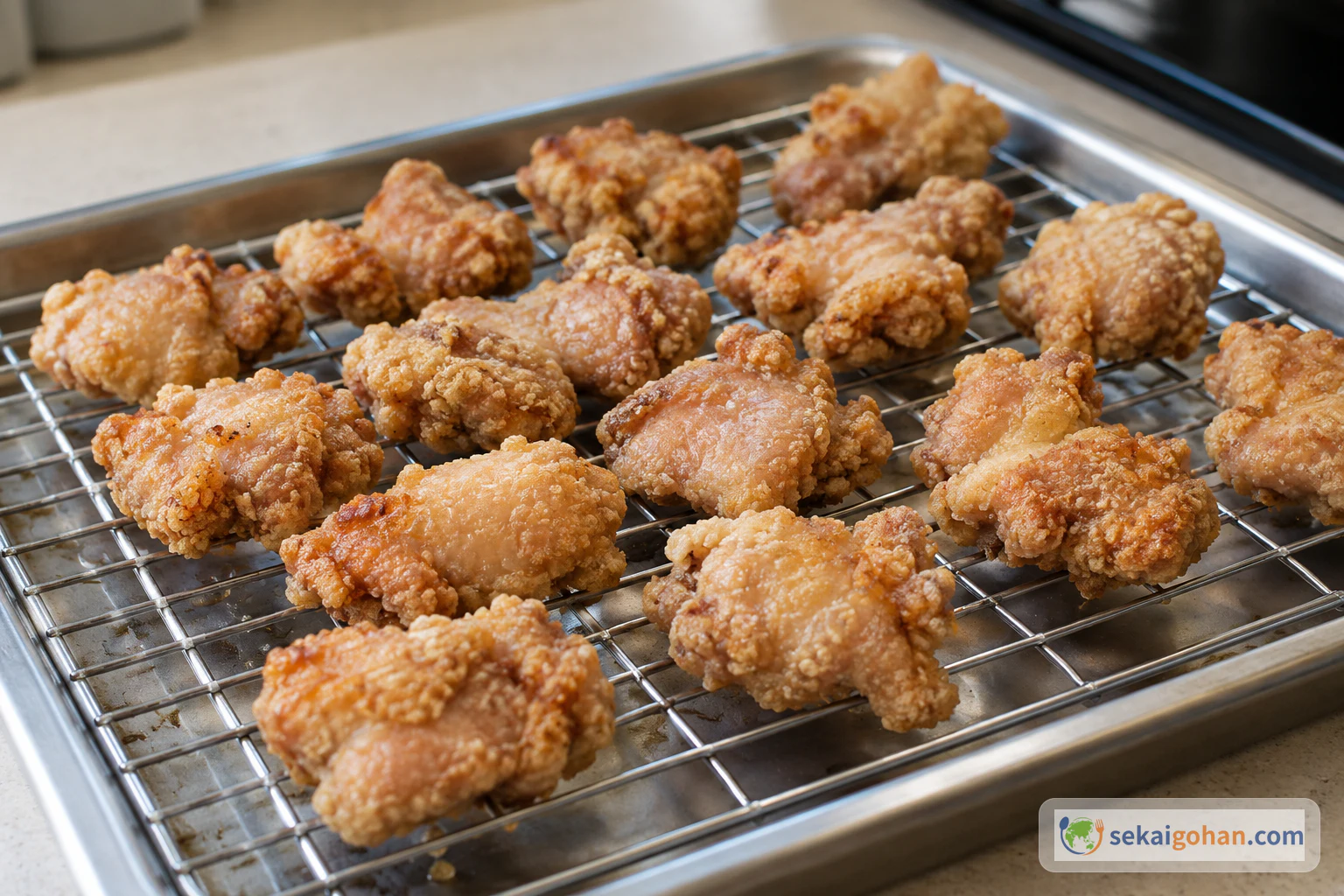
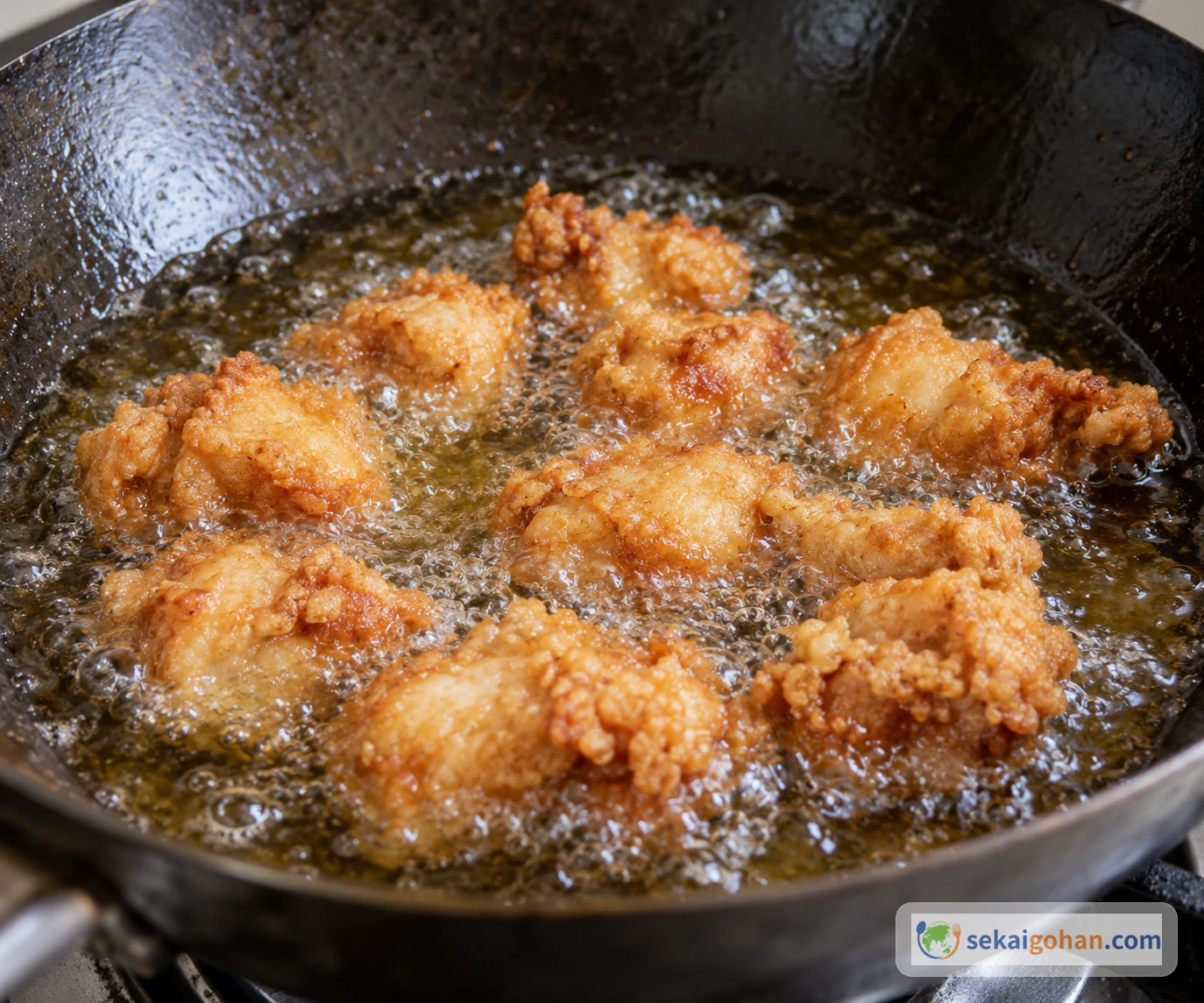
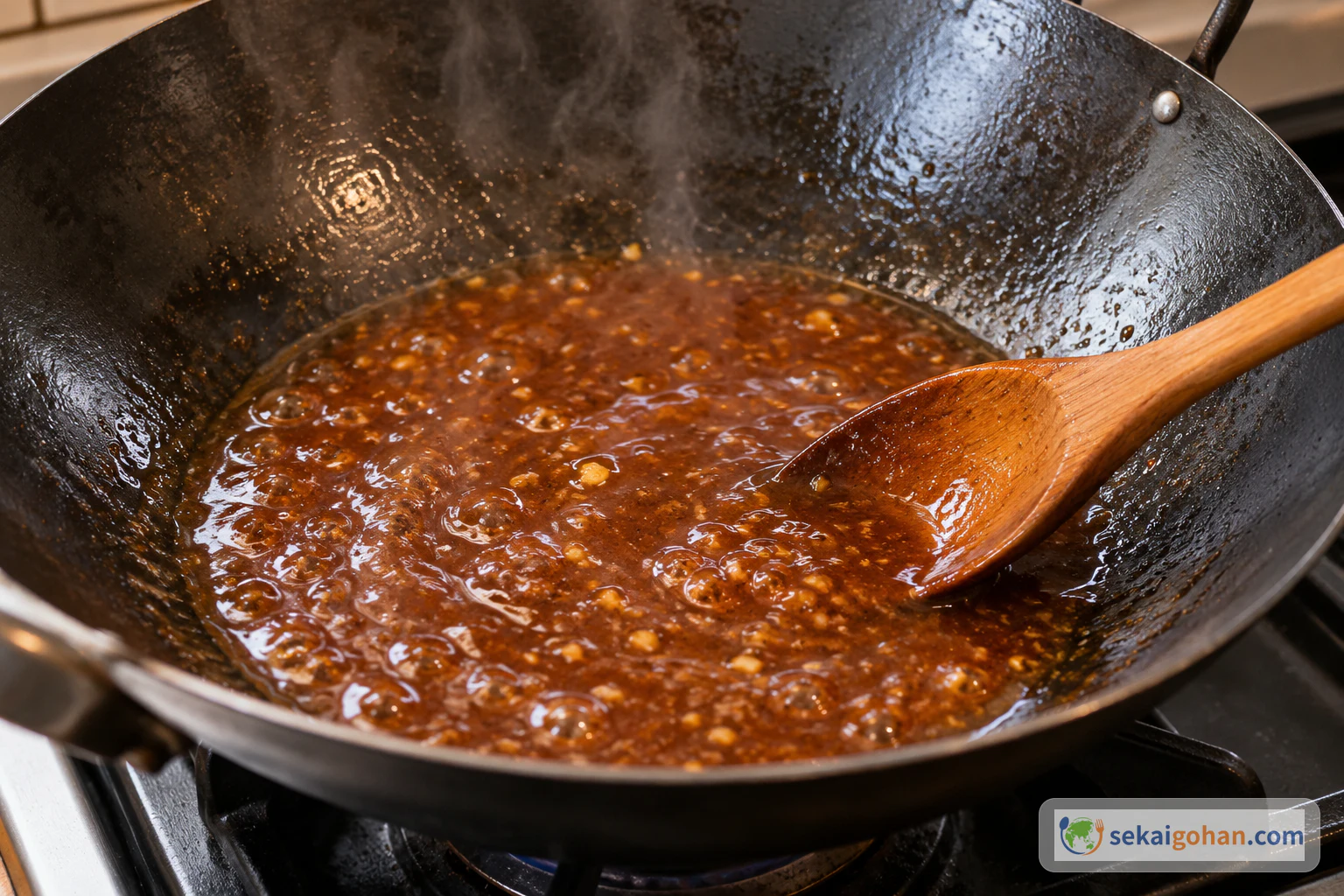
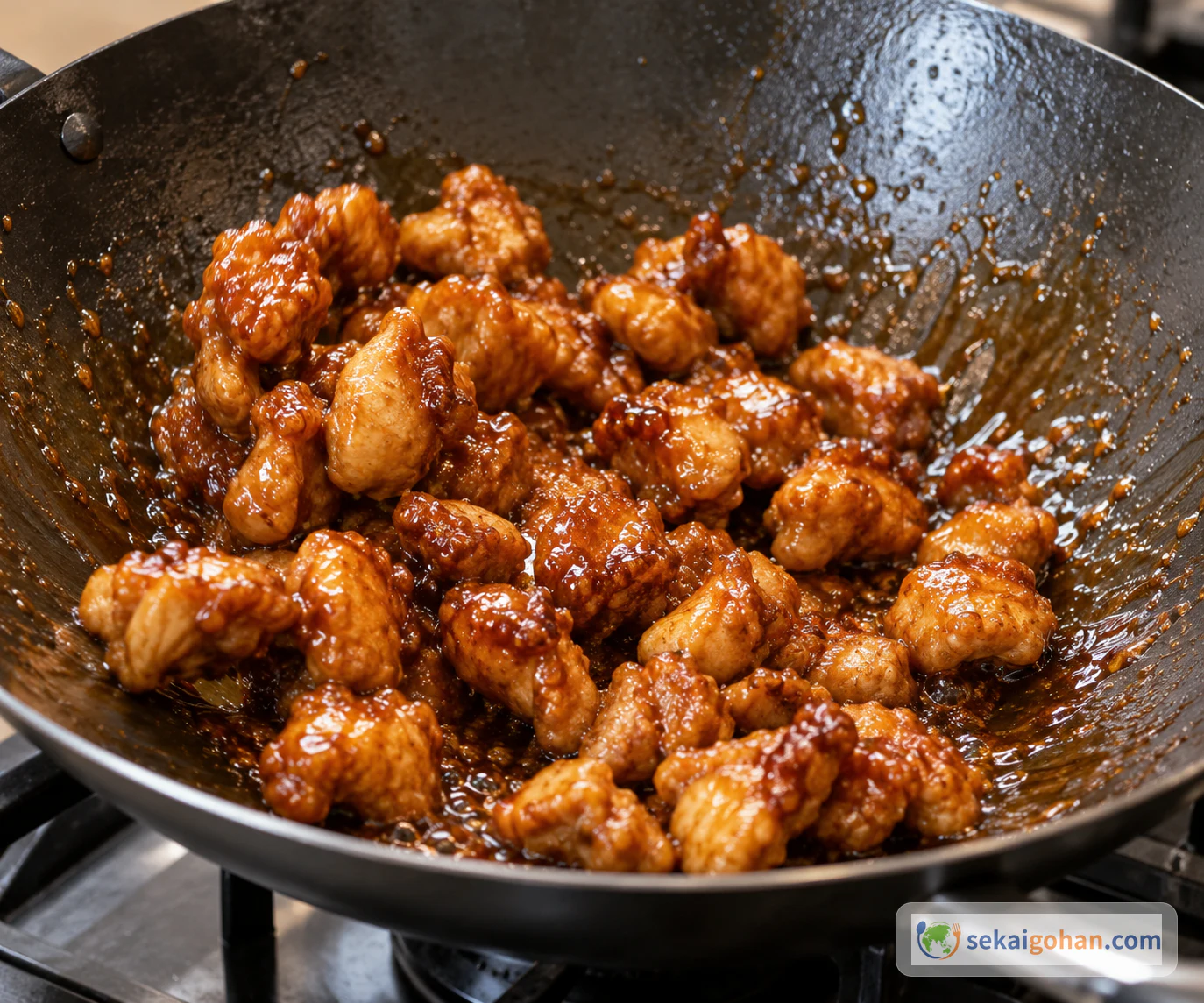
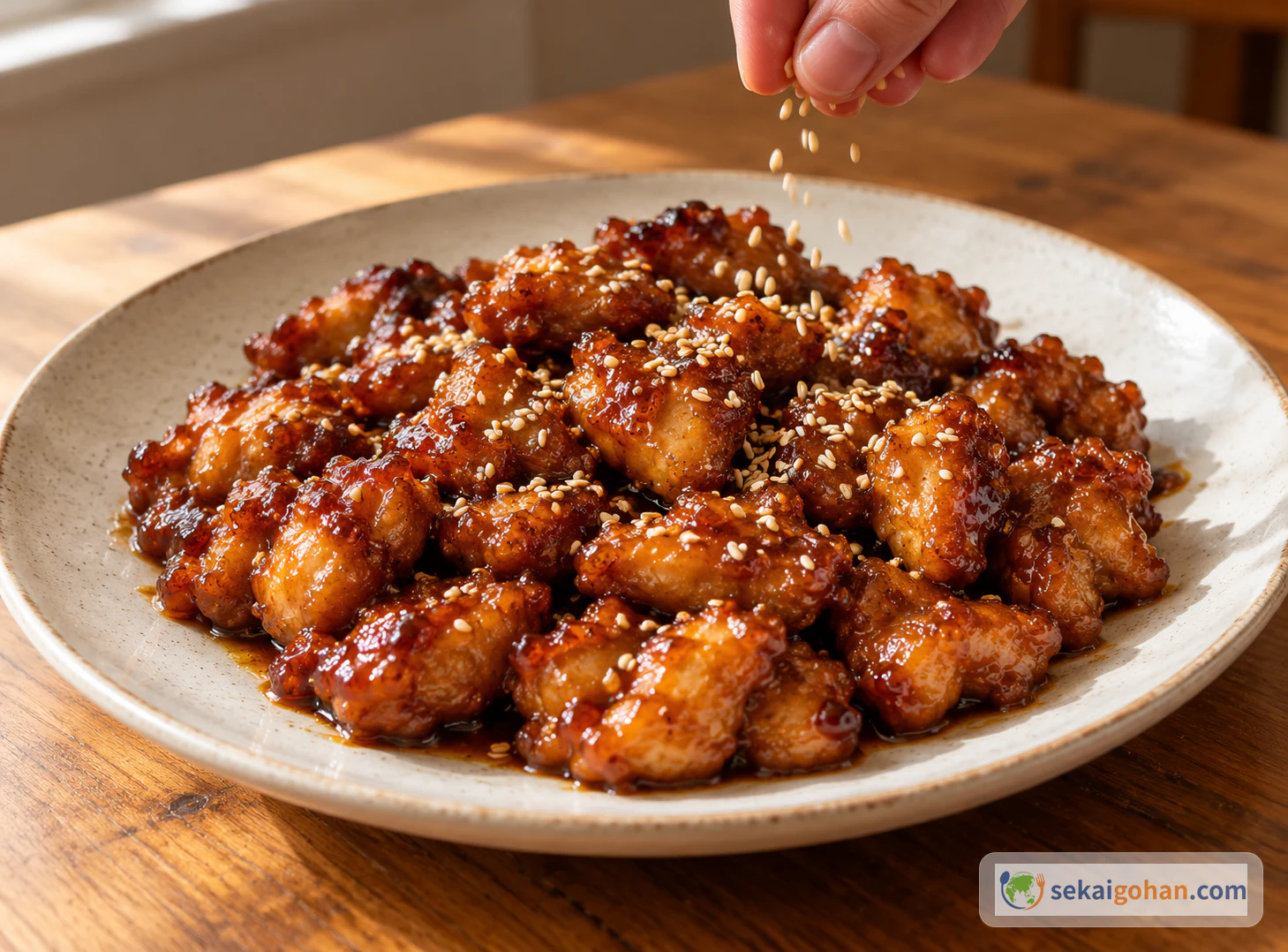
Picture the lid coming off a takeout container. Inside are bite-size pieces of fried chicken, each coated in an amber-brown sauce that shines under the light, with small toasted sesame seeds caught in the glaze. This is sesame chicken, a favorite at Chinese takeout restaurants and buffets across America. It's sweet, sweeter than General Tso's chicken, with a little vinegar to keep that sweetness in balance.
About Sesame Chicken
Sesame chicken is a Chinese-American takeout dish rather than a traditional dish of mainland China, though you'll find it filed under China. A good plate comes down to three things: a coating made crisp by two rounds of frying, a sauce that is sweet but kept in check with vinegar, and a light scattering of toasted sesame seeds. The sauce has no ketchup.
The dish belongs to the same takeout menu as General Tso's chicken, beef lo mein, and beef and broccoli. These are dishes that immigrant families cooked and served in America, and they are part of the Chinese-American family experience, not something apart from "real" Chinese food. They make up a living food culture with its own history.
Ingredients for 4 Servings
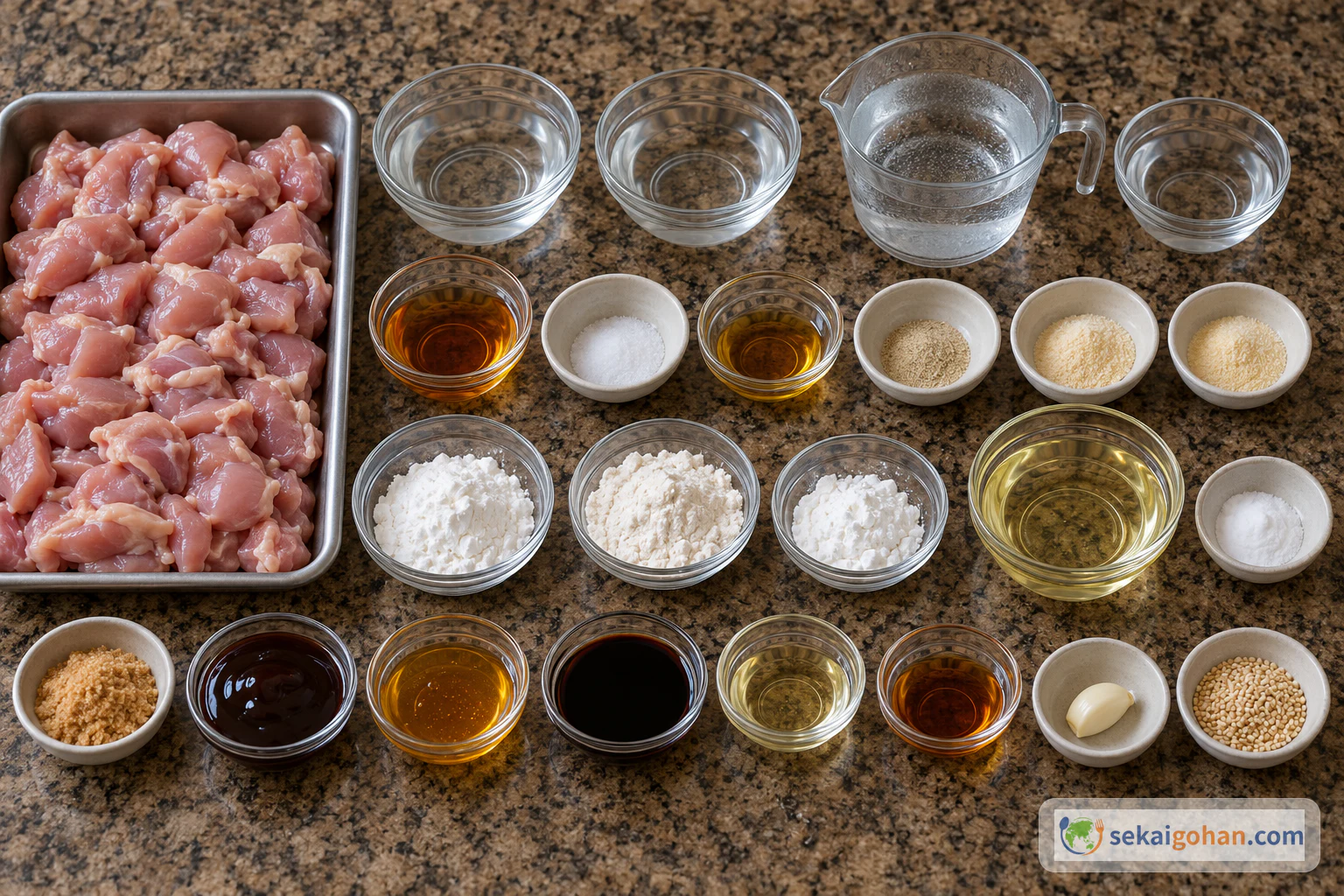
Measure the water for the marinade and the batter separately, so it does not all go in at once. The sesame oil in the marinade and the toasted sesame oil in the sauce are separate amounts.
This dish contains sesame (sesame oil, toasted sesame oil, sesame seeds), wheat (all-purpose flour, and often soy sauce), soy (soy sauce), and shellfish-derived ingredients (oyster sauce). Check the labels on store-bought sauces and wines for allergens and shared-facility statements.
Equipment
- Cutting board and knife for raw chicken only
- Mixing bowl for marinating and battering
- Small bowls for the sauce and the slurry
- Wok or medium-deep pot for frying
- Deep-fry thermometer
- Instant-read thermometer for checking the chicken
- Wire rack or paper towels
- A second clean wok or pan for the sauce
- Slotted spoon or spider, and a spoon for judging the sauce
Choosing Ingredients and Substitutes for Sesame Chicken
Each option below replaces the matching item in the ingredients table. Choose one per line.
| Item | Used above | Alternative | Note |
|---|---|---|---|
| Chicken | Boneless, skinless thighs | Boneless, skinless chicken breast | Thighs are preferred for their fat and flavor; breast works at the same 1 lb and 1-inch cut |
| Sauce liquid | Hot water, 3/4 cup | Hot chicken stock, 3/4 cup | Use one or the other, not both |
| Wine in the sauce | Shaoxing wine, 1 tbsp | Clear rice wine, 1 tbsp | Sauce only |
| Shaoxing wine | Shaoxing wine | Dry cooking sherry | Use in place of Shaoxing wine |
| MSG | Not used | MSG, 1/4 tsp, in the marinade | Optional |
For the coating, use all-purpose flour. Other flours, such as Japanese cake flour (hakurikiko), aren't interchangeable with it.
Method: Marinate, Batter, Fry Twice, Then Glaze
Both fries use 335°F/170°C. The second fry does not use hotter oil. Frying shapes the coating, but it does not show that the chicken is cooked through. Check the inside with a thermometer.
Sesame Chicken Troubleshooting and Safety
Most problems come from crowding the oil, skipping the second fry, or adding the slurry too fast.
| Problem | Likely cause | What to do |
|---|---|---|
| The oil temperature dropped sharply | Too much chicken went in at once | Fry in at least 2 batches for the first fry, and bring the oil back to 335°F/170°C before the next batch |
| The coating isn't crisp | The second fry was skipped or cut short | Rest the chicken for 5–10 minutes, then fry again at 170°C for 2–3 minutes, keeping the oil at the same temperature |
| The coating looks done but you're unsure about the inside | Color and oil temperature can't show what's happening in the center | Check the thickest piece with a thermometer: at least 75°C for at least 1 minute |
| The sauce is too thin | Not enough slurry yet | Keep adding the stirred slurry a little at a time while stirring, until the sauce coats a spoon |
| The sauce is thicker than a spoon-coating consistency | More slurry went in than needed | Next time add it gradually and stop as soon as it coats a spoon |
| The sauce tastes too sweet | The sauce is meant to be sweet, with vinegar for balance | Make sure the 1 1/2 tsp rice vinegar went in; it balances the sugar and honey |
Handling Raw Chicken Safely
The 335°F/170°C oil and the fry times are for the coating. They don't guarantee the chicken is safe. Heat the chicken until the center reaches at least 75°C and stays there for at least 1 minute. Check the thickest piece with a thermometer.
Skip rinsing raw chicken, since splashing water can contaminate nearby food and surfaces. Keep the raw chicken, and the board, knife and bowls used for it, away from ready-to-eat food, then clean those utensils and wash your hands once you're done. Marinate the chicken in the refrigerator, and make the sauce in a clean wok.
Frequently Asked Questions
Can I use chicken breast instead of thighs?
Yes. Thighs are preferred for their fat and flavor, but boneless, skinless breast works too. Use the same 1 lb, cut into 1-inch/2.5 cm pieces.
Why is the second fry done at the same temperature as the first?
Both fries use 335°F/170°C, with a 5–10 minute rest in between. The second fry, for 2–3 minutes, is what crisps the coating, so keep the heat where it is.
What can I use instead of Shaoxing wine?
Dry cooking sherry. In the sauce only, clear rice wine also works.