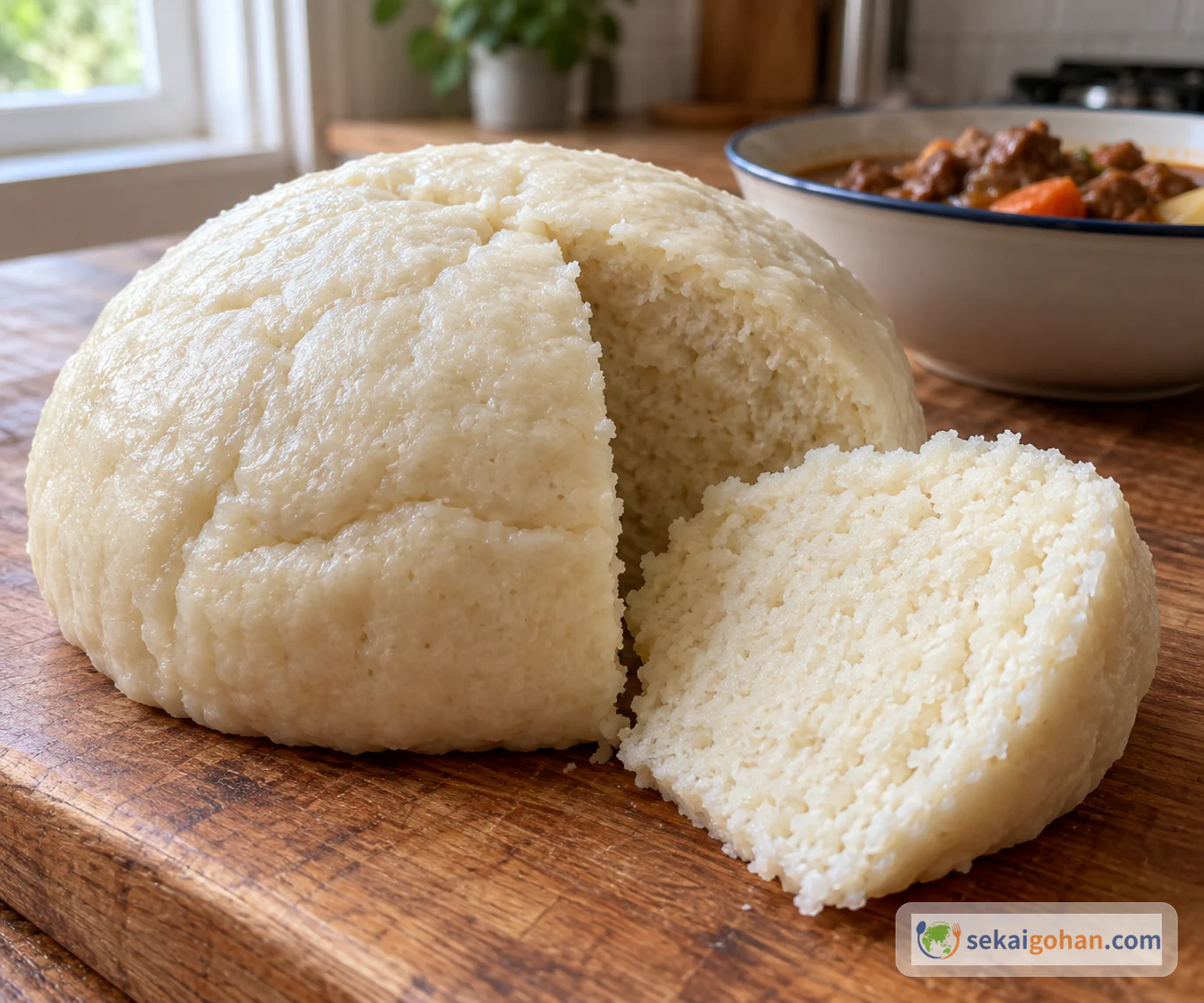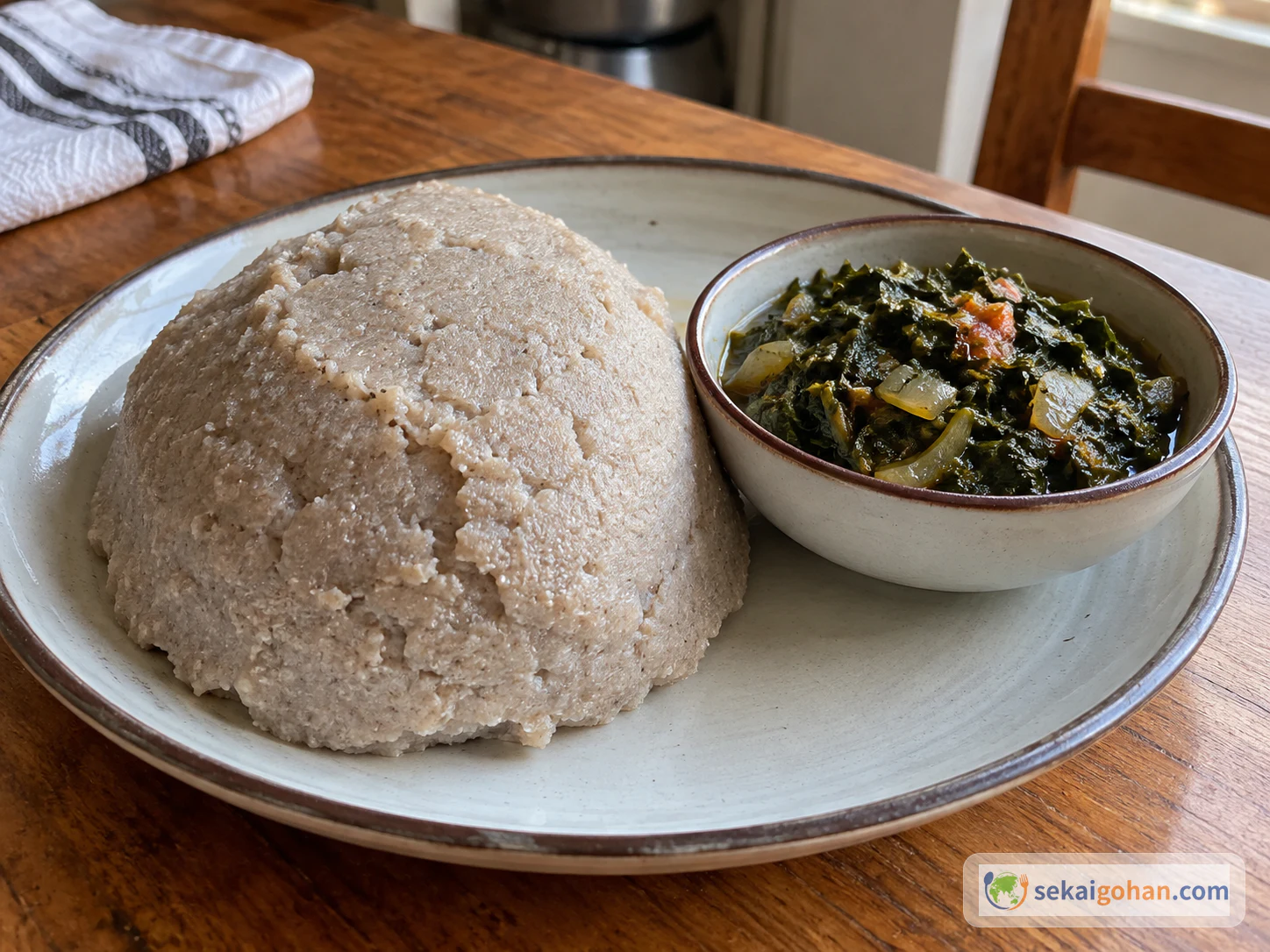
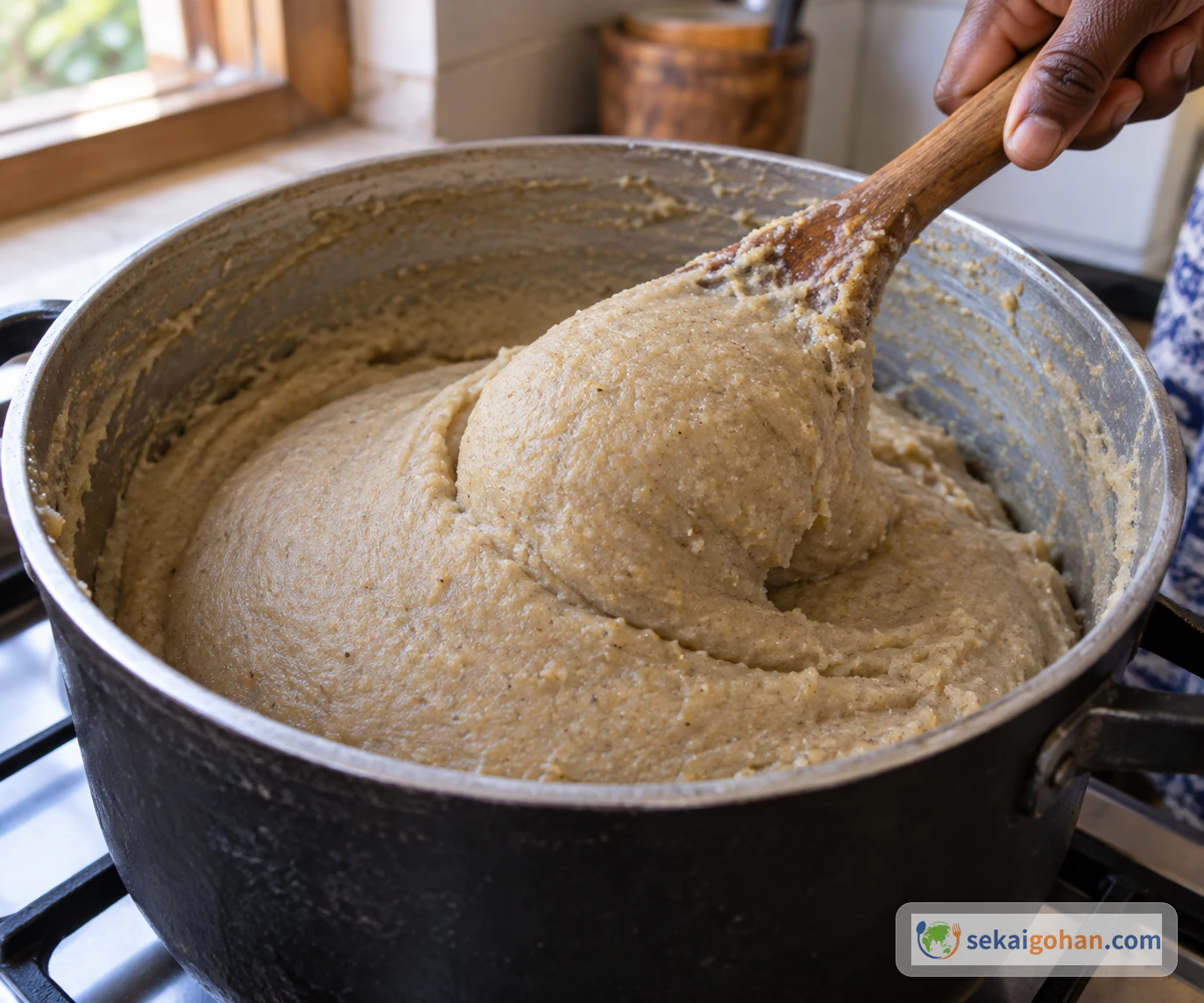
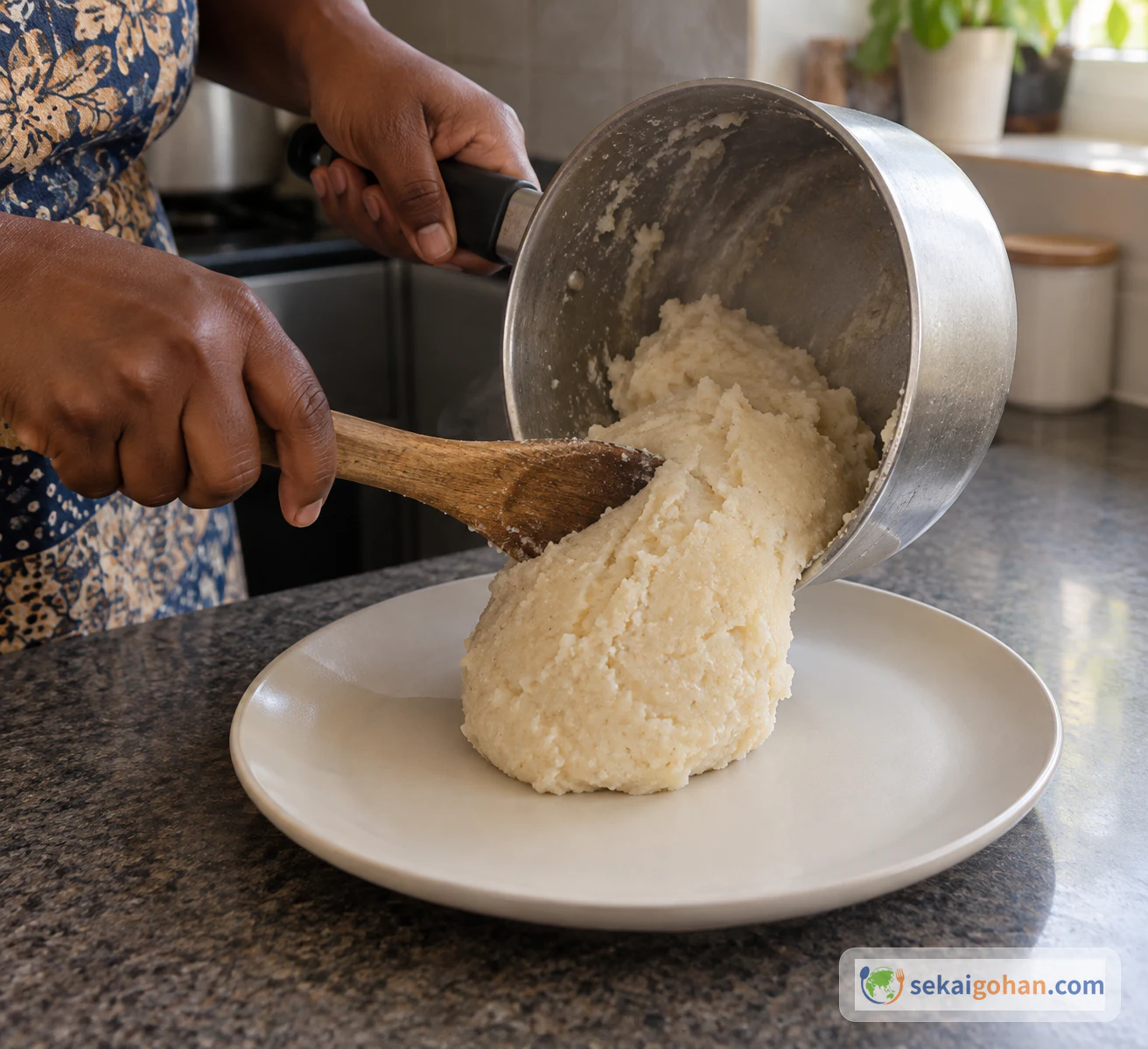
Oshifima (Oshifimá) arrives at the table as one firm, smooth mass, turned straight out of the pot. You break off a small piece, shape it with your fingers, and dip it into the sauce. The word "porridge" usually suggests something soft in a bowl, but this thick millet porridge is firm enough to scoop with, and it is a daily staple for Oshikwanyama speakers in northern Namibia. This version, from a cook who grew up there, makes two servings with fine maize meal and mahangu (pearl millet) flour.
About Oshifima
Oshifima belongs to the Oshikwanyama-speaking community of northern Namibia, and there is no single national recipe. Households make it in different ways and with different flours: pearl millet flour, maize meal, or a mixture of the two. It was traditionally cooked over a fire and is now also made on gas and electric stoves.
In English the dish is written Oshifima, or Oshifimá with the accent. Searching for "oshifima" together with "mahangu" turns up the flour and the dish more easily than searching for "millet porridge" alone.
Oshifima, the All-Millet Method and Mielie Pap
The older all-millet method uses no salt, and the maize-only version is mielie pap, which is a different dish. Pap (maize meal) and omahangu (pearl millet) are both served as accompaniments to meat dishes, but sharing a label like "pap" doesn't make them the same thing.
| This recipe | Traditional all-millet method | Mielie pap | |
|---|---|---|---|
| Flour | Fine maize meal and mahangu flour | Millet flour | Maize meal only |
| Salt | A pinch, optional | None. Salt comes from the accompaniments | — |
| Method | Maize meal first, mahangu added gradually, finished on low heat | A little flour mixed with cold water and added to boiling water, cooked to a thin porridge, then more flour added gradually while scraping the pot until cohesive | — |
| Amounts | As in the ingredients list | Water and flour judged by the result. One ratio is 6 dl millet meal to 1.5 quarts (1.5 l) water | — |
For another African grain staple, related but distinct, see Tanzanian ugali.
Ingredients (2 Servings)
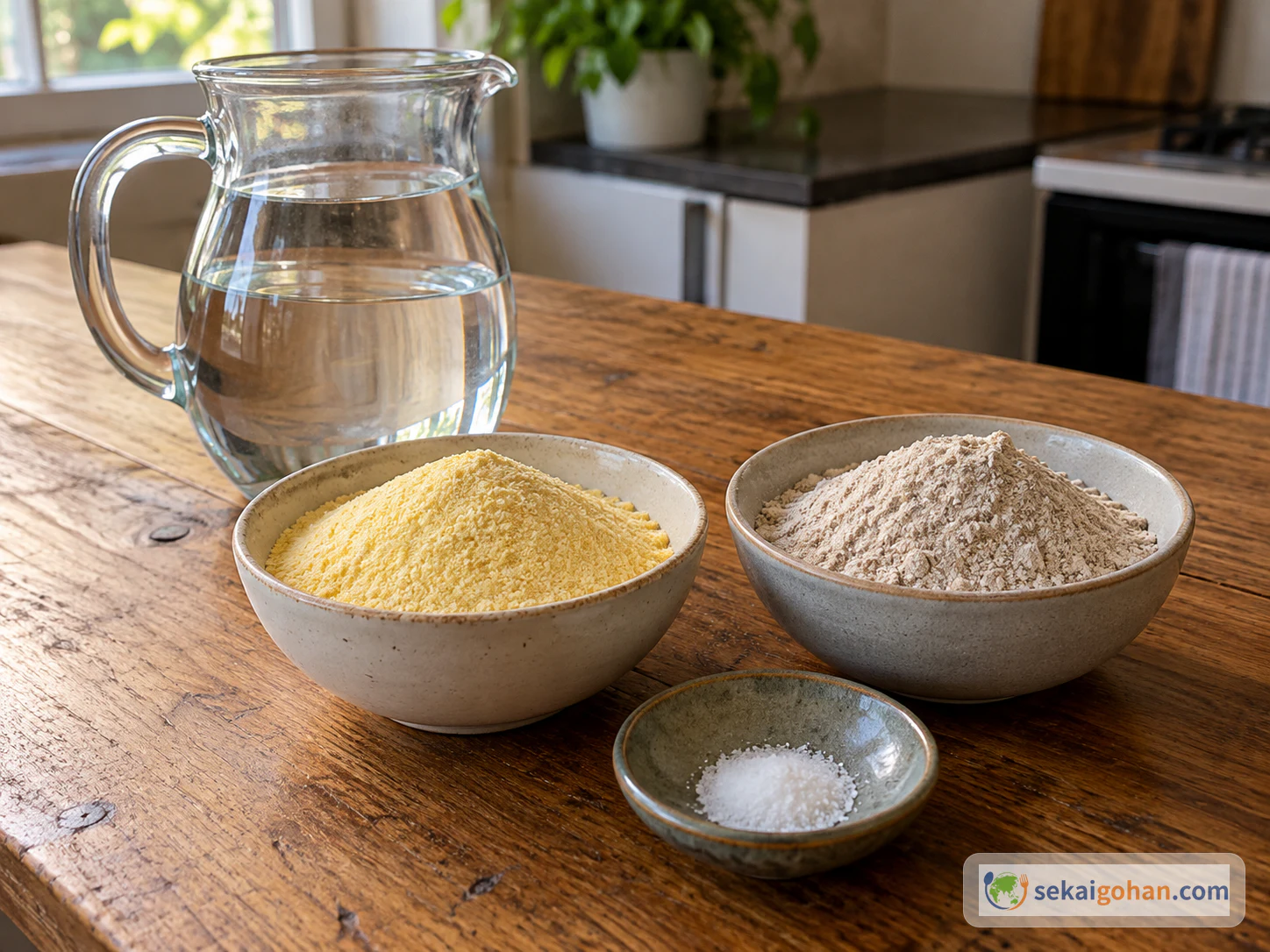
These amounts make two servings. Measure by weight.
The ingredients do not include wheat, milk or eggs. Specialty flours can be produced in facilities that also handle other grains or allergens. Check the label and any shared-facility statement on each flour you buy.
Equipment
- A heavy saucepan or small pot
- A sturdy, fairly long wooden spoon
- A flat plate or serving dish to turn the porridge out onto
A special stirring stick, called oluko, is not needed. An ordinary strong wooden spoon does the same job at home.
Choosing the Flours for Oshifima
Mahangu flour is pearl millet flour. Outside Namibia, look for it as "pearl millet flour" or "mahangu flour" at specialty grocers or online. Another grain flour won't give the same dish or flavor.
Fine maize meal is closest to finely ground cornmeal, so fine cornmeal works as a stand-in. Coarse cornmeal changes the texture.
If you cannot find mahangu flour, keep in mind that maize meal alone gives you mielie pap rather than oshifima.
Grind size differs from product to product, so the same weights can thicken differently. For your first batch, stick to the stated weights and judge by the result.
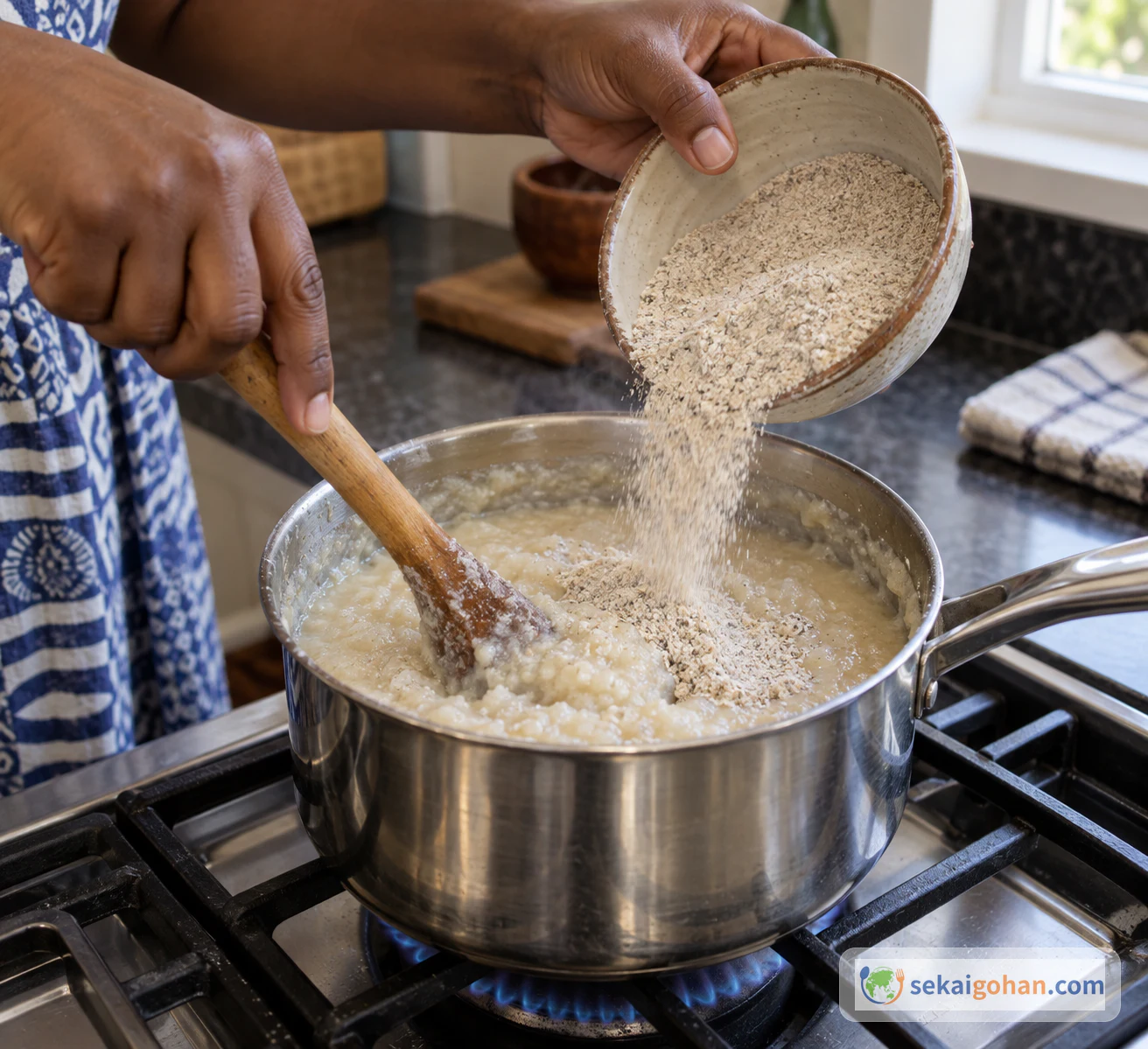
Method: Adding the Flour Little by Little and Working It Smooth
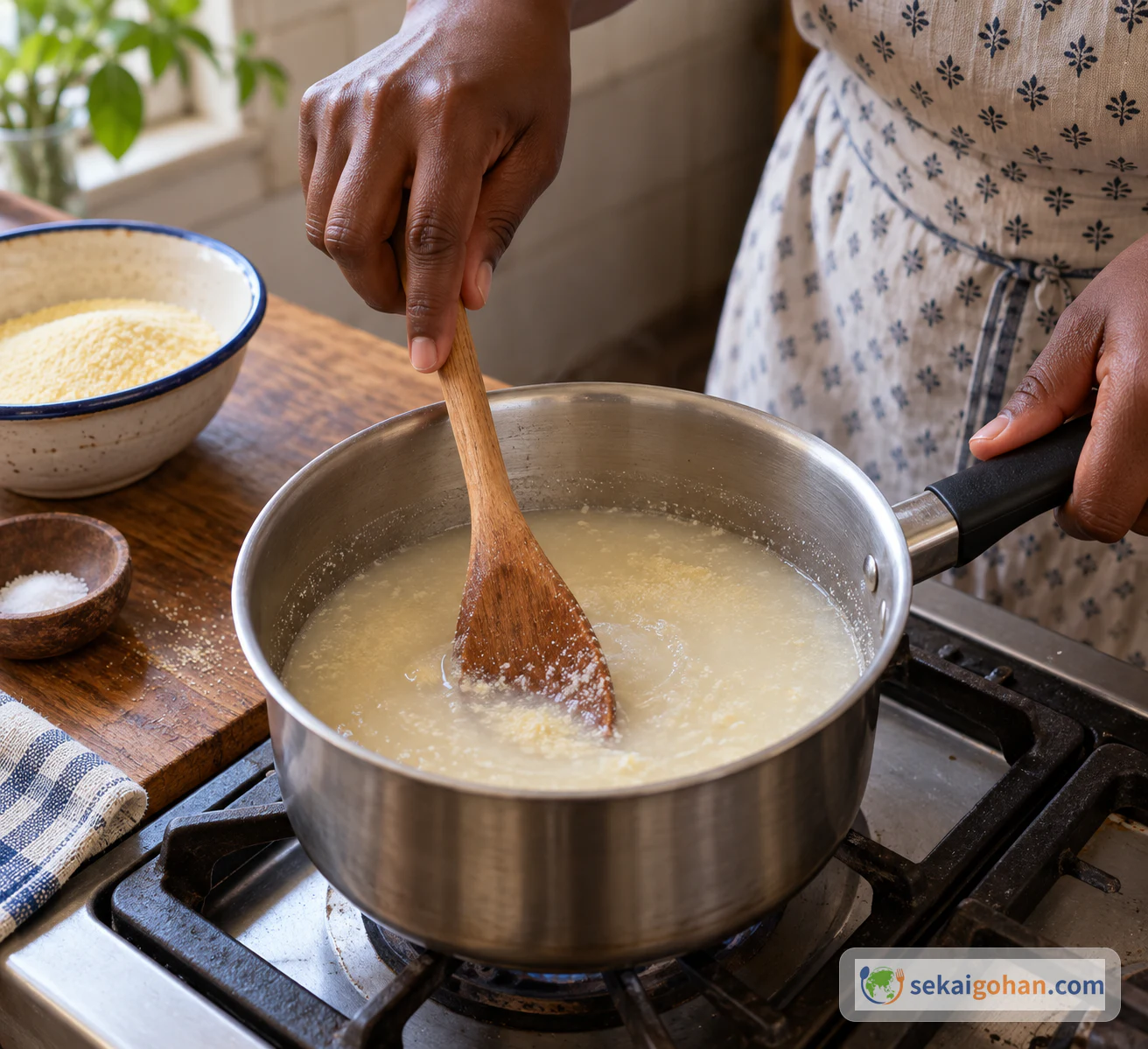
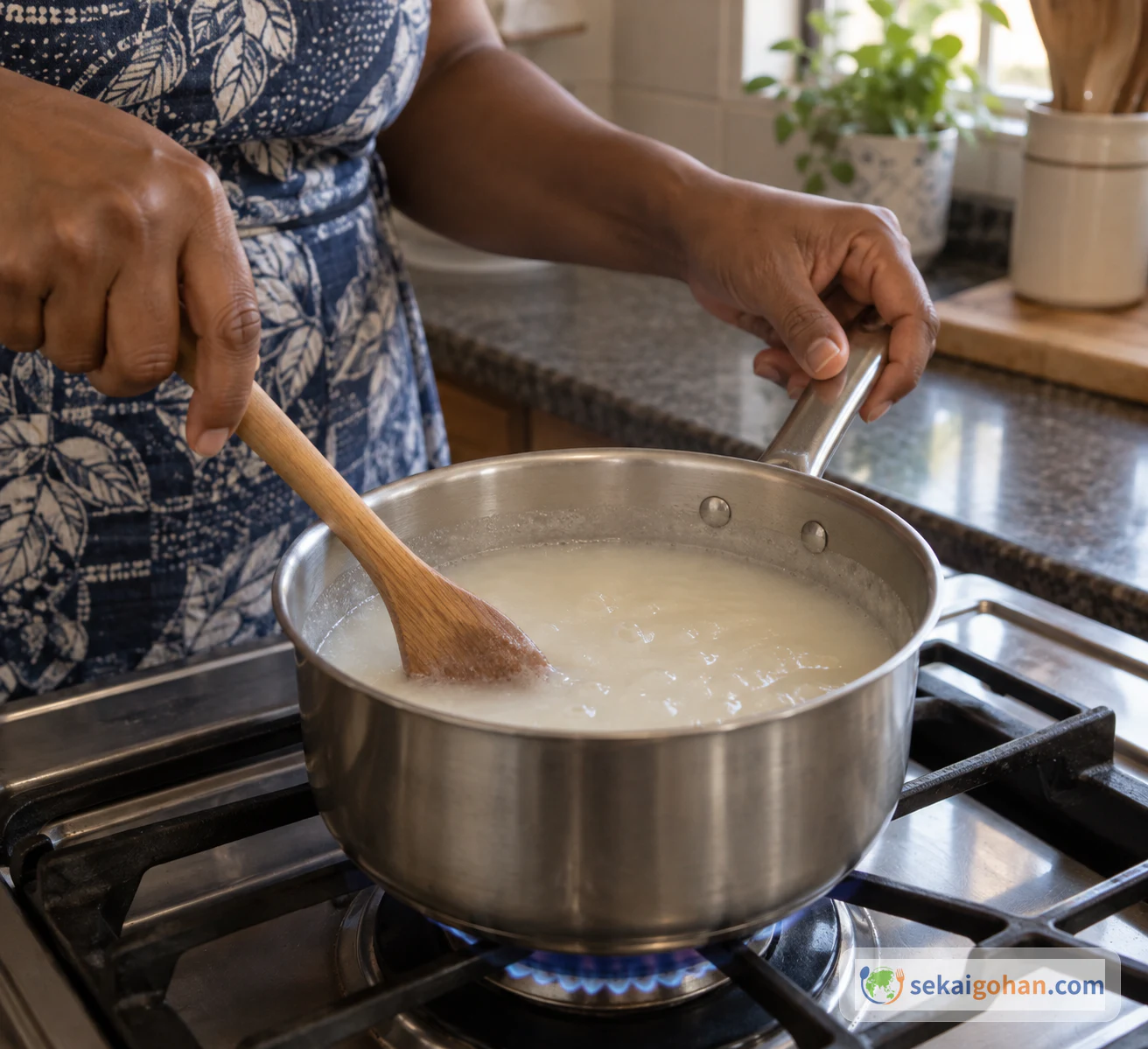
The maize meal goes into lukewarm water at the start and cooks into a thin base. The mahangu flour is stirred in gradually afterwards. Do not combine the two flours beforehand.
Troubleshooting Oshifima
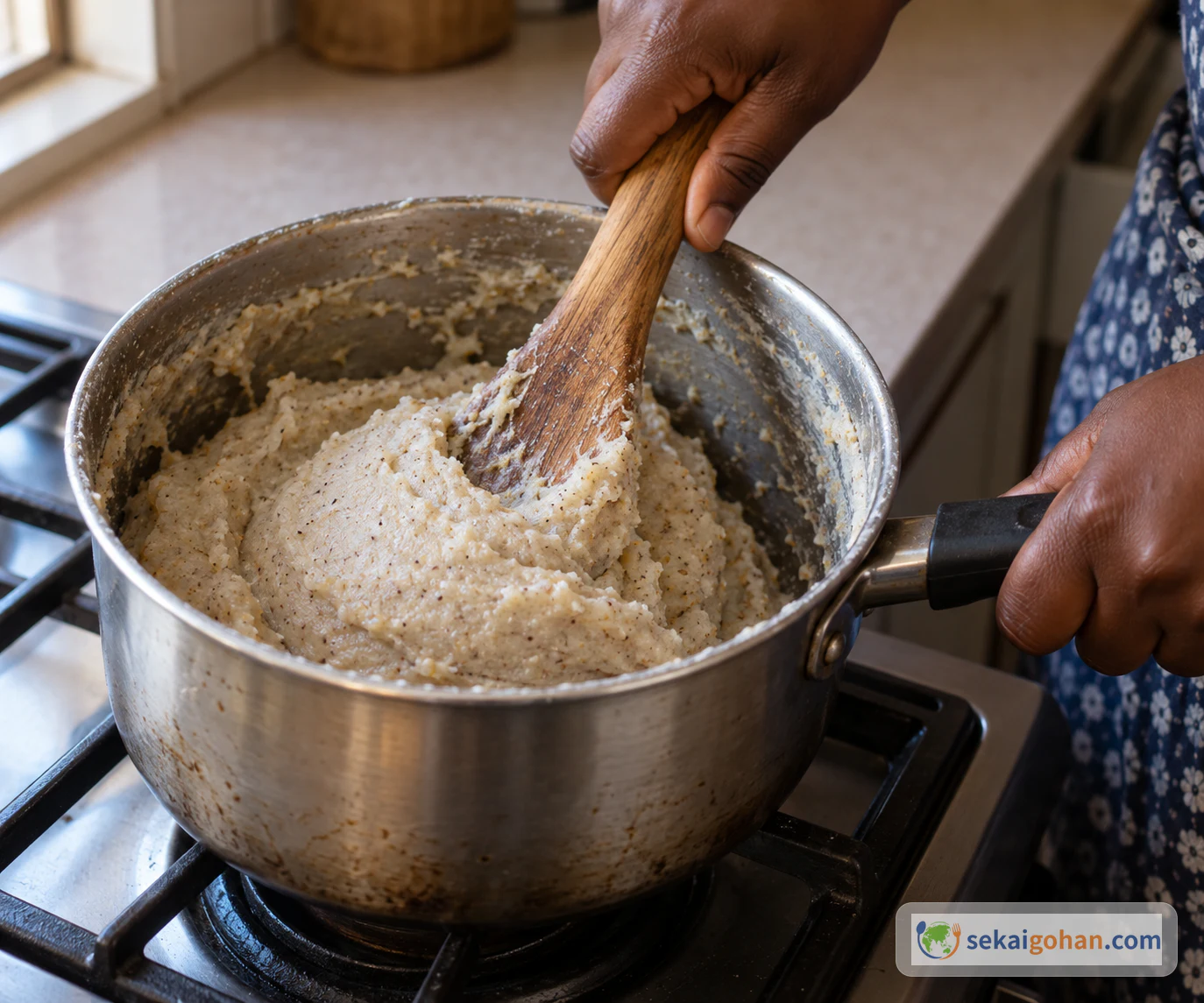
Oshifima should end up as one smooth, cohesive mass that turns out of the pot onto a plate, not a loose porridge you eat with a spoon. Add the mahangu flour a little at a time and keep working it against the pot until it comes together.
| Problem | Likely cause | What to do |
|---|---|---|
| Lumps form | The mahangu flour went in too quickly | Next time add it in small amounts and keep stirring while it falls. While it cooks, press the porridge against the pot wall with the spoon |
| The bottom catches | The base was not stirred along the bottom while boiling | Scrape the bottom as you stir, especially during the boil |
| Still loose, not one mass | Not yet worked enough, or a different grind of flour | Keep stirring firmly through the low-heat stage until it gathers. Stick to the stated weights; grind size varies by product |
| Dry flour remains | The flour has not been fully worked in | Keep pressing and folding against the pot until no dry flour is visible |
Serving and Storing Oshifima
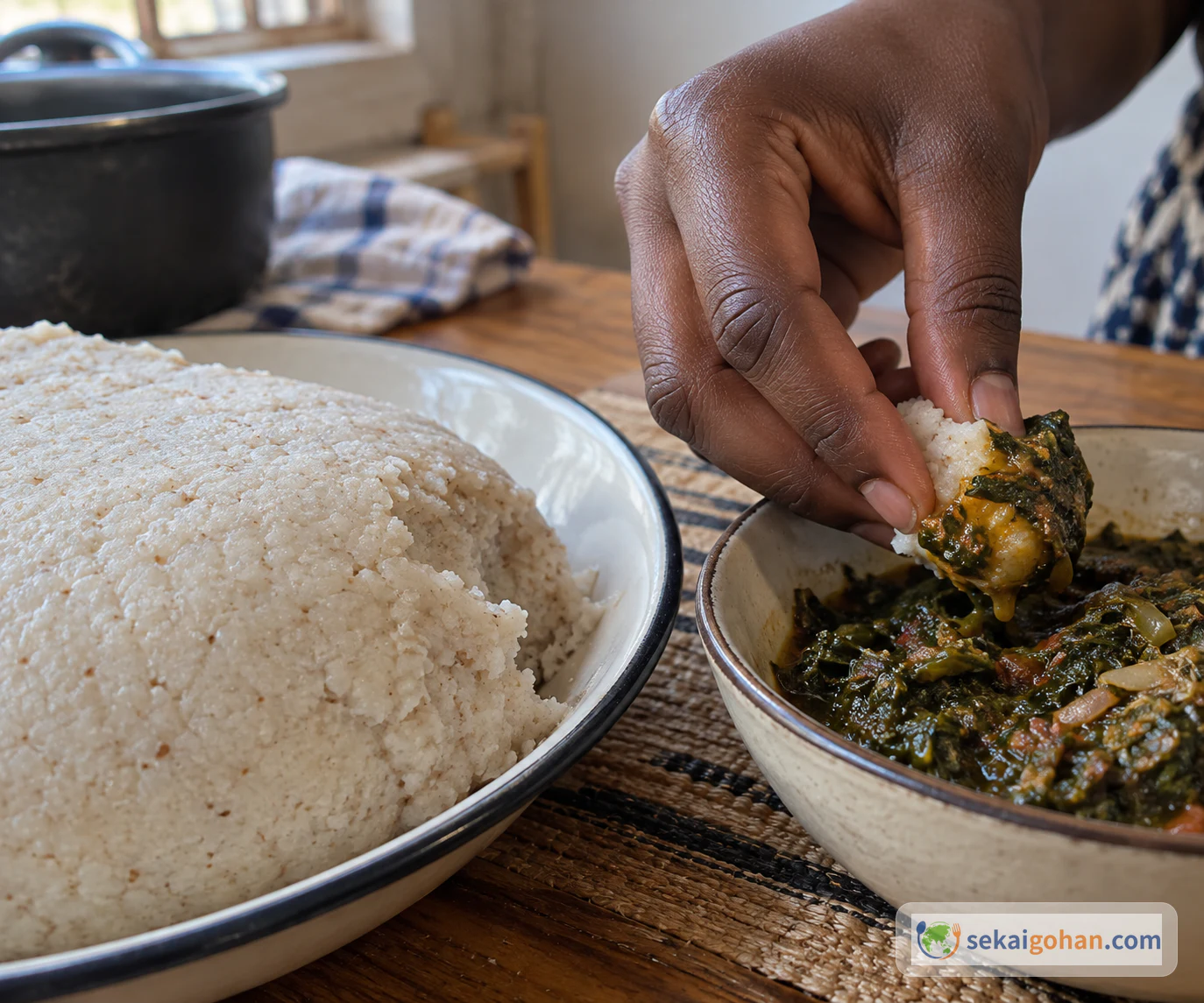
Oshifima is eaten by hand. Take a small piece, shape it with your fingers, press a hollow into it to hold the sauce, and scoop. Vegetable sauce, beans, meat, fish, milk, soured milk, grilled meat, vegetables and stews all go alongside. A natural partner is omboga (also ombidi or mutete), a wild spinach commonly stewed in northern Namibia and served as a side dish.
The traditional all-millet version contains no salt; the seasoning comes from what you serve with it. If you leave out the pinch of salt, make sure the sauce carries enough flavor.
Oshifima is usually made fresh for each meal, though leftovers are sometimes eaten at breakfast. Put any leftovers in a clean, covered container, refrigerate them promptly, and reheat them soon.
Frequently Asked Questions
What is oshifima made from?
At its core, oshifima is mahangu (pearl millet) flour cooked with water. Some households, as in this recipe, mix in maize meal.
What if I can't find mahangu flour?
Fine cornmeal can stand in for the maize meal portion, but there is no real substitute for the mahangu. Made with maize meal alone, the dish becomes something closer to mielie pap and won't taste like oshifima.
Do I need salt?
It's optional. This recipe uses a pinch, while the traditional all-millet method uses none and takes its seasoning from the dishes served alongside.